

Information on the current losses of the RF due to sanctions as of 19.04.2026.
1. The Security Service of Ukraine conducted a comprehensive operation on the temporarily occupied Crimean peninsula, as a result of which several Russian military infrastructure facilities were hit, including ships and surveillance systems.
– The operation was carried out by fighters of the Alpha Special Operations Center. According to available data, three Russian fleet ships were hit: the large landing ship “Yamal,” the large landing ship “Azov,” and another unidentified military vessel.
– Additionally, there are reports of probable damage to the Project 21980 “Grachonok” anti-sabotage boat.
– Within the same operation, drones damaged the antenna block of the “Dolphin” communication system, the MR-10M1 “Mys-M1” radar station, and fuel tanks at the “Yugtorsan” oil depot.
– Strikes on ships, communication systems, and fuel infrastructure are aimed at weakening Russia’s ability to use occupied Crimea as a key naval base and logistics hub for conducting warfare against Ukraine.
2. On the night of April 18, Ukrainian drones carried out a series of strikes on Russian fuel and energy complex facilities.
– Several strategic objects were under attack, including the Novokuybyshevsky and Syzran refineries in the Samara region, which are owned by “Rosneft” and have a total capacity of over 16 million tons of oil per year.
– Hits were recorded at industrial sites, and footage showing thick black smoke has appeared online. At the Syzran refinery, capable of processing up to 8.5 million tons of oil annually, the tank farm was damaged.
– The enterprise supplies fuel to several regions of central Russia, and according to Ukrainian estimates, it is used for the needs of the Russian army.
– The Novokuybyshevsky refinery, with a capacity of 8.3 million tons, produces a wide range of products, including jet fuel.
– Simultaneously, a fire was recorded at an oil depot in Tikhoretsk, Krasnodar Krai, associated with the key “Transneft” hub in southern Russia, highlighting the scale of strikes on logistics.
3. Russian auto giant “KamAZ” ended the year with a net loss for the first time in six years, highlighting the deepening crisis in the industrial sector amid a general decline in economic activity.
– By the end of 2025, the company recorded a loss of 43 billion rubles against a symbolic profit of 731 million rubles the previous year — a sharp deterioration that became one of the most indicative for the industry.
– The last time the company was unprofitable was in 2019, but then the losses amounted to only 1.96 billion rubles, making the current result dozens of times worse.
– Additional pressure is created by the rise in credit costs: amidst high interest rates, debt servicing has become sharply more expensive, further worsening the financial result.
– The situation with “KamAZ” reflects a broader trend — Russian industry is losing momentum, and domestic demand cannot compensate for the market contraction.
– Combined with expensive money, this creates conditions where even the largest manufacturers cannot maintain stable profitability.
4. The military model of Russia’s economy shows signs of exhaustion, despite high oil prices.
– Despite the fact that Russia avoided a sharp collapse after the imposition of sanctions, accumulated imbalances are increasingly evident. Even Putin is forced to acknowledge the deteriorating situation: manufacturing, construction, and industrial production have gone into the negative, and the economy contracted in the first months of the year.
– This happens despite significant budget injections into the military sector, which previously artificially supported activity. To finance war expenses, the government increased the tax burden, raising VAT to 22% and expanding the range of taxpayers among small and medium businesses.
– As a result, hundreds of thousands of enterprises are on the brink of bankruptcy, and only about a quarter of companies are confident in their survival. The situation is complicated by a labor shortage — unprecedented for modern Russia. Part of the qualified workforce has moved abroad, while others are involved in the military-industrial complex, further weakening civilian sectors.
– Against this backdrop, the Kremlin is tightening control over information, restricting access to economic statistics, and blocking thousands of websites, indicating attempts to hide the real state of affairs. The criminalization of “incorrect” information and the actual absence of independent control further distort the picture.
– As a result, even high oil revenues cannot compensate for structural problems. The Russian economy continues to operate in conditions of war and isolation, but it is increasingly evident that such a model has limited resources and is gradually losing stability.
5. The Russian economy is transitioning from a slowdown to an open decline, which is now acknowledged even by representatives of the country’s largest state bank.
– “Sber” reported a sharp deterioration in the situation and warned of an approaching wave of loan defaults that could impact the banking system.
– Businesses are facing a massive decline in revenue, while the economy itself is “already falling.” The lack of external demand for products in many sectors, combined with a prolonged period of high interest rates, resulted in GDP growth slowing to 1% in 2025, and by early 2026, the Russian economy had already contracted by 1.8%.
– The situation is complicated by a combination of factors: enterprises are forced to raise wages due to a labor shortage, while the cost of servicing debts has doubled.
– As a result, the financial condition of businesses is rapidly deteriorating, and more companies are losing the ability to service loans. Signs of problems are already accumulating in the banking system: the share of non-performing corporate loans has reached 11.3%, amounting to 10.6 trillion rubles — a sum comparable to a quarter of the federal budget.
– Even state companies, previously considered more resilient, are beginning to feel the crisis’s effects. Ultimately, accumulated imbalances — expensive loans, weak demand, and structural constraints — are forming the preconditions for a systemic wave of financial problems that could significantly deepen Russia’s economic downturn.
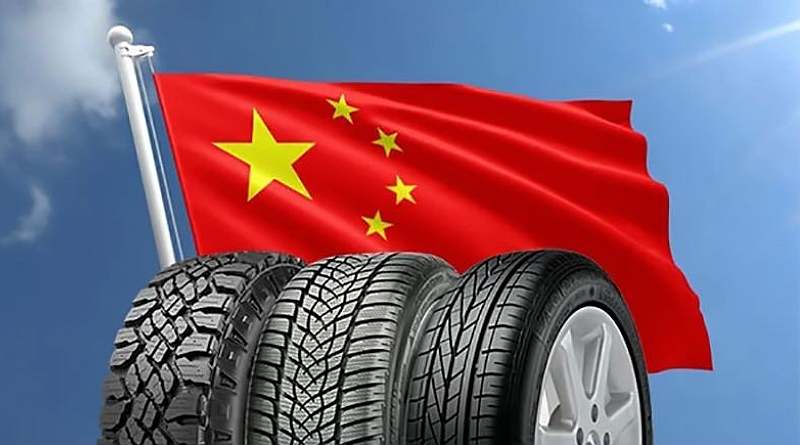
6. The Russian tire industry continues to lose ground in the domestic market, showing a sharp decline in production along with increased dependence on imports.
– In the first quarter, passenger tire production fell by 23% — to 6.7 million units, indicating deep sectoral problems and underutilization of capacity. Meanwhile, imports rose by 20% to 8.9 million tires, effectively pushing local manufacturers out of even the domestic market.
– Domestic factories are operating at about half their capacity, and their market share by the end of 2025 fell to the lowest levels in recent years. A key factor of pressure was Chinese manufacturers, who already control about 30% of the Russian market.
– Over 70% of imports come from China, highlighting the rapid increase in external dependency.
– Market participants attribute this to aggressive pricing strategies and state support for Chinese industry, with which Russian companies cannot compete. The Russian industry continues to lose the domestic market, yielding to cheaper imports, further weakening its production base.
