

Information on current losses of the RF due to sanctions as of 08/07/2026.
1. Ukrainian UAVs attacked one of the largest Wildberries logistics centers in Yekaterinburg, which was used to support the RF armed forces.
– On August 7, Ukrainian long-range UAVs “Liutyi” struck one of the largest Wildberries logistics centers in Yekaterinburg, covering an area of about 158,000 m². Following the attack, a large-scale fire broke out on the site, witnessed by many.
– The logistics complex, opened in 2023, is one of Wildberries’ key hubs in the Urals. It provides storage and distribution of goods for the Sverdlovsk region and other regions of Russia, handling tens of thousands of shipments daily.
– The center was also used for the accumulation, sorting, and dispatch of cargo for the needs of the RF armed forces, including ammunition, equipment, drones, and other logistical supplies.
2. After the attack by Ukrainian UAVs, the largest food cargo transshipment terminal in Russia stopped operating.
– Following the strike by Ukrainian drones on the night of July 30, the “EFKO” group terminal in the port of Taman — the largest specialized food cargo transshipment complex in Russia — ceased operations. The attack caused a fire at the site. The terminal is currently not operational, with damage assessment and recovery work underway.
– The terminal’s capacity is 1.5 million tons per year. Due to its shutdown and general logistical issues in the Azov-Black Sea basin, the export of Russian sunflower oil could decrease by up to 40% in August.
The company is already forced to look for alternative routes for export and import shipments.
– Ukrainian UAV attacks are increasingly disrupting the operation of Russian port infrastructure, complicating exports and increasing logistical costs for Russian companies.
3. Russia increased oil production in July, but new UAV attacks threaten further growth.
– In July, Russia increased oil and gas condensate production by approximately 100,000 barrels per day to over 9 million barrels per day. However, this trend may change as early as August.
– New Ukrainian drone strikes on refineries, as well as a tanker shortage in the Black Sea, complicate exports and may force Russia to reduce production.
– Additional pressure is created by logistical issues and disruptions in refinery operations following new attacks, notably on the Yaroslavl refinery.
– Despite attempts to increase August exports from western ports by approximately 4%, further strikes on energy infrastructure and increased risks for maritime shipments cast doubt on Russia’s ability to maintain the current level of oil exports and budget revenues.
4. The ruble fell to its lowest level in over four months amid a currency shortage and new sanction risks.
– On August 7, the dollar exchange rate exceeded 83 rubles in the over-the-counter market for the first time since the end of March, the euro rose to 95.6 rubles, and the yuan settled above 12 rubles. Since early May, the ruble has already lost about 20% of its value.
– The weakening of the Russian currency is linked to the advancement in the US Senate of a bill proposing new harsh sanctions, a reduction in foreign currency earnings from oil exports, and increased demand for foreign currency.
– Additional pressure is created by the need to import fuel, and the withdrawal of more than 2 trillion rubles by the population from banks since the beginning of the year. There is already a shortage of yuan in the interbank market, causing lending rates in the Chinese currency to temporarily spike to 9% annually instead of the usual less than 1%.
– Further weakening of the ruble is driven by the Finance Ministry and Central Bank’s purchases of yuan and gold to replenish the national wealth fund.
5. Russia has started importing petroleum products from South Korea due to a fuel crisis.
– At the end of July, traders shipped about 30,000 tons of petroleum products from South Korea to Russia, according to data from Kpler and Vortexa. Two tankers loaded at the port of Ulsan and headed for Russia’s Far East. One of the ships has already arrived at its destination port but has not yet completed unloading.
– According to traders, the cargo contains diesel and aviation fuel. Such a shipment is atypical, as Russia has traditionally been a major exporter of petroleum products.
– The need for imports is linked to a sharp decline in fuel production following Ukrainian drone strikes on Russian refineries and a fuel shortage in the domestic market.
– Previously, Russia had begun importing gasoline and diesel fuel from Belarus, Kazakhstan, India, and Morocco, and now South Korea has joined this list.
6. In six months, Russia nationalized assets worth a record $10.2 billion.
– In the first half of 2026, Russian authorities nationalized assets worth $10.16 billion, which is almost equal to the volume of nationalizations for the entire year 2025. It is estimated that during this period, there were 15 cases of forced business takeovers, making up 42.2% of the entire Russian mergers and acquisitions (M&A) market.
– The largest was the nationalization of the agricultural holding “Rusagro” valued at $7.7 billion, which in May came under the control of a Rosselkhozbank structure. The state also seized grain producer “Krasnodarzernoproduct” (over $1 billion) and several fishing companies in the Murmansk region with a total value exceeding $600 million.
– The record scale of nationalization indicates increased state intervention in Russia’s economy and further deterioration of the investment climate.
– Forced seizure of private assets increases risks for businesses, deters potential investors, and accelerates the transformation of the economy into a model dominated by state control.
7. Sweden to transfer Russia’s “shadow fleet” vessel to Ukraine.
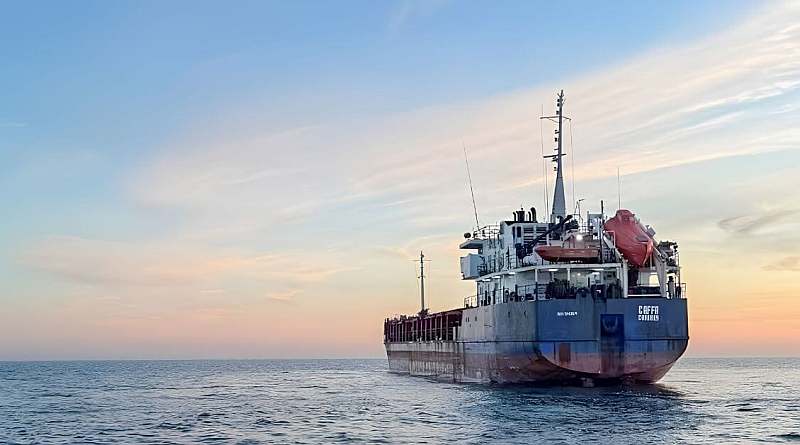
– The Supreme Court of Sweden has definitively decided to transfer the cargo vessel Caffa, part of Russia’s “shadow fleet,” to Ukraine. The court rejected an appeal by the owning company, Caffa Shipping Ltd, upholding the decisions of two lower courts. The vessel was detained in March off the southern coast of Sweden.
– The transfer of Caffa to Ukraine marks one of the first instances where a vessel from Russia’s “shadow fleet” has been definitively confiscated and handed over to Ukraine.
– This sets a legal precedent that could complicate sanction evasion schemes and increase risks for shipowners involved in transporting Russian oil.
8. In July, China increased purchases of Russian oil after supply disruptions from the Middle East.
– China’s crude oil imports in July rose by 22% compared to June — reaching 35.73 million tons (about 8.45 million barrels per day), recovering from nearly a decade-low. The growth was particularly driven by additional purchases of Russian oil.
– After the temporary resumption of shipping through the Strait of Hormuz, Chinese refineries increased imports, but a new escalation of hostilities in the Middle East once again posed supply risks.
– Shipments from Saudi Arabia were additionally reduced due to the redirection of some flows to the Red Sea. Amid this, Beijing increased purchases of Russian oil to compensate for the raw material shortage.
– Meanwhile, China’s July imports still remained lower than the same period last year, indicating sustained weak demand and instability in the oil market.
