

Information on current losses of the Russian Federation due to sanctions as of 01.06.2026.
1. Fuel problems in Russia, which were recently observed mainly in occupied Crimea and frontline regions, are starting to spread to the Moscow agglomeration.
– Restrictions on fuel sales have appeared at gas stations in New Moscow: one customer is allowed no more than 60 liters of gasoline and 100 liters of diesel fuel. Gas station owners explain that this order will be in effect until further notice.
– Although the Russian authorities officially do not acknowledge the deficit, the implementation of limits indicates growing tension in the domestic fuel market.
– Earlier, similar restrictions were already introduced in occupied Sevastopol and Crimea. There, gasoline sales were initially limited to 20 liters per person, and later local authorities reported a temporary absence of certain fuel grades.
– Such measures have also been recorded in the occupied parts of the Zaporizhzhia and Donetsk regions. The worsening situation is directly related to problems in Russian oil refining.
– In May alone, Ukrainian drones attacked Russian refineries at least 16 times, setting a record since the start of the full-scale war. In addition, oil depots, pipelines, and port infrastructure were regularly hit.
– The consequences are already reflected in official statistics. In April, oil product production in Russia decreased by more than 9% year-on-year, and gasoline producer prices rose by almost a third. Notably, signs of a deficit began to appear in a region that traditionally had priority fuel supply.
– If sales restrictions spread to the Moscow region, this could indicate significantly deeper problems with the production and consumption balance than the Russian authorities are willing to admit.
2. Russia is facing increasing risks of a fuel deficit following a record wave of Ukrainian strikes on oil refining infrastructure.
– May 2026 became the most intense month of attacks on Russian oil refineries since the start of the full-scale war. Eight out of the ten largest Russian refineries, as well as oil depots, pipeline infrastructure, and export terminals were hit. The consequences are already reflecting in production figures.
– According to OilX analytical company estimates, the average oil processing volume in Russia in May was about 4.58 million barrels per day. This is approximately 13% less than a year earlier and is the lowest figure since October 2009.
– There is particular concern about the change in Ukrainian tactics. Previously, the strikes predominantly targeted main production facilities, which could be relatively quickly repaired, but now secondary technological complexes are increasingly being attacked. Such equipment is significantly more expensive, more difficult to restore, and often depends on imported components, access to which for Russia is limited by sanctions.
– In addition to refineries, pumping stations, fuel storage tanks, and export infrastructure are under attack. This complicates not only production but also logistics and the accumulation of oil product reserves.
– Signs of fuel shortages are already becoming noticeable. At the end of May, the supply volume of AI-95 gasoline on the St. Petersburg Commodity Exchange in the European part of Russia decreased to about 5,000 tons per day, only a third of last year’s level. Meanwhile, exchange prices for this fuel increased by more than 20%.
– The consequences of strikes on Russian oil refining are gradually going beyond individual enterprises and beginning to affect the entire domestic fuel market of the Russian Federation.
3. The Russian government has imposed a temporary ban on the export of aviation kerosene until November 30, 2026.
– The decision was made against the backdrop of growing problems in the oil refining industry and a series of Ukrainian drone strikes on the country’s key refineries. The new restrictions apply to the export of jet engine fuel, including volumes purchased on exchange trades. In the Russian government, this move was explained as necessary to “ensure a stable situation in the domestic fuel market.”
– The ban has become another signal of the worsening situation in the Russian fuel and energy sector. The authorities were previously forced to limit gasoline exports due to the risk of shortages in the domestic market and rising prices.
– In recent months, Ukrainian drones have been regularly attacking refineries, oil depots, and logistics facilities. As a result of the attacks and forced repairs, Russian companies have temporarily lost a significant portion of their oil product production capacities.
4. Despite the increase in VAT rate and the strengthening of the tax burden, the Russian budget is beginning to feel the consequences of the economy’s slowdown.
– In the first four months of 2026, revenues from value-added tax amounted to 5.3 trillion rubles, which is almost 20% more than for the same period last year.
– However, even such growth did not allow for the fulfillment of planned targets. After increasing the VAT rate to 22%, the authorities expected to receive about 5.8 trillion rubles for January–April. Thus, actual revenues were approximately 500 billion rubles below expectations.
– The situation is particularly indicative given that VAT is one of the main indicators of economic activity. Falling short of the plan indicates weaker-than-expected domestic demand, reduced business activity, and deteriorating financial conditions for enterprises. More and more Russian companies are facing reduced profitability or operating at a loss.
– High interest rates, tax burden, labor shortages, and rising costs are gradually undermining the financial stability of businesses. As a result, even tax increases do not guarantee the fulfillment of budget plans.
– According to forecasts, by the end of the year, the federal budget may fall short by over 1 trillion rubles in VAT revenues out of the planned 17.5 trillion rubles.
5. Sanctions have collapsed Russia’s freight transportation market.
– The Russian international freight transportation market is in deep crisis: companies that recently were earning stable profits are now incurring monthly losses on each piece of rolling stock.
– By the end of the first quarter of 2026, the average net financial result per truck is about $1.5 thousand in loss per month. For comparison: in 2023, the figure was diametrically opposite – $3.3 thousand in profit.
– The main causes of the industry’s collapse were Western sanctions and the overall degradation of Russia’s economy, which provoked a drop in demand for logistics services.
– At the same time, leasing costs sharply increased, and operational costs – fuel, maintenance, taxes, and mandatory payments – continue to rise. As a consequence, the vehicle fleet is aging with almost no renewal, which deprives the industry of competitiveness.
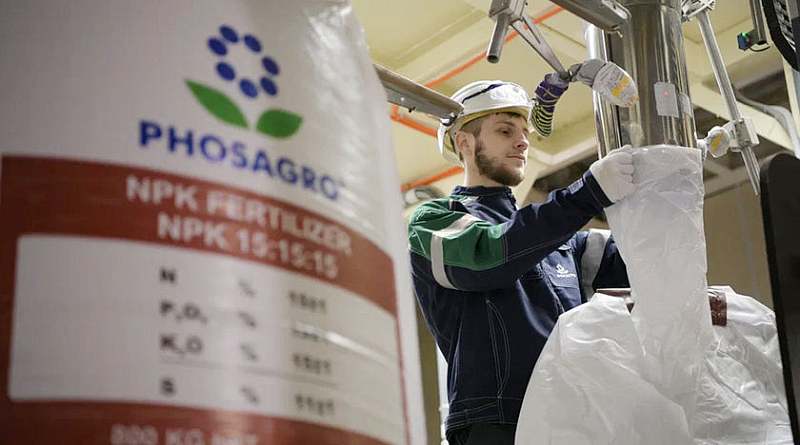
6. One of the largest producers of mineral fertilizers in Russia faced a sharp deterioration in financial results.
– By the end of the first quarter of 2026, PhosAgro’s net profit plummeted 216 times year-on-year — from 47.7 billion to only 221 million rubles. The company’s revenue decreased by 17.5%, amounting to 131.5 billion rubles. Simultaneously, the cost of production increased by 16%, to 94.2 billion rubles, which significantly affected the business’s profitability.
– One of the main reasons for the worsening figures was the rapid price increase of sulfur and sulfuric acid — key components for phosphate fertilizer production. The costs for their procurement increased 2.6 times over the year, reaching almost 20 billion rubles.
– Raw material supply issues are directly linked to the crisis in the Russian oil refining industry. In 2025–2026, numerous strikes on refineries led to a reduction in sulfur production, which is a by-product of oil and gas processing.
– As a result, Russia, which traditionally was among the largest exporters of sulfur worldwide, started experiencing a shortage of this raw material itself and began seeking import opportunities. To stabilize the domestic market, the Russian government was forced to impose a ban on the export of technical sulfur, which it later extended until the end of June 2026. However, even such measures could not fully compensate for the shortage or curb price increases.
– The instability in the Middle East delivered an additional blow to the industry. The war around Iran and disruptions in shipping through the Strait of Hormuz led to issues with global supplies of sulfur and sulfuric acid, further exacerbating the situation for fertilizer producers.
– Additionally, PhosAgro recorded a net exchange loss of 8.8 billion rubles, which also negatively impacted the financial result.
7. The EU may include 20 tankers from Russia’s shadow fleet in the new sanctions package.
– The new 21st EU sanctions package against Russia may include restrictions on approximately 20 additional tankers from the shadow fleet that Russia uses for oil transportation. According to the publication, the sanctions regime will later be expanded to vessels transporting liquefied natural gas.
– The European Union plans restrictions on vessels providing services to shadow tankers. There is also a discussion on introducing a new sanctions package against a greater number of banks, oil traders, refineries, and crypto operators in third countries that Moscow uses to bypass existing restrictions.
– However, the new sanctions are unlikely to include a complete ban on maritime transportation. Several EU member states oppose this option due to instability in the Middle East.
– The EU is also considering temporarily freezing the price cap on Russian oil. Last year, a mechanism was introduced to ensure that the cap is automatically set every six months at 15% below the average market price for Russian Urals oil. The current price cap is $44.10 per barrel and is set to be reviewed in the summer.
– Under the restrictions, European companies are prohibited from providing certain services, such as insurance and transportation, related to oil sold above the threshold value.
8. France continues to tighten control over the Russian “shadow fleet” used to circumvent Western sanctions and export oil.
– On May 31, the French Navy detained the oil tanker Tagor, which is under international sanctions and, according to French authorities, was involved in transporting Russian oil. French President Emmanuel Macron stated that the operation took place in the Atlantic Ocean with support from international partners, including the United Kingdom. He mentioned that the vessel was used to finance Russia’s war against Ukraine. The tanker was detained approximately 740 kilometers west of the Brittany coast.
– After the boarding team disembarked, the French military checked the ship’s documentation and confirmed suspicions of violations regarding the use of the flag of the state of registration. Currently, French Navy ships are escorting the tanker to a docking location for further inspection.
– According to maritime monitoring services, at the end of May, the vessel was en route from Murmansk and was on a trip related to the transportation of Russian oil.
– This is the third tanker from Russia’s “shadow fleet” detained by France since the beginning of 2026. Such actions indicate a gradual shift by Western countries from a formal sanctions regime to more active enforcement.
9. A Danish shipyard still services tankers for transporting liquefied natural gas for Russia.
– Despite numerous EU statements about the intention to limit Russia’s income from gas exports, certain European companies continue to support the functioning of the energy infrastructure critical to the Kremlin.
– The Danish ship repair yard Fayard continues to service Arc7 class icebreaker tankers, which are used to transport liquefied natural gas from the “Yamal LNG” project. These ships are a key link in exporting Russian LNG from Arctic fields to global markets.
– An analysis by the environmental organization Urgewald showed that this summer, six out of fifteen Arc7 class tankers are scheduled for repair or maintenance at the Fayard yard. According to the company’s reports, it serviced five gas carriers last year alone, operating on routes related to “Yamal LNG.”
– The situation is raising more and more questions in Denmark. The country’s Prime Minister Mette Frederiksen previously stated that such activities are “absolutely incomprehensible” and should be halted. However, the company continues its work, citing current European Union regulations.
– Fayard claims that it acts within legal bounds and complies with EU requirements. The company emphasizes that until 2027, LNG supplies from Yamal remain part of Europe’s energy balance, and the maintenance of vessels is necessary to ensure maritime safety.
– At the same time, this situation highlights one of the main contradictions of European sanctions policy. Despite political statements about reducing dependency on Russian energy, certain infrastructure elements supporting the export of Russian gas continue to receive support in EU countries.
– For Russia, the “Yamal LNG” project remains one of the most important sources of foreign exchange revenue from gas exports. Without specialized icebreaker tankers and regular maintenance, their operation in Arctic conditions would be significantly complicated.
– Therefore, any services related to the support of this fleet effectively help maintain the operability of one of the key export directions of the Russian energy sector. The EU ban on providing maritime services to Russian LNG tankers is expected to come into effect only in 2027.
– Until then, Russian gas exports from Yamal will continue to benefit from certain opportunities within European infrastructure, despite the sanctions regime and Brussels’ official policy of reducing the Kremlin’s energy revenues.
