
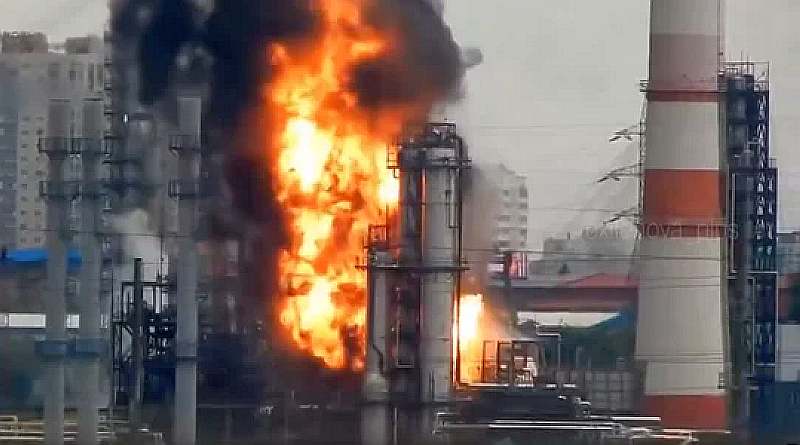

Systemic combat impact on the critical infrastructure of the Russian Federation gradually deprives its economy of the fundamental stability that has been built over many decades. Precision strikes on oil processing facilities and major logistics hubs turn the Russian hinterland into a high-risk zone, as the destruction of key value creation chains triggers a series of uncontrollable economic disruptions.
In July 2026, oil processing volumes at Russian plants dropped to 3.6 million barrels per day. This is the lowest since May 2002, when the country’s oil industry was at a completely different stage of development. When compared to the seasonal norm from 2020 to 2025, when the average daily processing was between 5.3 and 5.6 million barrels, the decline exceeded 30%.
The significant reduction in processing capacities is a direct result of the intensive Ukrainian campaign targeting energy facilities, which deprives Russia of a key source of income. In July 2026 alone, 18 refineries were attacked, including the Omsk Refinery, located more than 2500 kilometers from the Ukrainian border.
The high precision of the strikes means that repairing damaged secondary processing units takes many months, and under strict technological constraints, restoring complex equipment becomes an almost impossible task.
Disabling key refineries creates a noticeable shortage of motor fuel within the country, already estimated by experts at between 400,000 to 600,000 tons per month. Attempts to redirect crude oil for export through alternative ports run into the limited capacity of pipelines and a shortage of tanker fleet. As a result, the state loses not only super-profits from the export of high-value-added products but also faces the necessity to organize the import of gasoline from other countries to cover basic domestic demand.
In parallel with the destruction of the fuel sector, there is a degradation of the supposedly civilian logistics infrastructure, as systematic strikes on distribution centers deal crushing damage to the network trade sector. The loss of the large Wildberries logistics complex in Volgograd became another vivid testament to the vulnerability of the country’s largest warehousing hubs.
The scale of losses for Russian logistics is measured in tens of billions of rubles, as the destruction of a single distribution center with an area of 50,000 to 100,000 sq. meters means the loss of stored goods, expensive sorting equipment, and automated control systems.
In the case of the Volgograd Wildberries facility, direct losses from the burning of products by thousands of independent sellers and the complete damage to the building itself exceed 10 to 15 billion rubles. To the mentioned figures, indirect costs of urgently redirecting goods flow and compensating affected market participants are inevitably added.
In recent weeks, 16 Wildberries facilities have been hit, indicating a systemic crisis in the supply chains of Russia’s largest marketplace. Such destructions lead to the rupture of regional trade ties, sharply increase the delivery distance of goods, cause delays in store supplies, and force retailers to account for massive risks in the final cost of products, further fueling inflation.
The decline in oil processing to its lowest level in a quarter-century and the massive destruction of warehouse facilities form a cumulative crisis capable of paralyzing key life-sustaining sectors.
The Russian economy loses two critical support elements at once, on which financial stability and the daily life of the regional population depend.
On the screen: Fire at the Moscow Refinery in Kapotnya. Photo: Telegram channel Exilenova+
