
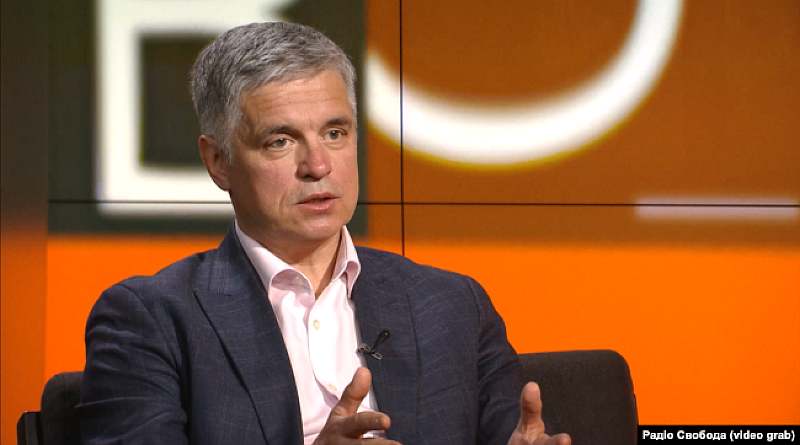
After receiving a loan of 90 billion euros, Ukraine should still not relax, according to Vadym Prystaiko, former Ukrainian ambassador to the United Kingdom (2020–2023) and Minister of Foreign Affairs (2019–2020). Because “the war and the situation we live in […] require constant daily attention,” the ambassador notes.
Partners see all of Ukraine’s problems: corruption, mobilization issues. Prystaiko clarifies that they are monitoring this, as one of the tasks of diplomatic missions is to report on negative trends. But will this affect further assistance to Ukraine? And what is Europe monitoring more closely: the war or Ukrainian corruption?
In a conversation (Freedom Live program) with Vadym Prystaiko, the following topics were discussed:
- What options for joining the EU and NATO is Ukraine ready for, and what is being proposed in these unions?
- Will relations with Hungary improve after the arrival of the new prime minister?
- Will Russia seek influence on Peter Magyar?
- Are negotiations between Zelensky and Putin (im)possible?
- Have the USA exited the game or taken a pause? Is the USA still interested in participating in Ukraine-Russia negotiations?
On the Radio Svoboda YouTube channel, watch and listen to an interview with Vadym Prystaiko, head of Ukraine’s Mission to NATO (2017–2019), ambassador of Ukraine to the United Kingdom (2020–2023), Minister of Foreign Affairs of Ukraine (2019–2020).
The 90 billion loan was unblocked. What’s next?
Iryna Sysak: The European Union has approved a loan of 90 billion euros for Ukraine, which until recently was blocked by Hungary. The European Commission announces that Ukraine may receive the first tranche in May-June. In this situation, can Ukraine already breathe a sigh of relief, or are there still risks of not receiving this aid?
Vadym Prystaiko: First of all, it’s great news. It has been very difficult for us all this time. And it’s no secret that we survive thanks to the help provided by our partners.
While we are fighting, while all our efforts are at the front, someone has to support the economy, pay salaries, and keep us afloat. And fortunately, we have friends and partners who do this. The fact that Russia expected Ukraine to be a relatively small country they could crush, our partners built for us this strategic depth that allows us to survive and be part of something bigger. Not just, you know, like an island: you capture it, go to the end, and it’s over. No.
Do we need to worry? We need to worry constantly!
Because of the war and the situation in which we live: the systemic changes occurring in the Ukrainian economy, in Ukrainian demographics, in everything Ukrainian, require constant daily attention. But without resources, particularly financial, we obviously cannot solve all this.
Corruption and mobilization in the partners’ focus?
– You mentioned the economy. I will mention the issue of corruption. How does it affect the receipt of this aid? The same “Mindichgate.” Do partners pay attention and is the issue of corruption in Ukraine generally in their focus?
– I think partners are well aware of who we are. The issue of corruption is obvious. The question of some Ukrainians being able to buy themselves apartments worth half a billion dollars resonates, and every politician who makes decisions to press the button – or vote, is aware of it. They understand how this is perceived in newspapers, in their constituency, where they are voted for, and how to respond to these questions. These are very unpleasant questions, which undoubtedly, if we could avoid creating for our partners, would make their decision-making much easier.
However, at the same time, they understand that there is a priority for survival: their own survival, European and ours is so significant that they turn a blind eye to a certain extent on what is happening. Our task is to perceive this as an advance, not as permission. That “we can do anything we want because we are like that: someone is slightly embezzling, some cannot live without corruption, the CCC decides their task now is to enrich as much as possible,” and so on. All these diseases of ours, which threaten the life and existence of the state itself, if we do not realize this for ourselves, eventually, the negative trend will overwhelm all the positivity that still exists regarding us as a country holding the Russian attack. For Europe, not for Europe, it is no longer important. What is important is that we survive and fight.
– Are partners also monitoring the actions of the CCC?
– If the embassy in Kyiv, the consulate in Odesa, in Lviv, have not reported these cases, I really do not know what their countries are paying their salaries for. Believe me, our embassy would have done the same long ago, if it were in such a country dependent on our own budget, undoubtedly, one of the tasks of the diplomatic mission would be to report everything happening in this country, including negative trends.
I assure you, they are well aware of what is happening. Corruption, mobilization. The problems of mobilization, not just corruption, but mobilization itself. Corruption is something that has layered onto mobilization. Mobilization itself is a tragedy and a problem. We really lack troops, we really lack soldiers on the battlefield.
– Is this for information or for further discussion and proposals?
– There is no such thing as ‘information’ in diplomacy. It is all information that is perceived as a single database for decision-making. Worse, you can use this information as: “People are fighting, but not everything is working out. Let’s next time, when we give 90 billion, include a checklist, the length of 90 billion pages, where it will be stated what needs to be corrected”.
Or one can speak, as Orban did, speaking at a rally, explaining how corrupt Ukraine is, questioning how we can give them money when an average Ukrainian can afford to buy our entire country. Or a TCC employee, a serviceman, allows himself to carry millions of dollars in this minibus, and you don’t know what else he has under the mattress.
This can definitely work against us, it depends on the political will, on how much the country sees all the complexity of Ukraine, the entire complexity of this picture.
Homework for Ukraine: What actions are expected in the EU?
– About political will and the demands from partners, the very question of whether this financing will be tied to the European Union’s demands, is raised by the Anti-Corruption Center, saying that Zelenskyy and his government demand that financial aid to Ukraine be unconditional. “The attack on anti-corruption bodies in the summer of 2025 shook the EU’s trust in Zelenskyy and sowed doubt about his true intentions to combat corruption and ensure the justice that the Ukrainian people demand.” Among the reforms they write about are the reform of the justice and law enforcement bodies, as well as the format for selection and dismissal of heads of law enforcement and judicial bodies. Could this become a problem?
– There are clear criteria, which, so to speak, are the criteria for Ukraine’s accession to the EU and NATO. Right? They are written down, everyone can read them, we coexist with them conditionally. Sometimes we fulfill these criteria, sometimes we believe that priorities should be different now, and that we will do later.
There are things added to every such big event, like 90 billion. Obviously, no matter what we are told, believe me, the list will either be on paper or will be announced during conversations.
And there are conditional questions that exist in the air. So to speak, it is obvious that the European Union demands from us the fight against corruption, right? And any measures that don’t fit into this picture at least cause irritation at the level of perception. And then it turns into some documents, and we return to when this irritation turns into each specific requirement defined in the end. And all donors act like this.
But to be honest, this is generally anyone’s logic, right? When a person lends money to someone, they at least expect to get it back. This is a requirement. Or the life of this person being supported gets better because they are being helped. The same goes for the state.
No one can expect that money collected from taxes in one state will flow to another without any conditions. We find explanations for ourselves that this is done because Europeans understand that they cannot survive without us.
You know, we are angels in white with a sword and shield, covering all Europe behind us. I’m sorry to disappoint, Europeans don’t think like that.
Sometimes they make statements that painfully hurt us. Like saying “Ukraine still needs to fight for at least two more years for Europe to be ready…” This is just an unfortunate formulation. Europeans mean that they are not ready. And will not be ready before two years. But someone formulated it incorrectly. But this is definitely not an argument why we shouldn’t be whiter and more righteous than the Pope.
“‘Symbolic’ Entry of Ukraine into the EU: Concessions or Strategy?”
– There has been recent talk about Ukraine’s membership in the EU. Specifically, according to Financial Times, France and Germany are supposedly proposing a symbolic version of Ukraine’s accession to the European Union without access to the common budget and without voting rights, at least until full membership is achieved. What does this mean? How do you understand this? And how does such a proposal align with Ukraine’s interests?
– It was once said ironically that when Britain left the EU, you could leave the two letters UK, add the letter R, and you could immediately sit in the British chair while it’s still warm, after the British representative. The implication being that we will be part of this family anyway, you know, it works out like that. Whether some leaders like it or not, the logical path for Ukraine is to become part of Europe. Now, certainly, it has brought us much closer because our suffering and our courage are inspiring, and people understand that this distant Ukraine is, in fact, not so far away.
By the way, the same goes for NATO. If we were ever to put our path together, we would understand that it’s a single path for us. We need to be: a) protected; b) wealthy. Then we will find ways to solve most of our problems.
So, what the Germans and the French are saying is that it’s evident Ukraine is not ready. It irritates us, frankly, as they say: “it gets on our nerves.”
– And the war continues.
– The war continues, exactly, someone might have said the same. But we forget that these are families without an exit mechanism. If Ukrainians could just momentarily set aside the aversion to Brussels bureaucracy, they would understand it’s a family you join but from which there’s no way to be expelled. A typical example is Hungary, Slovakia, or, God forbid, Bulgaria and other countries that, from time to time, don’t quite grasp why they joined. Therefore, these countries, these organizations, when making a decision to include someone, they always worry: “What if something goes wrong? What if Ukraine doesn’t come out of the war? What if Russia captures Ukraine? What if Ukraine makes such painful compromises with Russia that it won’t have a place in the European Union with its high European standards?” This is softly and diplomatically expressed by our partners from France and Germany and all others who support them.
On the other hand, it is clear that for us the demand is: “No, no, let’s not play with definitions.” A European home means a European home. We have invested so much for this, starting with our Maidan revolutions and turning away from Russia. Taking a global view, the entire state, the entire 40-million nation has changed through internal pain, revolutions, misunderstanding, political clan interests that have been ground down.
Our place is there. Therefore, our demand is maximalist. EU and NATO membership.
How this happens: through agreements, through some odd forms, ersatz (substitute – ed.)? Ideally, we would simply calmly and honestly sign the documents, ratify them in parliament, and just become members of these organizations.
– You say that Ukraine’s place is there. So, it turns out that you can first agree to this simplified version of accession, and then move on to more serious negotiations. Is that how I understand it?
– What President Zelensky is currently demonstrating, as far as I understand, is stating that we don’t need such an ersatz form. Let’s talk about a full one. But the Europeans’ argument will be: fine, then let’s talk after the war is over.
And here we need to think, decide whether we now (conditionally “now,” because no one knows when this might be, right?) become not even a full member of the EU but already take a seat at the table. This is fundamentally very important. Russia understands that it’s over. Ukraine has moved, it is already seated elsewhere. We are not sitting at CIS meetings, we are sitting at EU meetings. Or for our internal political situation, we might still decide that no-no, we don’t need it. We don’t need ersatz forms in the EU; we need a full one. Even if it has to be postponed until the end of the war, which is not far off.
– So Ukraine needs to weigh what is more beneficial for it today?
– I think Ukraine needs to weigh it. Partners simply offer different options. Some are simplified, some are more complex but more substantial. We need to determine what is in our interest. It’s important to support Ukrainians. It’s important, right? People are really exhausted after all this time. On the other hand, if it’s not the full form, do we really need it? Or do we realize that we need to make another leap, but we will get everything?
– You mentioned Zelensky, he says he does not accept the simplified option for Ukraine’s accession to the EU. And I also read a post by Yegor Chernev, an MP from “Servant of the People”, who says that “the EU is trying to buy off Ukraine with symbolic things and Ukraine should not agree to such ‘non-membership’.” These are the thoughts.
– I agree, but again, if we are now told: “Okay, fine, but not earlier than the war ends,” then we’re talking about full membership. Obviously, this is also then postponed to some unclear term. We don’t know when this war will end.
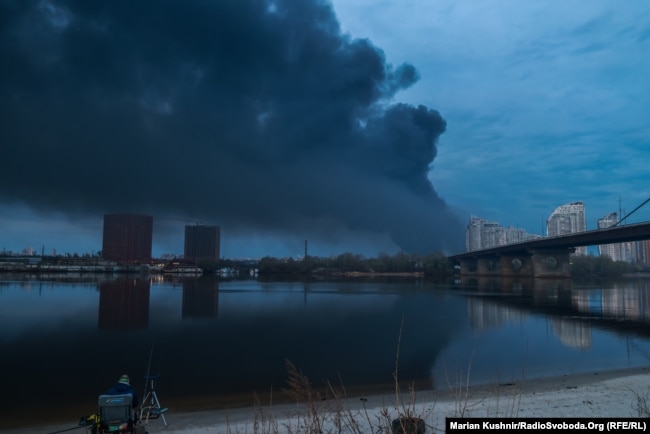
– About the end of the war. How does the security situation in Ukraine affect the European integration processes? Can Ukraine even become a symbolic member of the EU with an ongoing war, continuing shelling, and combat operations in the east and south?
– You know, I understand that you keep asking about the EU, but I’m in NATO… I was once an ambassador to NATO too, and I can’t forget that, my part of the history. But here, a clearer picture emerges because if we were NATO members, in theory, Article 5 would have invoked support for us. But it could also be said during the negotiations that Ukraine’s accession to NATO is on the territory that is currently controlled. And it is so, there is an article in the North Atlantic Treaty that defines where NATO’s responsibility lies.
By the way, the Strait of Hormuz – is not NATO’s responsibility. Although I understand that not all American partners have read what a specific NATO treaty entails. Why the Alliance cannot participate as an Alliance there.
Likewise with the EU, it’s just not as prominent, not as clearly described, whether Ukraine can [join] during the war (since the EU is not designed for war, it’s not about that). But clearly, forcing member countries to vote now, while there’s a discussion in the EU about making security-defense agreements even clearer than those in the Alliance, explicitly writing, drafting, and signing by all that all European Union members must intervene. Because Article 5 does not state that. Article 5 of NATO states that all members must decide individually or collectively on how they can help. So it’s a different level.
Can you imagine what the EU is thinking about now? They are thinking about how to transform into a unified political-security organization. In such a political-security organization, we certainly have a place, but not during active combat operations.
– Interesting, I was thinking about what is more important to European partners in this issue: the war or the same “Mindichgate” and corruption?
– War is a very good moment to highlight the truth for everyone. To say: well, we would, but there’s a war. And with “Mindichgate”, we have a fair argument as well, that wait, the judicial investigation is not finished. We will catch and expose every corrupt person. We hope that Israel will extradite him, right? And here everyone looks at Israel. And they say no, we are not extraditing.
– You mentioned that France and Germany propose this simplified accession option, but will there be a consensus among European countries regarding such an accelerated option? Because Peter Magyar, the newly elected Prime Minister of Hungary, has already stated that he is against any such accelerated options. And Ukraine must go through the full accession process, like other countries. And this is a matter of at least the next 10 years, or even more.
– I’ll tell you that if we were in Magyar’s place, we would say the same as you. If we were Magyar, who won over a still popular politician like Viktor Orban.
– 16 years in office.
– Imagine being the new prime minister now, who emerged from the same party. So, the loyalty of party members was divided at some point. Your task is to gather this loyalty back so that you become the leader. You understand that some remained loyal to Orban. The attitude towards Ukraine was defined by Orban for these people. You need to gently bring them back to the general understanding that you are now the leader of all these party members. Not just those from “Tisa”. Certainly, you will say what is “diplomatically palatable”. Whether you will act that way or not in the end – we don’t know.
The only thing to say is that the less we create problems for him by demanding direct answers, that everything is not the way it was before, the easier it will be for him… We just need to trust the new political partner that he understands the complexity of the situation after the elections in Hungary, he needs some time.
And obviously, his interest is not Ukraine, but his interest is Hungary.
And calmly give him the opportunity to do what is within his capabilities.
Well, it’s generally logical to tell any country: “Do you want to become a member of the family – demonstrate readiness. We recognize the sacrifice, we recognize the courage, but tomorrow when you enter the house…?” Returning to the beginning of our conversation, about the fact that if you are already part of the family, no one will kick you out if something goes wrong. Certainly, [they] would like to believe that these people will live up to the high title of a member of the European community.
The Persona of Peter Magyar: What to Expect for Ukraine?
– What are the expectations from the new Prime Minister of Hungary? What kind of support can Ukraine expect from Peter Magyar? Is there talk of support at all, or perhaps a neutral attitude, neutral relations?
– We don’t expect Hungary to just step in and help us, we understand their capacity.
– So is it an illusion that things will get easier for Ukraine?
– I think it will become easier for Ukraine, there won’t be negativity. There are countries that bear, so to speak, the burden of everything. Germany, France, they have taken on and are driving this whole European Union, because originally – this is their project. These two great nations realized that they needed order in Europe. They had fought enough with each other. There are other countries that are strong partners on this path. Italy once, the United Kingdom, Poland with its interests. There are countries that, with all due respect, don’t play a special role, as long as they don’t interfere. But still, the European Union needs to be a general union. The presence of Switzerland somewhere, Norway somewhere, doesn’t fit into the overall field that, ultimately, one would like to see. And therefore, if Hungary did not interfere, it would already be a great help.
The only thing is we have a small personal nuance, [Hungary] is our neighbor. And with neighbors, obviously, you should just try to find common ground. Because there are many issues that remain, historically, in business, whatever.
– Can Russia influence Peter Magyar as it did with Viktor Orban? Are there any attempts to somehow win him over, to sway him?
– There certainly will be. No doubt about it. The question is absolutely rightly posed. And I am sure that somewhere in the dark corridors of the Kremlin and around, in the neighboring squares, there are people thinking, “well yes, we missed a bit.” Orban is done – written off. That’s why, you see, Russia was so nervous, claiming Hungary is not a friendly country.
– But is Orban still in politics? As an opposition already?
– Who knows, maybe he really still has a chance to return. I am sure that money will be invested in him. I am sure that he will hint to his former Russian curators, “please, don’t completely close my bank account somewhere in Alfa-Bank. I, so to speak, am still useful.” Like in all those Russian fairy tales.
But I think the analysis will lead to the fact that this is already outdated material, and relationships need to be managed somehow with the new one. Considering that Russia has done this before, interfering or buying politicians, this can be done in parallel. Supporting Orban as a backup. And after all, he remains in parliament, his party is in parliament. Information is needed from parliament, and no one has refused. But certainly, we must try.
And obviously, with the traditional play, there will again be oil, which we are restoring. Gas, which is still flowing to these few EU countries and Europe in general. All of these are arguments, these are all cards that won’t disappear from the table.
– Do you see the risk that Péter Magyar might?..
– Get ruined? I would like to urge Ukrainians not to see him as: finally, our guy has come, and now everything will be fine! No, no, this is a very complex situation. He eventually achieved a significant victory, but if you look at his career, it was such a flash. Most likely because Orban was just unbearable. And this helped the young, active politician, who is also not flawless, to emerge, to break through. This does not mean that he won’t burn himself out. Because Orban is a very powerful politician, in terms of the extensive experience he has managed to accumulate. 16 years in the European system. We need to give him the opportunity, as they say, to breathe, that is, not to press him immediately to change everything.
Because I see what we’re trying to do now. This, this, come on. He has already done a lot for us. In principle, we don’t need much more from Hungary. He should be given a little opportunity to deal with his own affairs. Even if he says something we don’t quite like. We need to close our eyes, say, “yes, we know, there’s a lot of work, we need to get done, we fully agree and are working on it.”
– Nevertheless, Hungary unlocked support for Ukraine with 90 billion and the 20th sanctions package.
– Everyone knows how to play the game when nerves, emotions are controlled by politicians.
“Friendship” restored, crisis over?
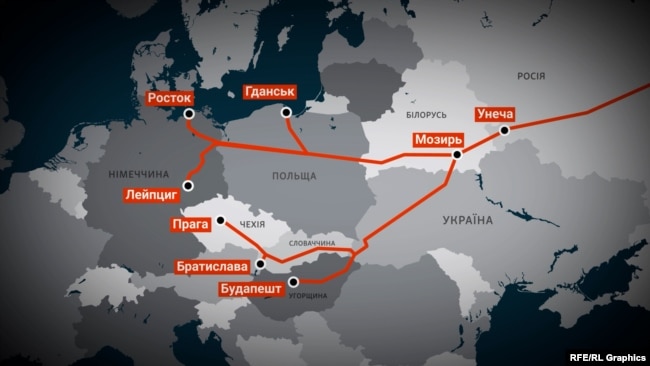
– You mentioned that Ukraine is opening the “Druzhba” oil pipeline, which was such a problematic issue during Viktor Orban’s time. There were many discussions, Russia attacked it. Now Volodymyr Zelensky says that it has already been repaired, and the Hungarian company MOL reported that it received a signal about oil pumping. Was there a choice for Ukraine not to repair this damaged pipe? And can we expect relations to warm up after this?
– I think this is like our European future – this is already decided, obviously. Everyone understood that the bombing of this pipe… By the way, maybe not everyone remembers, but once Ukrainians sincerely believed that Russia would not attack us because it would not want to risk the pipelines that go to Europe. And this was to a certain extent our security guarantee. A sort of mini-Ormuz Strait, Ukrainian style.
Obviously, this did not stop Russia, because the political weight — to force us to take a position in the Soviet stable — was much greater than those miserable few million barrels of oil being pumped.
But if I were, for example, in Ukrainian power, I would have taken a little longer to repair the pipeline.
– Why?
– Because if we’re saying that it was bombed and couldn’t be repaired earlier because it was so bombed that it would take a long time – well, it needs to be repaired. So yes, let’s repair it.
But it turns out that Madjar arrived – and the next day the pipeline was immediately repaired.
– So, the issue isn’t the repair, but politics?
– This allows people to conclude that the issue is more about politics than repair. It’s just hard to imagine that the completion of repairs coinciding with Madjar’s arrival could be so precise. It’s mastery at each individual stage.
It could certainly be said that now, with Madjar’s arrival, we’ll repair the pipeline together. That would be wonderful. And it would be good for Madjar. He could then say: I understand that the Russians bombed it, but we need it very much, and together with Ukraine – our specialists, our pipeline workers came together and repaired it.
– The European Commission also offered its specialists, I remember. But nonetheless, for Hungary, for Peter Madjar it’s still a plus.
– It’s a plus. It’s an obvious political tool. Orban has hit us on many fronts, there is no doubt about that.
It’s just more complicated to play: to help a partner, while showing that we have other matters besides pipelines. Well, we will repair it because we promised – you trust us, we promised, we have the strength. Our funds are directed to other needs. Sorry, the Hungarian pipeline is not a priority for us.
By the way, if it were a priority – you understand, it would be nice if you supported us there, there, and there. The result is the same, just a more complex and elegant game.
Trigger Points Between Ukraine and Hungary: What’s Left and How to Solve It?
– Speaking of downsides: what unresolved issues remain between Ukraine and Hungary? What should the Ukrainian authorities do now?
– I can’t imagine how, for example, Madjar will explain to a society so strongly influenced by the previous government – that Hungarians from Transcarpathia are suffering from almost enslavement by Ukrainian nationalists. And for this reason, Orban has been demanding all this time from everyone – from the EU, from NATO, from American partners – to restrain Ukraine and force it to respect the interests of Hungarians.
It’s hard to conceive, purely diplomatically, how Madjar will suddenly close this chapter. He also needs to constantly say now that we are very concerned about the situation, we are protecting our own – everything a politician needs to say. But at the same time – find ways to resolve it with Ukraine. Opening new schools, perhaps Ukrainian schools in parallel – to respect and balance partners.
Seek other options, yet still state that protecting Hungarians worldwide remains a priority for the Hungarian government. And, in principle, softly and intelligently try to address and resolve this issue, which has indeed accumulated. However, this will now have less and less of a political hotbed and will be more like relations between neighbors. They are not always perfect, but they are always neighbors.
– Is the issue of Transcarpathia currently one of the key issues?
– Transcarpathian Hungarians, well, and there are always various small issues. Business matters: transit, passage of freight vehicles, which are limited by licenses.
– The “Oshchadbank” money?
– I think regarding “Oshchadbank” money, Magyar already made the correct statement, noting that we saw a political performance – beautiful, all good, well done. Meaning that there was too much politics in that decision.
Therefore, softly and intelligently, everyone needs to say that, yes, probably the money should be returned. Well, everyone understands: planes don’t fly, valuables were previously transported by plane, now by car. Some may find this suspicious, but you understand that Ukraine cannot do it differently now. So, well, everyone got heated, it’s time to calm down and obviously return the funds because these are Ukrainian funds. And gently apologize to the “Oshchadbank” employees.
In turn, perhaps some unresolved issue from the Ukrainian side could be found that might also make a move to help our new partner strengthen their political position. Just play the correct, beautiful political-diplomatic game.
Sanctions wars: Will Russia win them?
– The European Union agreed to adopt the 20th package of sanctions. At the same time, the United States again lifted sanctions on the sale of Russian oil until mid-May. The Ukrainian authorities criticized this decision – as Zelensky noted, every dollar for Russian oil is money for war. What does such easing mean for the Russian economy? And doesn’t it free the Kremlin’s hands to continue the war, for which they can obviously now earn money through oil?
– You are now addressing a question that seems very simple. And to most Ukrainians, it seems that if the price of a hypothetical brand of oil reached $102-104, then compared to the budget that the Russians had planned, they now have a lot of money. Just not all Ukrainians understand how complex and professional this field is, and it requires expertise.
Just for people to understand: an oil tanker moves at the speed of a cyclist. And those tankers that left a month ago are still on their way. And therefore, the war in Iran, which has been going on for a month – not all tankers have even arrived yet. Not to mention that those tankers that left before the closure are still on their way and will be in transit for almost another month. And there is no such immediate impact.
Moreover, when talking about the complexity of Russia’s economy – if someone wants to dig deeper, they will discover that taxation from oil extraction occurs at the moment of extraction. This means that companies that have extracted oil and then loaded it onto tankers – or have not yet loaded it – have already paid the Russian budget. These funds have already been used by the Russian budget for the war. Or wherever they used them.
The opening, the closing – haven’t yet had an impact. This system inertia continues to this day. So, the oil that has already been extracted and paid for, which hasn’t yet been loaded or shipped – won’t bring anything more to Russia’s budget. So, there’s no need to panic.
Furthermore, I understand where you’re going with this.
But the Russian economy has entered such a complicated situation with systemic problems that cannot be remedied by increasing oil prices.
I don’t want to tell our Ukrainian patriots that everything is lost, or the opposite. But this is a very complicated mechanism that doesn’t simply affect the economy, including Russia’s.
Similarly, when the Americans temporarily allow licenses – don’t forget, they allowed the sale to those ships already en route. Again, taxes for these have already been paid to the Russian budget. This gives nothing to the Russian budget.
Companies are deeply in the red, even oil companies. The fact that they allowed another month – it’s obvious why the Americans are doing this. They are concerned about feeling constrained in the global energy sector.
And choosing between allowing Russia to sell oil, which doesn’t impact their defense budget anyway – it might be acceptable if it keeps oil prices at a favorable level, allowing Trump and his administration to negotiate from a position of strength.
– So does Ukraine overestimate the impact on the Russian economy?
– I think we are overly concerned about what’s happening with this growth. I want to share good news for Ukrainians:
the systemic problems in the Russian economy are much deeper, and oil won’t help them.
For example, currently in Russia, there are about 11 applications for every job. In Moscow, 4,500 stores have closed and 3,500 in St. Petersburg.
During the 30 years of this state’s independence, such panic among small and medium-sized businesses has never happened. Moreover, ironically, gasoline prices are rising, although oil prices should theoretically have the opposite effect, making it easier for Russians. No, that’s not happening because very interesting things are occurring. For instance, you can’t refine oil into gasoline and other light fractions, including jet fuel, without producing heavy fractions, which Russia typically sold abroad – like fuel oil and everything else.
But Ukrainian drones have made it so that Russia can’t even ship this fuel oil. It accumulates and prevents the refining of new oil.
These complex problems, which specialists definitely know – I am not a specialist in the oil industry – they will say that for a broader audience, it’s understood: high oil prices are bad because Russia profits, low is good. But the picture is much more complex.
And we need to be concerned, but we shouldn’t think it’s the end and that we can’t succeed.
We will defeat them anyway.
Are the negotiations on pause or at a dead end?
– Optimistic forecasts. I want to discuss the relationship between Russia and Ukraine further. Andrii Sybiha, the Minister of Foreign Affairs, stated that Ukraine is ready for a meeting between Zelensky and Putin anywhere except Moscow and Minsk, and that the Ukrainian side has also approached Turkey to organize this meeting. This is Andrii Sybiha’s second statement in a week about a meeting between Zelensky and Putin. Do you actually expect that it could happen soon? Is there anything that could make Putin sit at the negotiating table with Zelensky?
– You are right; there is nothing in the air right now that would force Russia to sit at the negotiating table.
And we realize that the increase in oil prices does not contribute, so to speak, to making such a decision in his mind.
But there are already symbols of things going poorly – this is Putin’s acknowledgment of economic and demographic problems in Russia.
Those who follow his speeches noted this with surprise: after four years of war, he finally spoke about the worsening economic situation.
However, from the logic of war we are currently observing, he is basically sending these people to death because he at least wants to fix something to sit at the negotiating table with. This “something” could be at least gaining the administrative borders of the Donetsk and Luhansk regions. This allows him to somehow explain: okay, we are sitting down for negotiations. Because Putin himself realizes – and he sees what is happening in Iran with the United States – that a country is not inclined to negotiate if it has been attacked, unless there is a Damocles sword of physical force hanging over it.
And therefore, he understands: as soon as he sits at the negotiating table, Ukrainians will feel much more comfortable. And his goal is to not give us this opportunity. Our task is to keep his troops at bay so that they just wear out against us, showing that this logic will not work.
And then sooner or later, he will have to sit at the negotiating table – or he will collapse, like the Soviet Union collapsed, having lost a much simpler war, which was the Afghan war.
This is where we are right now.
In short: there are no grounds for Putin to sit at the negotiating table right now, regardless of where the negotiations take place – whether it will be Istanbul, Almaty, Minsk, or elsewhere. Because I want to tell you that even earlier, when there were the Minsk agreements, there were other countries that offered their platforms. We would now know them not as Minsk but as Istanbul or Almaty, had other proposals been accepted back then – and there were even more.
– What is Istanbul’s role now? Can it become a mediator?
– The symbolic role of Istanbul is not very good for us because the first negotiations were held in Istanbul. And this fuels the Russian narrative that they are essentially demanding a return to the Istanbul agreements.
And if we move the negotiations to other capitals, we symbolically break this connection and say: no, you closed that stage in Istanbul. What you did, the fact that you even killed any chance of negotiations, what you did in Bucha, and so on – that completed that stage right from the start. And overall, the situation is different, as we have pushed you out of some of the territories you managed to occupy.
Therefore, in our interests, I believe, is to have a different name, different symbolism, a different capital, and essentially – a different rewritten document.
The Russians, evidently and logically for them, try to return to that document. And you remember, Lavrov repeatedly said there’s nothing new needed – allegedly, everything is already in the so-called Istanbul document.
– You mentioned statements and the position of the Russian Federation. They issue Ukraine ultimatums regarding withdrawal from the Donetsk and Luhansk regions, setting deadlines for when this should happen. The Ukrainian side firmly rejects these ultimatums. And it turns out that currently, there’s virtually no compromise in sight. The question arises: could there be a scenario where Ukraine might be forced into a “bad peace” on Russia’s terms? Do you foresee such a development?
– Well, figuratively speaking, they are already trying to force us into “peace.” Our peace, in reality, is to completely drive them out of our territory, right? There are certainly some people in Ukraine who would like to have a selfie against the backdrop of a burning Kremlin, but we are postponing this task for the future.
For now, we would like to stop this war.
And anyone urging us to stop now is advocating a certain compromise. How painful it is for us – this is our land. We have lost so much already, and to force us to do this now…
Sometimes it’s thought that diplomacy is only about finding a compromise. But sometimes compromise means its absence.
An uncompromising position is also a clear stance, which is easily conveyed to a partner, even to someone who believes they are much wiser and sees the situation more deeply than Ukrainians in their own land.
And when they say, “let’s finish now, it’s a convenient moment,” we respond: no, it’s an inconvenient moment, we are not negotiating from a position of strength. We are ready to negotiate, but don’t forget – we are negotiating about ourselves.
And, essentially, what is being stated now, and what Peskov allows himself, when he is offended, saying it’s about “a few unhappy kilometers of land” – well, then give them back to us! If they are “unhappy,” just leave our territories – and negotiations won’t be needed at all. Return them, leave.
That’s why sometimes our uncompromising stance is, in fact, a normal compromise.
– Ukraine talks about a ceasefire along the current line of contact.
– This is a standard approach in any war.
– Does the Kremlin have any leverage today, particularly in negotiations with the United States, regarding the situation with Ukraine?
– We see, first of all, a slight diminishing interest of the United States in negotiations regarding Ukraine. And this, frankly speaking, is a significant argument in Russia’s hands. Because when our strongest and most powerful partner is preoccupied with something else and cannot allocate enough time and attention – it undoubtedly, to some extent, strengthens the Russian position.
Then we need to, like “porcupines,” gather all our quills together and hold on until the political situation changes: until the Iranian war ends, the price of oil drops, the Russians and the Chinese learn their lessons, and the United States strengthens its position in the world and refocuses on other processes.
Europeans, who are increasingly realizing that they need to take control of their own continent, will tighten their grip and understand that this is our survival strategy. Until then, we must acknowledge that we are using it quite successfully.
– What about the negotiations? They are now reaching a “deadlock” because, as Volodymyr Zelensky has repeatedly stated, following the events in Iran and the Middle East conflict, interest has practically waned, and Trump acknowledges that the United States is now focused on Iran, not Ukraine, although he expresses hope for conflict resolution. Does this mean the “window” for negotiations is currently closed for some time?
– To be honest, what we’ve been observing was not classic negotiations. It was more of an active political dialogue between Ukraine and the United States. Essentially, we have nothing to “negotiate” with the United States—they haven’t attacked us, and thank God, we haven’t attacked them either.
All we did in this process was try to bring the negotiators’ positions closer. And frankly, we had the logic that it would be good for it to look like “two to one,” except that Ukraine should be “two,” and Russia “one.” Because sometimes Ukrainians feel like we are alone, and on the other side, it’s like there are two.
And that’s why the Europeans wanted to sit at this table. Not because they want to become part of the problem—they already have enough problems. But because they saw that Ukraine sometimes feels uncomfortable at this table, as if it’s not quite round—more like it’s narrow on one side and too “wide” for the two partners on the other side.
If even this political dialogue has stalled—nothing critical is happening as long as the Americans are occupied with other wars. And Ukraine can survive and hold on at this moment. That’s precisely what we are doing now. If we had reached the negotiation finale, and at that moment the Americans shifted their focus—it would have been much more painful and unpleasant. It’s good that we are at this point now.
– How long can this pause last?
– Well, the Russians scare us with stories of the “30-year war with Sweden,” Medvedev occasionally emerges from a binge and writes something like that. I don’t think it will be that way.
The question is, what is war? If it’s the scenario of Israel or South Korea, which live under constant threat but have managed to build a strong economy and normal social life—being formally at war—well, if that’s our fate, such a neighbor, then okay.
Of course, we’d like for it to end somehow. But there’s no certainty that even if it ends on paper—it will truly end in real life.
Maybe it’s not a very pleasant signal, but if we can survive as a normal state—as we define it for ourselves—having such a neighbor, then yes: everyone will know how to shoot and launch drones, but these are survival skills.
Maybe this is a historical stage we need to transform into a different Ukraine than we are now.
– It’s a matter of time.
– It’s a matter of time, but it is not “two or three weeks,” as a well-known character once said. That would be both unfair and illogical.
– In Kyiv, by the way, they have been expecting American negotiators Steve Witkoff and Jared Kushner since early April. It was reported that they might come to Kyiv. And Zelensky even criticized these envoys, calling their behavior disrespectful. They have traveled to Moscow several times but have not yet visited Ukraine. Is such public criticism justified? And what could it mean for Ukraine?
– I think, in this particular case, it will not end in anything. It’s more of an emotional outburst, which is understandable. We are indeed offended.
Those who have been in politics for a long time remember how different envoys traveled to Russia without even stopping in Kyiv or only stopping at Boryspil Airport. Back then, Ukrainian predecessors of Volodymyr Oleksandrovych had to travel to them to have any chance of negotiating with major foreign negotiators. Thank God, Ukraine is now on the map in the sense that no one needs to explain where Kyiv is.
And what President Zelensky rightly said – maybe it’s not very comfortable to travel 8-10 hours by train or car from the border, but this is because of the war, not because we lack planes or understanding of aviation transport.
From the perspective of the negotiation process, it’s evident that entering another country should be demonstrated. It’s hard to imagine full-fledged negotiations where you skip one of the parties.
But this further confirms my position: what we currently call “negotiations” is not fully negotiations yet. It is an exchange within the framework of an active political dialogue – exchanging positions, understanding where we will sit and negotiate. So there is nothing critical. It was unpleasant and offensive to us that they went. But we are already a mature nation, and we understand emotions and can say: well, let them go. Moreover, I don’t see much progress from their negotiations.
NATO’s Dissolution: Should We Be (Un)Afraid?
– Finally, I want to ask you about NATO. Trump stated that he is seriously considering the US withdrawing from the Alliance, although Secretary-General Mark Rutte says he is confident the US will not take such a step. How seriously should these political signals be taken? Could the US really leave NATO? And what should Europe do then – is there an alternative to the Alliance? And could Ukraine be part of it?
– Firstly, experts, especially on American relations, will remind you that in the latest budget approved under US law, it is specifically stated that Trump does not have the right to make decisions about leaving NATO. The fact that this was written shows how much American legislators are aware of the danger. However, this budget is in effect, if I’m not mistaken, until October and may be rewritten in a new one. They have a specific budget – it’s a broad law that allows for the inclusion of other provisions. But this is purely formal.
Could Trump find a way to bypass this restriction? He could. France once also found an explanation to withdraw from NATO’s military structures: it almost completely froze and physically curtailed its presence, and after many years, returned.
It is evident that the United States is the center of the entire Alliance. It is not just one of the members but the nuclear “umbrella” that forms its foundation. All these forces possessed by the Americans surpass the capabilities of others by tens of times—this is a fact. Yet, it is the nuclear potential that is the key to deterring Russia, as only these two countries have such vast nuclear arsenals. Therefore, a potential exit by the U.S. would be a painful blow that could truly undermine the existence of this organization.
Is there a European alternative? Not quite an alternative, but it is clear that Europeans should have been acting more actively long ago. At the same time, aside from purely European formats, other alliances are emerging—such as the British-led expeditionary forces, which include Northern European countries. These are our best friends, who best understand the threat from Russia, and that’s where our place is. We are already effectively a conditional, informal member—much like in NATO. Joining European defense structures is a matter of time.
Can Europeans counter global threats independently without the U.S.? This is a complex question. Meanwhile, Americans rightly believe that after World War II, Europeans learned to live in peace with each other: today there is no internal conflict in Europe that threatens humanity. Yet, there are many hotspots around the world where American presence and security are needed.
– There is no need to worry about the fate of the Alliance now.
– I suggest worrying about our fate. The Alliance has already survived many challenges—and it will survive this one too. But once we become part of it, then we will worry about the fate of this Alliance.
(The conversation’s text version prepared by Yaroslava Trygubova and Olha Armyanyshyna)
On the cover: Vadym Prystaiko, head of Ukraine’s Mission to NATO (2017–2019), Ukraine’s ambassador to the UK (2020–2023), Ukrainian Minister of Foreign Affairs (2019–2020), in the Radio Liberty studio. Kyiv, April 22, 2026
Copyright © 2021 RFE/RL, Inc. Reprinted with permission from Radio Free Europe/Radio Liberty
