
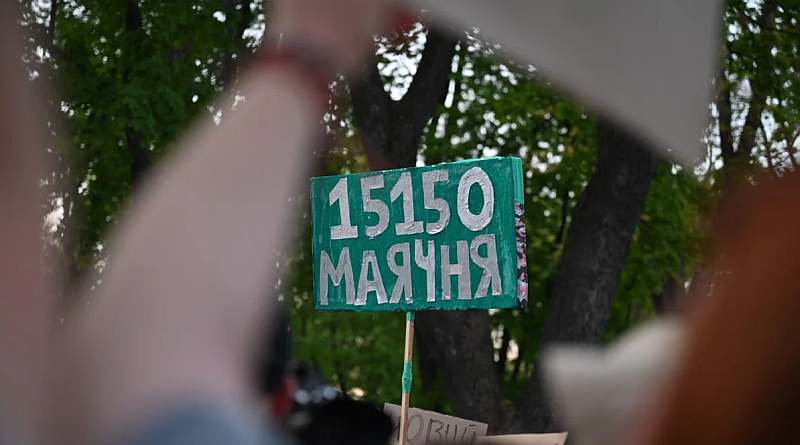
The Verkhovna Radaadopted in the first readinglarge-scale amendments to the Civil Code.According tothe co-author, Speaker of the Verkhovna Rada Ruslan Stefanchuk, this substantial legal reform was “prepared within the walls of parliament for nearly seven years”.
Over 800 pages, nine books, thousands of articles, hundreds of novelties, which could change the life of every Ukrainian, provoked intense discussion and criticism even at the registration stage.LB.uawrote about this in the articles “Family under State Supervision: What the New Civil Code Really Changes” and “The New Civil Code: An Attempt to Attack Freedom of Speech“.
The adoption of the draft, although not final, sparked a new wave of criticism. In particular, there is much talk about “moral decency” — a not fully understood concept that, according to the new Civil Code, should guide the actions of Ukrainians.
There are other sensitive topics as well: notarial divorce, penalty for broken engagements, inheritance of cryptocurrency, wills for biomaterial, permission for in vitro fertilization only for medical reasons, etc. How will judges determine what constitutes a moral act, and what does not? Will parents legally be able not to pay child support? And will there be a legal way to seize someone else’s house?LB.uagathered explanations and evaluations from lawyers.

Moral Decency
“Moral Decency” is a new construct that the Civil Code project proposes as an overriding principle. Article six defines this concept as “a set of moral norms and principles, standards of ethical behavior, and generally recognized notions of proper conduct established in society”.
Lawyer of the company Gracers, Yaroslav Malik, says that introducing this term into the legal framework is “a fundamental problem because no law or regulatory act contains a list of what is considered good practice.”
This word is used many times in the code not only concerning property relations but also in the family sphere, the validity of contracts, and wills.
How will good practice work in practice? “A judge will decide at their discretion what is morally acceptable and evaluate the transactions and behavior of the parties based on this,” warns Yaroslav Malik.
Lawyer of the company Eternix, Viktoria Havrylkina, considers the concept of “good practice” evaluative and warns that it may “lead to unlimited interpretation, considering different factors depending on the situation.”
Judicial Reconciliation
Another novelty in the family block is the mechanism of judicial reconciliation of spouses, which MP Inna Sovsun from the “Holos” faction called a “Soviet relic.”
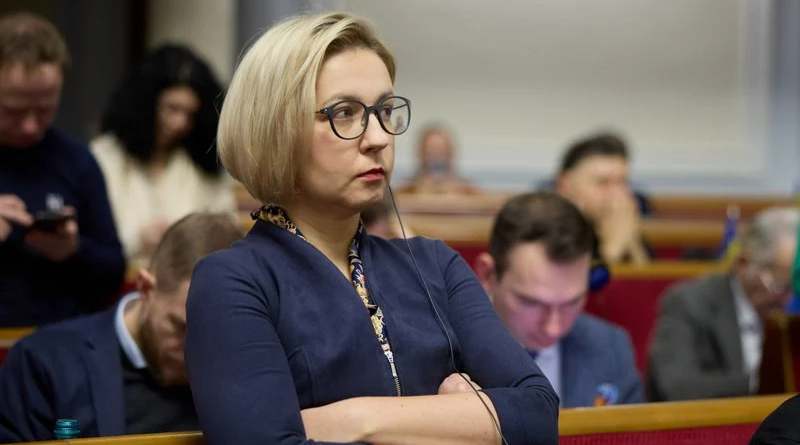
Yaroslav Malik explains: if the judge, guided by their understanding of good practice, decides that divorce is an immoral decision, they can initiate reconciliation. “Such authority contradicts Article 8 of the European Convention on Human Rights, which guarantees everyone the right to respect for private and family life. Forced state intervention in adults’ decisions to terminate a marriage without their consent and based on the judge’s evaluative judgment, in my view, violates this right,” says the lawyer. He believes reconciliation can be offered as an option, but it should not block divorce, “as this already forces people into certain actions.”
Viktoria Havrylkina points out important limitations of reconciliation: “Firstly, reconciliation measures are not used if domestic violence has occurred or there was other unlawful behavior (part 5 of Article 1513). Secondly, the goal is not to force living together: there is a period of up to six months to agree on the consequences of divorce if there are children (part 2 of Article 1513). Thirdly, mediators or social services centers are offered to assist in court reconciliation (Article 1553).” The lawyer believes that the norm is more balanced than it appears at first glance, although there is a risk of its expanded application.
Compensation for Broken Engagements
The project introduces the concept of engagements (Article 1488) and provides for liability for breach of obligations arising in connection with them. Engaged are people who have mutually promised verbally or in writing to marry. The person who refuses marriage after engagement is obliged to reimburse the other party for wedding preparation expenses and compensate for moral damages.

A similar provision exists in the current Family Code (Article 31), so there is no fundamental novelty here, except for the direct indication of the possibility of moral damage compensation.
“Personally, I don’t believe in the effectiveness of moral damage compensation, although I often practice claiming it. This is more about the need to establish the fact of harm rather than to receive compensation,” comments managing partner of the company “Prylutska & Partners” Nina Prylutska. According to her, the current law does not offer criteria for determining the amount of compensation, and the new Civil Code project does not establish them either. Therefore, “demanding compensation for moral damages of a million hryvnias doesn’t necessarily mean receiving even one hundred thousand hryvnias, regardless of the situation,” says the lawyer.
Viktoriya Havrylina draws attention to another danger of this provision—not procedural, but substantive. In her opinion, the engagement provision “can become a tool of psychological pressure in practice, as it introduces penalties for refusal to marry,” and “may undermine the principle of the voluntary nature of marriage,” enshrined in Article 1480 of the Code. The list of circumstances exempting from compensation: serious illness, having a child, criminal record, gender change, previous marriage, etc.—is also not exhaustive, “as each person will have their own significant circumstances.”

How to prove the very promise? The new Civil Code stipulates that engagements should take place “in a solemn setting or according to custom”; Nina Prylutskа interprets this as a public event involving parents, relatives, and witnesses, “which will create sufficient evidence of the promise to marry.” The lawyer believes that the right to compensation for moral and material damages is a way to protect against fraud or partner’s tricks, “compensation for damages should not be equated with coercion into marriage.”
Forced Change of Last Name
According to the draft of the new Civil Code, a former partner can demand through the court that the other returns a premarital last name if they committed an “immoral act.” The list of such acts includes adultery, domestic violence, and criminal offenses. However, according to Yaroslav Malik, it is not exhaustive. What acts outside this list are immoral will again be determined by the court at its discretion. At the same time, the procedure for changing the last name in documents is lengthy and costs money.
According to the lawyer, the norm on depriving a last name is a potential tool of pressure in property and custodial disputes. The party wishing to complicate the position of the former partner may gain an additional lever: initiating the process of returning the last name, complicating parallel proceedings. Without clear normative criteria for an immoral act, such procedures will become “not a protection of dignity, but a legal resource for abuse,” warns Yaroslav Malik.
Victoria Havrylkinа also believes that allowing one spouse to demand the depriving of the other’s last name for unworthy behavior can be interpreted too broadly, creating a “systemic risk inherent in the construction of the norm.”
Notarial Divorce
The draft provides for the possibility of a notarial divorce without court involvement. It gives the notary the right to make a record of the dissolution of marriage, and Article 1511 allows for the dissolution of marriage by joint application without lengthy court proceedings.
According to Yaroslav Malik, this is a reasonable step to alleviate the court system. Currently, for couples with children, this path is closed: even if the spouses have fully agreed on all divorce terms, the presence of children returns the case to the judicial-mediation track.
The lawyer states: “The idea of protecting the child’s interests in divorce is important, but without clearly defined timelines for these procedures and boundaries of the mediator’s powers, the norm turns into a mechanism of delay rather than protection.”

Nina Prylutska evaluates the situation differently. In her opinion, a notarial divorce will protect the child’s interests “relatively, but certainly better than the current Family Code.”
It is important that the legislator directly obliges parents who intend to divorce to first agree and notarize their arrangements for the distribution of parental responsibility and child support. At the same time, the notary is obliged to review the agreement and determine whether it takes into account the “best interests of the child.” This concept is partially outlined in Article 1476, which is meant to assist the notary.
Victoria Havrylkina believes that the ability to divorce at a notary is much more effective in protecting the child’s interests than a lengthy court process, as it immediately provides for an agreement between the parents.
Infertility as a Ground for Divorce
During the preparation of draft law No. 15150, a provision was removed which in the previous version (No. 14394) established “unwillingness to have a child” or “inability to conceive” as independent grounds for divorce.
“This is the right decision,” comments Yaroslav Malik. “Linking legal consequences to a person’s physiological characteristics is direct discrimination based on health status and is incompatible with Article 14 of the European Convention on Human Rights.” He warns that it is important to ensure this logic does not return through an expanded interpretation of moral standards.

Victoria Havrylkin warns: the issue of health status has not disappeared from the code, it has only changed form. According to her, the code requires couples to be mutually informed about health status (Article 1487), and concealing circumstances of significant importance, including health status, can be grounds to declare a marriage invalid (Article 1497). In the lawyer’s opinion, this norm can be used to exert pressure in property matters.
Property Risks of De Facto Unions
Victoria Havrylkin points out that the draft extends the regime of property communalization to people who live together without registering a marriage (Article 1474). And this “creates risks of unexpected property claims after the end of the relationship.”
That is, couples who intentionally do not register their marriage to avoid dividing joint property in case of separation, under the new Civil Code, might find themselves in a situation where property consequences arise automatically. The lawyer says this is a fundamental change in regulatory logic that requires broad public discussion.
How to Legally Avoid Paying Alimony
Article 1623 provides that a court may relieve an alimony payer from such an obligation if the income of the alimony recipient exceeds the income of the payer and fully meets their needs.” Inna Sovsun, speaking in parliament, modeled a situation: a mother living with a child takes on two jobs to provide the child with food, medical care, clothing, preschool or school. The father, to whom the “child is indifferent, needs only to get a job at minimum wage, and receive the rest, for example, in an envelope.” Formally, his income will appear lower, and the court will relieve him from alimony. “The child’s mother is left to look for a third or fourth job,” Sovsun said.
She also criticizes the legislators’ decision to reduce the period for recovering unpaid past alimony from the current ten years to one. That is, if a person who has been evading paying alimony for many years is brought to justice, the debt can be recovered only for one year.

Inheritance of Digital Assets
The new law enshrines the right to inherit digital assets, such as cryptocurrency. “It’s a right and progressive decision — reality has long surpassed legislation,” says lawyer Yaroslav Malik. However, without accompanying regulations, this rule remains rather declarative.
“Open questions include who and by what methodology assesses a crypto wallet at the time of inheritance opening if the rate is volatile? What happens if heirs do not have access to the private key? Without answers to these questions, notaries will find themselves in a legal vacuum in each such case,” warns the lawyer.
Another good provision that needs clarification is the recognition of the right to reparations as inheritable. The law does not establish from whom reparations are collected, in which international legal mechanism, by what document the initial right to them is fixed, and how this correlates with the future compensation regime. “Until these issues are resolved, the provision is not an instrument, but only an intention,” Yaroslav Malik notes.
Will Regarding Biomaterial
The project provides for the right to make a will for reproductive biological material. Yaroslav Malik calls this a “humanitarianly important novelty, especially in the context of people’s losses during the war.” However, he warns that without amendments to the laws establishing bioethical norms, this will not work as intended.
“Open questions remain about the terms of material storage, the testator’s capacity at the time of will expression, the legal status of a child born after the death of the biological father or mother, particularly regarding the order of inheritance,” says the lawyer.
Artificial Insemination “for Medical Indications”
Article 305 stipulates that artificial insemination is possible only for medical indications: when doctors have confirmed that a person is infertile and other treatment methods have not yielded results. Lawyer and Kyiv City Council deputy Viktoria Ptashnyk criticizes this idea, especially that confirmed infertility and a woman’s age under 41 are included in the medical indications (according to state programs). It concerns the right to the first IVF for a woman up to 40 years old financed by the state.

Many couples using the option of in vitro fertilization after forty will still not be able to do so at the state’s expense. Victoria Ptashnyk suggested that this norm was introduced to “create a business with infertility certificates” or force reproductive clinics to “negotiate.”
Property Revolution
If the family block provoked the loudest resonance, then, according to Yaroslav Malik, “the property block creates significantly more serious systemic consequences.” The project proposes several new mechanisms that will operate as an interconnected system. And it is capable of fundamentally changing the logic of acquiring and protecting property rights in Ukraine.
The first mechanism is the acquisition of property rights to real estate after ten years of actual possession.
Acquisitive prescription exists in the current Civil Code and in most European legal systems. Its meaning is to legalize prolonged bona fide use of property in situations where the legal title is not formalized or did not exist for objective reasons. The key condition is good faith.
The threat is not in the institution of acquisitive prescription itself, but in its combination with the institution of possession and the priority of the registry record. The lawyer describes a possible illegal scheme: a person unlawfully seizes property, registers a property right to it through corrupt or technical mechanisms, and resells it to a “bona fide acquirer.” Then the statute of limitations expires, and recovery becomes impossible. “This chain of actions is a real threat to forest plots, coastal strips, and cultural heritage lands that have been outside the state’s registry control for years,” says Yaroslav Malik.
Second: the mechanism of possession—actual control without ownership. “This is the most controversial new law of the property block,” says Yaroslav Malik.
Articles 568–591 of the draft introduce the institution of possession, known from Roman law: legal protection of actual control over an item regardless of the presence of legal title. At the initial stage of a property dispute, Article 583 prioritizes actual control rather than legal documents. According to Yaroslav Malik, a person can build a fence around someone else’s house, place security there, and already at this stage receive legal protection as a possessor. Meanwhile, the lawful owner, who could not control the property due to evacuation, occupation, illness, or being abroad, is hypothetically in a worse legal position than the person who took possession of their property.
“Such an institution, though it can be effective, requires independent courts and transparent legal instruments,” notes Yaroslav Malik.
Thirdly, the mechanism of deprivation of property rights for public interest. Article 404 replaces the constitutional standard of societal necessity with a broader one—public interest, which includes the interests of the state, society, territorial communities, etc.
According to Yaroslav Malik, this is a direct conflict with part 5 of Article 41 of the Constitution, as forced alienation is permissible only as an exception and only under conditions of societal necessity. Vague wording without a closed list of grounds, without mandatory prior compensation, and independent judicial control before alienation—this is “a potential basis for systemic appeals to national courts and the European Court of Human Rights.”
LGBT Rights Outlawed?
The new draft of the Civil Code, like the current version, defines marriage as a union between a woman and a man. Nina Prylutska emphasizes that both the new draft and existing versions of the Civil and Family Codes deny the possibility of same-sex marriages or marital relations between people of the same sex.
Different is the concept of a family. According to the lawyer, a family consists of people who live together, are connected by a common household, and have mutual rights and obligations. “As a general rule, it is not necessary to be married to create a family,” emphasizes Nina Prylutska. She reminds that last year, the Desnyansky District Court recognized the fact of cohabitation as a family (de facto marital relations) between two men since 2013. However, the court did not recognize the same-sex marriage even though these men entered into it in 2021 under the law of the American state of Utah.
“Thus, same-sex couples are not recognized as a family because it contradicts the fundamental principles of Ukrainian legislation. And the new Civil Code has not addressed this gap,” says the lawyer. In her opinion, such practice contradicts the fundamental rights and interests recognized by international norms, “but perhaps the Ukrainian society is not yet ready for such changes.”

Assault on Freedom of Speech?
Lawyers from the company YouControl have pointed out another set of problems this project creates — digital. Four rules scattered across different articles of the code collectively pose a threat to freedom of speech, journalists’ work, and public access to information. LB.ua has already written about how these rules can block journalistic investigations. Despite criticism, they remained in the first reading version.
Firstly, the right to be forgotten. Article 328 allows a person to demand the removal of information from search engines and databases if it has “lost public interest.” The idea itself is not new: a similar mechanism exists in European law. However, there it is accompanied by clear criteria and procedures. In the project, this criterion of public interest remains vague and undefined.
In practice, any official, businessman, or politician can demand the removal of inconvenient publications, claiming that the information is “no longer relevant.” Investigative journalists, media archives, anti-corruption databases will be under direct legal pressure. YouControl insists: data from open sources should be deleted or anonymized only if they are illegal or unreliable — in accordance with Article 8 of the Law “On Personal Data Protection,” and not based on a subjective assessment of public interest.
Secondly, the right to privacy for legal entities: when business effectively gains the right to hide from scrutiny. Articles 345 and 353 introduce the concept of a digital image of a company and require its consent for data processing. YouControl warns: this could significantly complicate the verification of counterparties and limit business transparency. This rule will complicate the work of journalists investigating corporate structures and company connections. It also threatens the work of analytical platforms and open data registries. The rule provides organizations (legal entities) with a level of protection that is usually reserved for people (private individuals) in democratic societies.
Thirdly, articles 321, 332, and 336 introduce the concept of digital privacy in such broad terms that it “may restrict access to public information and the work of OSINT tools.” In particular, creating an analytical dossier based on open data without a person’s consent may qualify as a violation. This is a direct threat to data journalism, investigations, and monitoring organizations that work with public information. Gathering information from open registries, social networks, public documents—all potentially fall under the new prohibition. YouControl proposes to clearly limit the concept of digital space to accounts and profiles created by the individual themselves, to avoid blocking the processing of public data.
Fourthly, the right to informational tranquility. It is designed to protect an employee from the obligation to respond in work chats during non-working hours. The idea is humane and understandable. However, the wording is so broad that, as YouControl warns, “it may be applied more broadly—in particular, to pressure journalists and restrict publications.” A politician, official, or businessman who does not want to comment on inconvenient investigations gains a potential legal tool to refuse any communication, citing the “right to tranquility.” Editorial offices requesting comments from officials may find that silence becomes legally protected. Therefore, YouControl insists that this rule must be specifically limited to the sphere of labor relations, so as not to affect access to public information and media work.
What’s next?
According to Member of Parliament Inna Sovsun, lawmakers can submit their amendments to the second reading of the Civil Code draft by May 19.
Some have already appealed to the National Agency for Corruption Prevention to check the draft for corruption risks, while the Ministry of Justice reported that it did not have time to process the text before its adoption in the first reading.
“This in itself is a worrying signal,” says lawyer Yaroslav Malik. For the second reading, he proposes, among other things, to return the constitutional standard of societal necessity instead of public interest in property rights; establish a direct prohibition on the acquisitive prescription regarding property that was dispossessed as a result of an offense; introduce special guarantees for property owners in occupied territories, internally displaced persons, and the mobilized; and also abandon excessive state regulation of citizens’ personal lives.
Nina Prilutska positively assesses the unification of civil and family law in one code. However, she predicts that the rights of same-sex couples are unlikely to be protected in the final version of the law.
Victoria Havrylkina considers the use of evaluative concepts to be the key problem. In her opinion, for the second reading, it is necessary to outline clear boundaries for the concepts of “honesty,” “unworthy behavior,” and “circumstances of significant importance.” Without this, the code risks becoming not an instrument of rights protection, but a space for their violation.
On the cover: During a protest against the new Civil Code, May 5, 2026. Photo: Zoryana Stelmakh/LB.ua
