
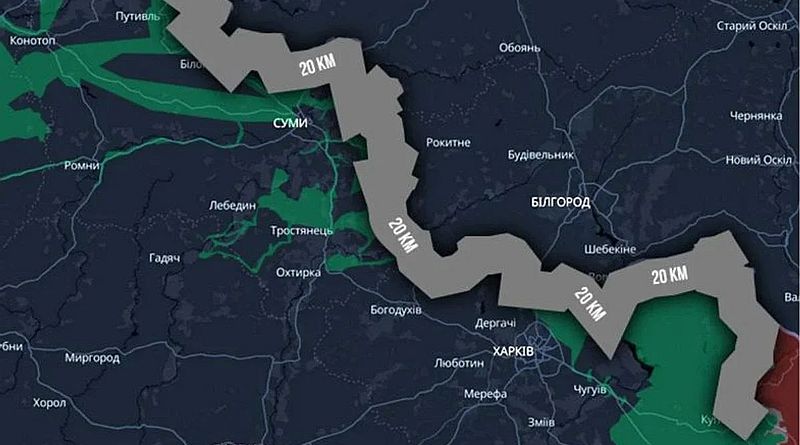

The statements from the Kremlin about the alleged breakdown of the “agreements” of the Anchorage summit demonstrated the usual strategy of Russian diplomacy, where any informal contacts are turned into a tool for blackmail and a pretext for another wave of aggression. Reports from sources indicating that Moscow no longer intends to return the captured areas of the Sumy and Kharkiv regions to Ukraine reflect the true nature of the aggressive policy hidden behind the rhetoric of seeking compromise.
After last year’s meeting in Alaska, the Russian side tried to create the illusion of readiness for territorial concessions, but the first harsh statements from Washington became a convenient excuse for the Russian leadership to renege on its promises. The desire to retain the occupied areas of the northeastern regions of Ukraine under the guise of so-called buffer zones proves that the Kremlin’s expansionist strategy remains unchanged, and international negotiations are used solely to buy time and legitimize the occupation.
The manipulations around the outcomes of the Anchorage meeting led to the formation of new ultimatums, according to which Moscow agrees to sit at the negotiating table only after the complete capture of the Donetsk region. Promises by the Russian Ministry of Defense to complete the occupation of Donbas by the end of the current year appear extremely dubious. Internal assessments within the Russian armed forces indicate that the real timelines are extended at least until the end of 2027, as Ukrainian troops offer stubborn resistance.
The creation of so-called buffer zones in the Sumy and Kharkiv regions becomes a constant source of instability, which completely undermines any chances for a peaceful resolution. The Russian leadership tries to present its inability to achieve quick successes on the front as a meaningful strategy, although the prolonged war is actually leading to the depletion of the country’s human and economic resources.
In light of the rejection of informal agreements, three main scenarios for the development of events are visible, each of which carries serious risks for Russia itself.
The first scenario involves a low to medium-intensity war of attrition, lasting another year and a half and requiring colossal financial expenditures from Moscow. Attempts to advance in the Donetsk region will result in huge losses, and the need to hold the occupied territories of Kharkiv and Sumy will tie up significant aggressor forces.
The second scenario is associated with further escalation of aerial terror and attacks on Ukrainian infrastructure, through which the Kremlin hopes to force Kyiv and Western partners to capitulate. This approach only amplifies the retaliatory military response, international isolation of Moscow, and provokes the introduction of strict economic sanctions, including restrictions on the export of hydrocarbons.
The third scenario involves the inevitable economic and military overstrain of the Russian system, where enormous costs for continuing hostilities will be in irreconcilable conflict with declining budget revenues. The refusal to return Ukrainian lands destroys the diplomatic platform, leaving the Russian economy under pressure from sanctions and devastating blows to the fuel sector.
The behavior of Moscow after the summit in Alaska clearly confirms that with the current Russian leadership, it is impossible to build a stable system of agreements. Any talks of compromises serve only as a facade for preparing new military operations, and claims on Ukrainian territories demonstrate a complete lack of desire to stop the bloodshed. The attempt to turn the occupied territories into permanent buffer zones will become a trap for the aggressor, leading to a deep internal crisis and final strategic defeat.
On the cover: The approximate view of the “buffer zone” that the Russians want to create in Sumy and Kharkiv. Infographic: UP
