

I increasingly encounter in online dialogues that our problems with power are because there have never been ideological parties in Ukraine, only leadership ones. What nonsense! When such an idea spreads in the social environment, it means only one thing – someone wants to push through a fierce, dark horse, no-name, marginal project in the elections. I’ll try to prove it.
I’ll start not with the history of politics, but with the history of popular music. Why?
The fact is that winning an election competition under electoral democracy conditions is relatively high popularity of the project at the time of elections among those who will participate.
The same is true in popular music. If a melody hits, concert venues will be packed, and sales will skyrocket. As it turns out, its quality, from the perspective of professional evaluators or incompetent connoisseurs, does not matter much.
There are many compositions and performers that were rejected for a long time by both the industry representatives and the public, until they “went viral” and exploded in popularity worldwide. There are countless examples. The first two albums of “Queen” were called “a second-rate copy of Led Zeppelin.” The band “Nirvana” barely sold 40,000 copies of its album over several years in its early years. Stefani Germanotta (Lady Gaga) signed her first contract with the Def Jam label, but she was released after just three months. Producers considered her “too weird” and did not believe her theatrical pop style would work. She performed for years in Lower East Side clubs where she was often ignored or ridiculed…
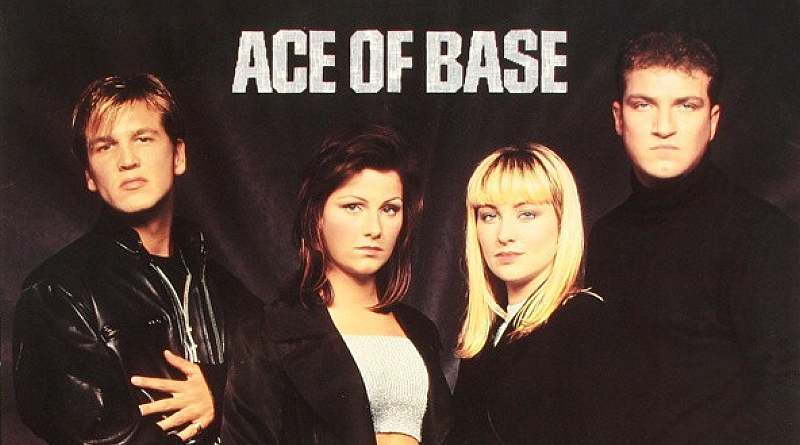
In my youth, a cool band “Ace of Base” was popular. If Facebook doesn’t lie, it was the youth of more than half my audience too. Many of us hummed “It’s a beautiful life, oh oh oh oh” or sang along:
“Happy nation living in a happy nation”
“Where the people understand”
“And dream of the perfect man”
“A situation leading to sweet salvation”
“Freedom for the people, a lucky pride.”
This band was doomed to fail due to the quality indicators of their songs. Their popularity resulted from a simple unhappy accident. The legendary Denniz Pop, founder of Cheiron studio, wanted to throw away the tape with their songs after the first listen. He strongly disliked the music. However, the car stereo (he was listening in his car) refused to eject the cassette. He was forced to listen to it several times in a row. After numerous listens, “Mr. Ace” didn’t seem so terrible and even quite good. So, when the tape player was repaired, he invited the band to the studio, they added arrangements, and “All That She Wants” was born. Any shit you are made to listen to several times a day, especially in neutral, relaxed situations, will soon evoke many pleasant emotions and become your favorite track. As “Tartak” once sang: “Play this song on the radio!”
The relations between political projects and voters completely mirror the relations between a musical composition and listeners. If you play a simple melody on a theme that easily fits the mass everyday worldview several times a day, for the listener it will become the greatest song of all. Elections in conditions of electoral democracy with universal suffrage are show business in the field of pop music. Why?
Imagine a graph, with the “X” axis representing the scale of voters’ ability to analyze a political project or the desire to analyze it, and the “Y” axis – the number of people who belong to certain indicators of this scale. This graph will be a Gaussian curve, where the majority will have moderate abilities for political analysis and the desire to apply them. Those who are either zero or extremely lazy — about a quarter, as well as those who can evaluate the project or are responsible enough to certainly do it before choice. The show business technologies I’ve described above with examples work better on the left side of the graph. The right side of the graph is usually not much susceptible to them. Thus, we have about 75% who will vote according to the desires of “producers” and 25% who will be guided by their own taste, independent of repetition and mass. Meritocratic democracy, through testing using machine algorithms, cuts off the left half of the electorate – those who cannot analyze political projects or do not want to take this responsibility.
As a consequence, modern democracy is the same as feudalism. Your belonging to an affluent family gives you the funds for promotion, or your incompetence and bias, interesting to producers, make you “great.” It is the legalization of the king and those in his shadow through the illusion of choice. With universal suffrage, there is no competition of ideas, programs, or reputation. Three-quarters cannot evaluate this.
It is a competition of “producers” and “investors” who trap the voter in a car where a tape with the next crap is stuck in the tape player.
