
Timothy Ash / Translation by iPress
Senior strategist at RBC BlueBay Asset Management and fellow at Chatham House, Timothy Ash, believes that the war in Iran, initiated by the Trump administration, has fundamentally changed the geopolitical landscape and, unfortunately, prolonged the war in Ukraine – primarily due to the sharp increase in Russia’s oil revenues. At the same time, Ukraine is demonstrating new confidence: by developing its own defense industry, including drone technologies, it has become a key strategic partner for Europe and the Gulf countries. Paradoxically, it is the weakening of American support that has forced Ukraine and Europe to rely less on Washington and more on each other. Thus, the question is no longer how to protect Ukraine under the NATO umbrella, but how to extend the Ukrainian defense umbrella over all of Europe.
The war in Iran has diverted attention from the war in Ukraine. This possibly reflects the fact that global markets now seem more vulnerable to events in the Gulf than to events in Ukraine, to which global markets have, in many respects, developed a certain resilience over time.
US efforts to achieve peace in Ukraine also seem to have taken a back seat – figures like Vitkoff, Kushner, and others were involved in attempts to broker a peace deal with Iran, leaving less attention and fewer visits to Ukraine, although ultimately, in over a year of these attempts, they have made little progress. This is also understandable, considering that the war in Iran now seems to have more existential significance for Trump’s ratings and the Republican Party’s chances in the midterm elections.
As for Russia and Ukraine, both sides also seem to have gained new energy or momentum from events in the Gulf, making them believe they can hold out longer for victory in their own war.
For Russia, the war in the Gulf has brought much-needed economic relief. Before the US and Israel struck Iran, there were many signs that tightening Western sanctions against Russia, along with increasingly successful Ukrainian strikes on its energy infrastructure, were taking effect. The discount on Urals oil compared to Brent reached almost a third, oil production and export volumes were declining, and energy export revenues were about half of the level before the full-scale invasion. The trade surplus shrank, and the budget deficit for the first two months of 2026 rose to 1.5% of GDP, almost the target for the entire year. Russian authorities were forced to consider raising taxes and cutting spending to restrain the deficit.
And then, due to Trump’s idiotic decision to start a war with Iran, Russia’s macroeconomic situation received a lifeline. Urals oil prices almost doubled, and although Ukrainian attacks continued to limit the increase in production and shipment of oil batches, the US Treasury eased sanctions on major Russian oil companies, allowing Russia to sell part of the 140 million barrels of oil stuck at sea. This literally became a “manna from heaven” – pulling the Russian economy out of the budget and credit noose that was tightening, thus helping it to sustain its military campaign longer. Data from the International Energy Agency shows that Russia’s energy revenues in March were over $9 billion higher than in February and almost $5 billion higher than for the same period last year. Russia now expects the war in Iran to fill its treasury, helping it to continue its war against Ukraine longer.
Russia also assumes that if the US spends scarce air defense munitions in the Persian Gulf, this means less availability of such aid for Ukraine, and therefore, its defense will eventually collapse under the continuous Russian barrage of drones and missiles.
Moscow is also driven by the expectation that the war in Ukraine will further weaken the NATO alliance since Trump intervened in Iran against the interests of key European allies and NATO partners. In the Kremlin, they likely anticipate future rifts between the US and NATO allies regarding Greenland and so on. Keep an eye on this, or rather, Moscow is already watching it, believing that the weakening of the NATO alliance reduces the West’s ability and willingness to continue supporting Ukraine. Putin continues to think that he can outlast the West on the issue of Ukraine, and Trump’s latest adventures in Iran have only strengthened this belief. It seems to me that Putin thinks: after the failure in Iran, Trump will want to return to a peace deal on Ukraine for the sake of at least some victory, but this will likely mean again imposing a bad deal on Ukraine, beneficial to Russia.
On the Ukrainian side, I also sense new confidence.
Firstly, Ukraine has endured a harsh winter both in terms of temperatures and the strength of the Russian onslaught. And all this amid reduced support from the US. Just recall J.D. Vance’s gloating statement this week that his greatest achievement in office was stopping aid to Ukraine. And this was aid for protection against Russian drone and missile strikes on Ukrainian critical infrastructure and civilians – war crimes and genocide. Perhaps Vance should look at his own moral compass, not the Pope’s. Fortunately, it’s now getting warmer in Ukraine with the approach of spring, which eases the pressure on the civilian population.
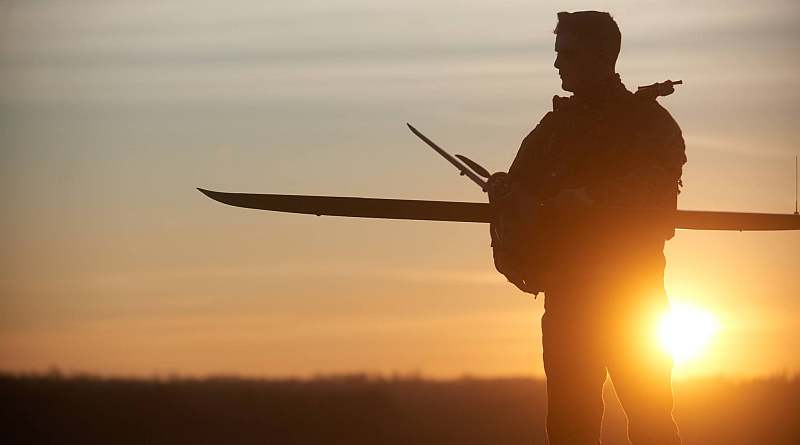
Secondly, Ukraine has achieved more success in both stabilizing the front line and striking Russian energy infrastructure with long-range drones. Both of these factors seem to be linked to progress in drone technology. This helps compensate for Ukraine’s shortage of human resources but also enables it to take more active measures – halting the Russian advance and even achieving small successes. This was evident this week during a fully robotic assault on Russian positions, which allowed Ukraine to capture territory.
Regarding long-range drones, Ukraine seems to have gained some tactical advantage and is ready to take advantage of this possibly narrow window of opportunity to weaken Russia’s energy export capabilities. Reuters reports that recent attacks on Primorsk, Ust-Luga, Black Sea facilities, and other sites may have affected up to 40% of Russia’s oil export capacity. Previously, Ukraine appeared restrained by requests from Western allies not to cross the line in attacks on Russian energy assets due to fears of negative impacts on global markets. However, after Trump seemingly struck Iran against European interests in keeping energy prices low, Ukraine might think: well, then there are no more restrictions for us. The logic, as I see it, goes: if Russia benefits from high oil prices, it’s best to try to limit its export volumes by attacking the export infrastructure, especially since Russia can still sell oil at sea and now also benefits from U.S. easing sanctions. I think Ukraine reasons: “if the U.S. acts in its own interests, ignoring Ukraine’s interests, and limits aid to Ukraine, then why should it keep listening to the U.S.?”
The above also reflects Ukraine’s growing confidence in its ability to conduct the war without U.S. support, relying on the development of its own defense industry and Europe.
Ukraine’s military capability has been further strengthened by the war in Iran, as Gulf countries line up to sign defense cooperation agreements with Ukraine. In this sense, after more than four years of countering Russian (and Iranian) drones, and now helping Gulf countries defend against Iranian drones, Ukraine has established itself as a leader in drone defense and counter-drone efforts. It is currently receiving large defense contracts, and Gulf countries’ money is fueling the development of its defense industry – now leading in Europe. Ukraine also hopes these defense ties will bring future diplomatic gains in the realm of soft power in the confrontation with Russia, helping to sway countries of the global South to more strongly support Ukraine against Russian aggression.
Thirdly, in Europe, the defeat of Viktor Orban in the Hungarian elections is hoped to remove an obstacle in the Ukrainian issue within the EU. The newly elected leader of Hungary, Peter Magyar, has hinted that he will no longer block the EU’s financing mechanism for Ukraine worth 90 billion euros. This mechanism, along with other multilateral and bilateral commitments (just this year – 8 billion dollars from Norway) will provide Ukraine with funding for the coming years, allowing it to invest in its own defense regardless of the madness coming from the White House and the pure evil from the Kremlin.
Fourthly, the war in Iran seems to have driven the last nail in the coffin of NATO and the transatlantic alliance. We are moving towards a world of great power competition, but also towards a world where middle powers strive to work together to better protect themselves against those same “great” powers. New alliances will be formed, and Ukraine – with the second largest and possibly the most effective army in Europe, as well as real capabilities in the critically important drone sphere – has resources that are needed, even essential, to other middle powers, thus giving it leverage.
In Europe, if Russia poses an existential threat and the American “umbrella” is no more, the key to European defense lies in a wall of steel or drones composed of Finland, Poland, Ukraine, and Turkey. But it’s clear that Europe can no longer defend itself without Ukraine—the key to European defense against Russia is precisely Ukraine. The main political circles in Europe have realized this, which is why European countries are now lining up to sign defense agreements with Ukraine, including a new 4 billion euro defense agreement between Ukraine and Germany signed this week. We also see similar agreements with Denmark, France, the United Kingdom, and Italy.
Previously, the discussion revolved around whether to admit Ukraine to NATO or to extend the European defense “umbrella” over it. Now it’s about how to extend the Ukrainian defense “umbrella” over Europe. Ukraine is now a greater defense asset for Europe than NATO is for Ukraine. NATO membership for Ukraine has almost lost its meaning.
We also observe similar trends in the case of Turkey and the Gulf countries, even Syria. Ukraine holds the keys to broader defense and security for many middle-power states in Europe and the Middle East.
In summary: unfortunately, the war in Iran likely prolonged the war in Ukraine. The bright side of this situation is that Ukraine seems to be in a much better position to defend itself and is positioned as a key strategic partner for others, which will also help its own defense.
Photo: General Staff of the Armed Forces of Ukraine
