
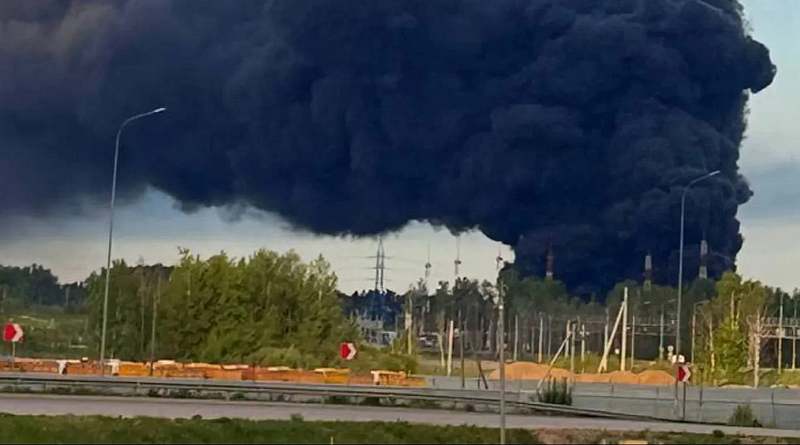
The fact that we have successfully hit the Ryazan refinery so powerfully for the first time and penetrated Moscow’s layered air defense, reaching Zelenograd en masse, represents a fundamental shift in the aerial campaign.
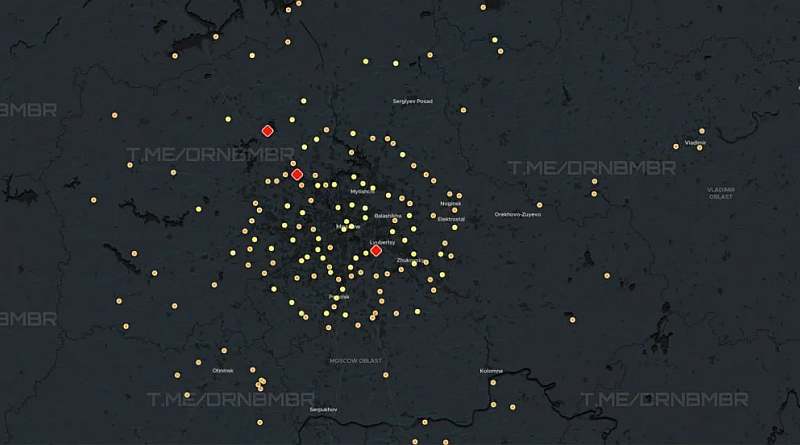
Zelenograd, Kapotnya, Solnechnogorsk, Sheremetyevo are deep within the air defense zone of the Russian capital, we practically reached the MKAD. And it wasn’t a bothersome raid just to exhaust the missile defense systems or force them to turn on their radars.
The attack was combined, calculating routes and bypassing coverage areas to guarantee hitting the targets. Moscow’s air defense zone was considered the most dense in the world, but it failed the stress test by this swarm.
The mass of the salvo, the approach at ultra-low altitudes, the perfect use of terrain, plus the overload of the missile defense system channels did the job. The use of jet drones also played an important role. In essence, these are full-fledged light cruise missiles modestly called UAVs just so that organizations with three-letter names can use them without sifting through piles of staff bureaucracy.
Their speed critically shortens the reaction window for operators of Russian radars: the target appears on the screen and leaves the damage zone faster than the calculation can take it to stable tracking and separate it from the swarm.
And the “Pantsirs”, of course. Ever since the campaigns in Syria and Libya, it has been clear that the “Pantsirs” can’t withstand even fairly large and radio-contrast “Bayraktars,” thus becoming targets for them. But it seems that the lobby in the Russian defense industry won out, and dear Russians tied the near defense of the capital and strategic objects to them. We sincerely congratulate them on this.
The system was created for classic metal targets (cruise missiles, aircraft). Slow drones made of plastic or plywood have a negligible effective scattering area, hence the radar often filters them out as “noise” (e.g., birds or trees). The calculation visually notices the UAV only a couple of kilometers away, when there is no time for interception.
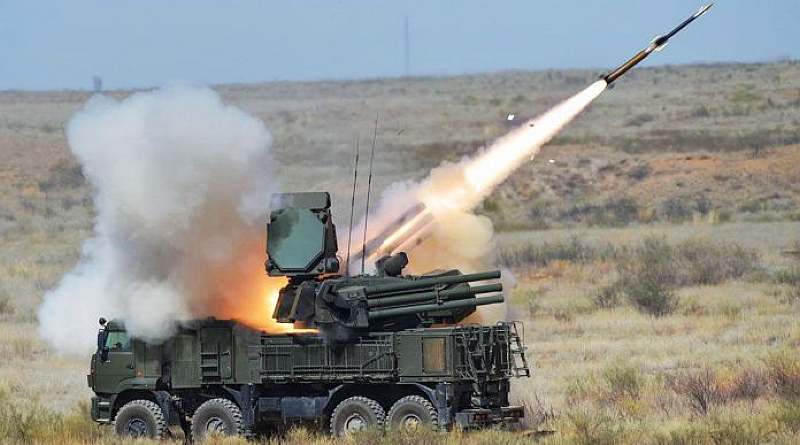
Channel overload by a swarm: “Pantsir” can simultaneously track and fire at a maximum of two to four targets. When 10–15 vehicles approach an object, the system simply gets overwhelmed.
Ammo expenditure and smoke: The ground-based 30 mm guns have a wide spread of shells — to shoot down one maneuvering drone, the automation spits everything out, instantly running out of ammo. As soon as thick black smoke and soot rise from the first impacts on the object, the complex’s optical channels are blinded, turning it into an expensive decoration.
In Ryazan, severe damage to key oil refining and distillation installations was recorded: diesel fuel hydrotreatment, AVT-3, AVT-4, and AT-6. Oil rains, like in Tuapse, generously pour on the surroundings. Is this a good plan, comrade Zhukov? We’ve hit this refinery many times, but such fatal consequences and a complete production halt are a first.
It’s important to understand the macroeconomics: out of approximately 30 large and medium refineries in Russia, 8 to 10 are consistently in a state of partial or full emergency (not scheduled, but right now!) repair. In absolute numbers, this means a stable shutdown of 18–22% of their primary oil processing capacities. This is a minus of 1.2–1.5 million barrels per day, which falls out of their balance.
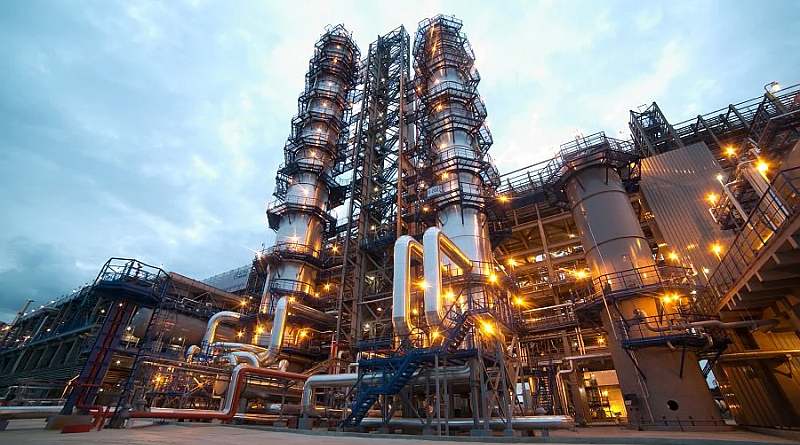
Moscow Refinery (Kapotnya) — it is generally the heart of their capital logistics. The plant processes 11–12 million tons per year, supplying fuel to the entire Moscow aviation hub and countless support columns. The strike hit right in the zone of the “Euro+” combined oil processing unit (their technological pride, launched in 2020 with great pomp) or the neighboring AVT-6.
The burnout of distillation columns is a complex repair lasting several months even before the start of a new wave of strikes on refineries. Since a queue for repairs has already formed across the country, Moscow will, of course, be prioritized. This means that spare parts will be sent there, and some other regional plant will remain stalled, unable to operate due to a lack of components.
An attack on Zelenograd is a separate form of art. It is the core of their unfinished “Silicon Valley.” The “Elma” Technopark and “Angstrem” enterprise produce microelectronics, optics, boards, and measuring devices for the defense industry. Destroying production areas, calibration stands, and clean rooms impacts their missiles and electronic warfare systems as effectively as the harshest banking sanctions. Restoring such lines quickly is, of course, impossible.
The aviation collapse was the cherry on the cake. “Vnukovo” was completely down — about 100 flights were canceled or rescheduled. “Aeroflot” frantically diverted planes to alternate airports, burning tons of scarce kerosene. In “Sheremetyevo,” drone debris fell directly onto the airport territory.
The war returned to where it began. The cheerful expeditionary operation “in three days” suddenly turned into hundreds of postponed flights, fires at oil depots, and logistical paralysis for the Russians. In the village of Durykino near Solnechnogorsk, tanks caught fire at the line-production pumping station. It started with one tank and turned into a large-scale fire affecting four reservoirs.
Against this backdrop, the videos of “ordinary people who are not interested in politics,” where they fearfully whine or complain about not getting enough sleep, sound almost like music. Twelve years after the invasion, the war finally came to their streets — and it turned out to be very frightening. It sinks in slowly, but personal experience is the best teacher.
To repel the attack, the Russians massively used S-300 and S-400 systems. Spending an anti-aircraft missile worth one to two million dollars on a delivery vehicle costing 100,000 is a perfect exercise in attrition. Especially considering that many of our UAVs are funded by the EU with its own money and interest from the frozen assets of the Russian Federation, which will not run out as quickly as the S-400 missiles in their warehouses, whose production takes months.
Transferring SAM and radar systems over a theater of operations more than 2,000 kilometers wide has become even more problematic for them. It’s a classic “short blanket dilemma”: what to cover this time? The village of Volna, Ryazan, oil terminals in the Baltic, MNPP, or naval bases in Kaspiysk? Choosing between protecting the budget’s cash cows, military-industrial complex facilities, or fuel logistics is becoming increasingly difficult. The resource of air defense systems is relentlessly depleting, and the industry physically cannot keep up with the army’s demands.
Due to strategic bombing, oil production has already fallen and, despite high global prices, the Russian budget received minimal additional income. Only at the “Solnechnogorsk” pumping station did four tanks of 5000 cubic meters each burn down — that’s 20,000 tons of destroyed fuel and 15-17 million in monetary terms. Several such key pumping stations were hit. If in 2024 they could still patch the column AVT hole in a month and a half, using stock reserves (cannibalizing old installations) and quick gray imports, by May 2026 this mechanism completely failed. Cannibalism is exhausted: there are no spare pumps, high-temperature valves, compressors, and sensors in stock — all used up by previous repairs.
And then there’s the Chinese squeeze. As we discussed, due to fears of secondary US sanctions, Chinese banks block up to 80% of payments. Ordering a Chinese analog of the German Siemens compressor now is a six-month quest with shady intermediaries, double overpayment, and the risk that money will simply get stuck in a transit account.
So we continue our work. Our mid-range strikes methodically grind their SAM systems and radar eyes, preventing the possibility of withdrawing additional air defense forces to the deep rear. And long-range drone strikes hit the sore spots — the macroeconomy and the wallet. This is a direct blow to their ability to recruit new contractors with astronomical signing bonuses and purchase components circumventing sanctions. These are the two main pillars on which Kremlin’s stability rests in 2026.
In the cover photo: Fire in the Moscow region after a drone attack on May 17, 2026. Photo: social networks
