

Regarding yesterday’s tragedy in Lviv — one person died, one will go to jail, minus two people for the Armed Forces of Ukraine.
Along with the stick in the form of draft officers in balaclavas, cutting off cars and forcefully packing people, focusing on Odesa, we vitally need a carrot.
Because the stick is from the times of the previous technical setup. It’s when a person lived strictly by registration and by 7 a.m. had to be at the machine at the “Red Ploughman” factory — they arrived with the district officer at the checkpoint and took them away.
But now, the district officer will come to him, and he simply won’t open the door. Because he’s sitting at home describing product cards for an online store, coordinating logistics, or working in sales over the phone.
The way of earning a living has changed.
Today he’ll stay at home, tomorrow at his mistress’s, and the day after, he’ll visit his father at the cottage. Are you really going to send officers to address him catching His Majesty the Clerk?
And will you guard him with three police units until he receives military training?
Even if we take everyone caught at mobile checkpoints, divide the districts into sectors, and clean straight from the cars, we won’t process tens of thousands per month.
We don’t have that many instructors, scattered training bases, and tents. Those who lived there understand that well.
Still, some come voluntarily, some sign a contract, and 220,000 are collected in a year. We can run like this for another 10 years. Especially considering that SZZH is also a significant number.
And you pull them into the ranks of the valiant defense forces, and they are out of there. They face 10 years in prison, but they are no fools and understand that you can’t fit half a million dodgers into the penitentiary system, as historically there were no more than 60,000 places. And you still can’t send them to the front.
Disable the cards of the 3.5 million who didn’t make it? First of all, that’s a third of the working economy, and you’ll just collapse it.
Secondly, most will take the card from their father, mother, wife, or sister. And some clever ones will attach quasi-cash like Zen to the phone and will calmly pay in Silpo via Google Pay, which doesn’t care whether the IBAN is Polish or ours.
Impose a 17,000 fine for not appearing since 2014? Go ahead with 32, they’re saving it, I’m sure. They’ll pay a couple of thousand, and it will hang in the system as “partially paid,” and you’ll spend years looking for 3 million debtors with your one and a half enforcement officers.
And then what — take away his phone as a penalty?
In short, you have no methods against Dodger as a phenomenon. Some will obviously be caught, the numbers on paper will be large, but massively no one will go. And the more pressure, the stronger the spring will be.
We need to provide proper motivation — salaries significantly higher than 23,000, real perks for contracts, transparent replacement schedules for those burned out, and the ability to transfer by specialty. People need to be recruited with intelligence.
But perks are key. A person should want to go themselves, during a war you need to take the best into the army. Sorry, but the best won’t go for 23,000 to haul carcasses in the cold storage or break their back with wounded soldiers in the hospital for 500 bucks.
But in the Rada one and a half cripples are sitting on a weekday, everyone is very busy. We are in an existential war, aren’t we?
The state is trying to break the digital society of 2026 with the tools of a Soviet draft board. But that’s a dead end.
Either the system engages market mechanisms (adequate money, transparent terms, transfers by specialty, adequate startup bonuses) in addition to tactics from cars, or yesterday’s news will seem like a calm day to us.
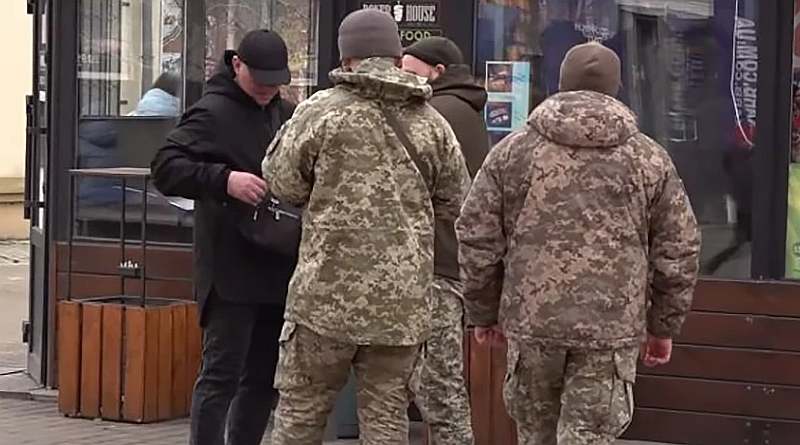
Illustrative photo from open sources
