
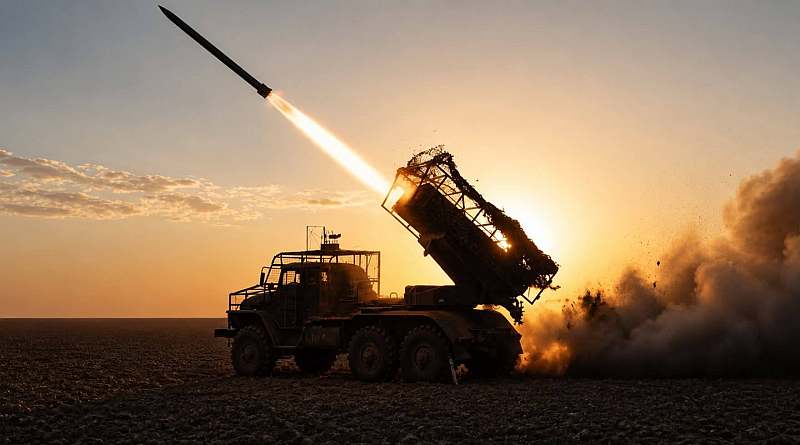

Today — the “major” Zaporizhzhia direction.
1. It is evident that certain changes have occurred in the operational zones of both Russian troop groups (TG) “Dnepr” and “Vostok”, which are advancing towards Zaporizhzhia, with regards to the concentration of their command’s main efforts. Specifically:
– The command of the Russian 58th Combined Arms Army (CAA) from TG “Dnepr” has shifted them to their right flank in the zone of their 42nd Motorized Rifle Division (MRD), directly towards Orikhiv.
– Meanwhile, the command of the 5th CAA from TG “Vostok” is evidently focusing its main efforts to the west, northwest, and southwest of Huliaipole, attempting to reach the area northeast of Orikhiv (Omelnyk — Shyroke — Yehorivka — Chervona Krynytsia), trying to advance the main forces of their forward detachments and formations in that direction.
Thus, it can be stated that there is a quite clear logic in the actions of the Russian command. Evidently, they have come to the same conclusion as I have, that further attempts to conduct any deep (operational) offensive on Zaporizhzhia within the framework of the entire “summer campaign” WITHOUT eliminating the Orikhiv defense area of the Armed Forces of Ukraine (AFU) simply lacks elementary operational sense. Therefore, at this stage, they are primarily trying to solve this particular issue.
The essence of their decision likely lies in a deep encirclement of Orikhiv from the east by the forces of the 58th and 5th CAA on their adjoining flank, where units of the 76th Air Assault Division (AAD) of the Russian Airborne Forces, the 40th Separate Naval Infantry Brigade (SNIB), and several units and detachments of the 35th CAA TG “Vostok” are also operating. And, likely, in the near future, the enemy, within this decision, will attempt to initiate active offensive actions to the west of Orikhiv in the direction of Nesteryanka — Novoandrivka and further towards Novopavlivka.
In other words, the Russian command in the operational sense seeks to “turn” the entire defense system of the AFU to the southeast of Zaporizhzhia (and primarily in the Orikhiv area), to have the opportunity to advance towards this regional center on a maximally broad front with forces (troops) of at least three combined arms armies (CAA).
It is evident that to concentrate the maximum possible forces in the aforementioned directions, the command of both Russian armies is taking several steps. Specifically:
– In the 58th CAA’s zone, its command is evidently gradually shifting its operational reserves from the left flank (from the 19th MRD’s zone) to the right flank (42nd MRD).
– Meanwhile, the command of the 5th CAA is trying to cover its right, northern flank (“joint” with the 36th CAA, the area of Dobropillia and east of it) with part of its forces, while simultaneously concentrating its operational reserves and reinforcement means on its left flank (Huliaipole area).
2. Current situation
Obviously, without completing the operational regrouping of some of its forces and means, as well as a certain amount of reinforcement means, in the sectors of both these armies, the enemy is unlikely to begin (continue) engaging a larger portion of its reserves in these directions. However, this does not prevent them from attempting to carry out current tactical tasks with the forces of the already deployed units, including:
– In the direction of Stepnohirsk — Kamianske, in the sector of the 19th MSD of the 58th CAA, its forward units (likely reinforced by several units from the 47th MSD of the 18th CAA) are evidently trying to hold their positions in the area of Prymorske and Stepnohirsk to prevent further retreat to the Yancheckrak River. Over the past few weeks, the AFU have been actively conducting counterattacks in the area of Prymorske, Stepnohirsk, and even in the direction of Plavni, where they have almost completely pushed out the enemy from Prymorske (likely, Russian units still have a few positions south of Pokrovska Street), in several areas of the central part of Stepnohirsk and eliminated almost all small infantry groups of the enemy southeast of Stepnohirsk.
The situation for the enemy is also complicated by the fact that the AFU continue to hold several positions east and southeast of Kamianske (on the Yancheckrak River north of Lobkove and Stepove) and thus have the ability to fire from at least one flank on the combat formations of Russian units operating north of Kamianske along the Dnipro.
– In turn, the enemy, so to speak, conducting several fairly active attacking/assault actions from the Stepove — Shcherbaky line, has shown a strong desire to advance northwards, i.e., towards Pavlivka and Novoyakovlivka. Or, more precisely, to restore their position in those areas, which existed earlier.
In the area of Stepove, the enemy managed to advance several hundred meters along the tree line west of Myru Street, achieve a similar scale of advancement in the northwest of Mali Shcherbaky, and “infiltrate” several small infantry groups north of Shcherbaky up to a depth of 1 km.
Additionally, in this context, it is worth noting the presence of several blocked small infantry groups of the enemy entrenched east of Pavlivka and northwest of Novoandriivka (apparently, their number does not exceed 5-6 “bodies”). They seem to be still alive.
– The efforts of the Russian command in the area of Orikhiv itself look much more expressive. Thus, northwest of Nesterianka, it seems several Russian assault groups have managed to advance north through parallel tree lines over a distance of 1.5-1.6 km, and south of Novoandriivka, they have made several rather intense attempts to break through (penetrate) to its southern outskirts.
– Additionally, fierce battles continued in the area of Mala Tokmachka and Novodanylivka. The information from there is quite contradictory. On one hand, several Russian “sources” immediately claim some sort of “liberation” of Mala Tokmachka (and even manage to congratulate each other on this “important event”), while others are more cautious, speaking only of “partial control” over the village.
According to my information, the enemy is currently present in Mala Tokmachka (albeit only in the form of occasional sightings of individual Russian military personnel) in just a few houses in the southeastern part of the village. Moreover, information about Russian “partial” presence in the area of the local railway station and in the blocks adjacent to the Konka River, also, let’s say, raises considerable skepticism.
Meanwhile, southeast of Novodanylivka, the Armed Forces of Ukraine (AFU) have apparently managed to “minimize” the area around the Uspenivska beam, where remnants of Russian assault groups, which previously attempted to reach from the direction of Robotyne to the highway junction south of the village, have entrenched.
– On the other hand, to the east and northeast of Orikhiv itself, on the stretch from Luhivske to Pryluki, the enemy (units from the 5th CAA, 35th CAA, 76th Air Assault Division, 40th Brigade of the Russian forces) persistently continue to “ram” (or more precisely, “fragment”) the defense system of the AFU.
Evidently, unable to, for various reasons (including the active use of tactical UAVs by the AFU), operate with grouped, somewhat larger forward units in unified combat orders, their command seeks to fully exploit the lack of personnel in the forward units and subunits of the AFU (and accordingly, the presence of numerous weakly protected “intermediate gaps” in their combat orders), constantly increasing the intensity of their own small infantry (assault) groups’ “infiltration” actions.
By operating this way, the Russian command has managed to achieve quite NUMEROUS “penetrations” of small infantry (assault) groups into the combat orders of front-line units and subdivisions of the AFU simultaneously in several areas and directions, quite deep in the tactical sense. For example, individual Russian infantry groups have already been observed in the areas of Vozdvyzhevka, Verkhnya Tersa, southwest of Hirke, in Hulyaypole, and even to the west of it, in the Charivne area.
In turn, the AFU southwest, west, and northwest of Hulyaypole, as well as even in the vicinity of Hulyaypole itself, continue to hold several positions that, due to the opponent’s active offensive actions, were either isolated in areas formally controlled by them or found themselves deep within the combat orders of the opponent’s front-line units and subdivisions.
As a result, a situation has developed where in a corridor 15-16 km wide, an appropriate zone has formed extending from the area of Pryluka to Luhivske and is quite unevenly divided by a formal LBS, densely and abundantly mixed with the combat orders of both sides.
Currently, both sides are regularly forced to conduct peculiar “pocket” and reconnaissance-raiding actions in the tactical zone with their own small infantry groups (including within their own tactical rear) to maintain at least a minimal level of unity and resilience of their front. Additionally, both sides actively use tactical UAVs to support and ensure their own assault groups and small infantry units of this type.
However, in the operational-tactical sense, it should be noted that the advance of the main forces of the Russian troops’ forward units and formations in this direction along the general “direction” from Huliaipole to Omelnyk, if not stopped, has acquired very minimal pace. Even its immediate task of the Russian 5th CA, as well as its reinforcement means and formations interacting with it (advancing to the line of Verkhnia Tersa — Hulyaipilske), has obviously not been accomplished yet.
The presence of several small enemy infantry groups in the area of Verkhnia Tersa, Horke, and Hulyaipilske obviously cannot be considered an accomplishment (or achievement). Since the main forces of the forward units and subunits of the 5th CA and its reinforcement means continue to operate (position) along the lines of Luhivske — Myrne, Huliaipole — Varvarivka. Moreover, the enemy has not been able to break through (advance) in this direction with its main forces even to a tactical depth for at least 3 weeks.
In fact, the command of the Russian 5th CA and units operating in its zone (including the 35th CA, several parts and units of the 76th Air Assault Division and the 40th Naval Infantry Brigade), which in most cases acted exclusively in small infantry (assault) groups, have become a kind of “hostages” of their own scattered “penetration” tactics. When, unable to concentrate the main forces of their forward units and subunits for a significant simultaneous offensive (advance), even in a tactical sense, they are forced to limit themselves to actions exclusively in very small infantry (assault) groups, effectively reducing the overall pace of their troops’ advance to a minimum or even to zero.
– Across the entire zone of the Russian 36th CA and on its right flank, next to the 29th CA, in particular after the introduction of the 120th Marine Division units into the battle, the Russian command has obviously managed to stop the further advance of the forward units of the AFU towards Uspenivka, Temyrivka, and generally towards the Huliaipole-Velyka Novosilka road. However, at the same time, it has not been able to restore the overall situation of its own troops that existed before the start of the Ukrainian counterattacks in this direction.
To this end, the enemy carried out a number of persistent attacks/assault actions in the directions of Rybne — Zlahoda, north of Novohryhorivka towards Verbove, and in the area of Berezove, which it managed to hold earlier as a result of several days of fighting. In this sense, the enemy managed to achieve only a few small tactical penetrations. The maximum of these was the “penetration” of its assault groups north of Novohryhorivka to a depth of 1.8-2 km towards Verbove.
In turn, the AFU continue to hold the positions they previously reached in the areas of Krasnohirsk, Novomykolaivka, and Ternove, as well as northwest of Novohryhorivka.
3. Prospects
As for me, in this sense, I can draw several deeply subjective conclusions, including:
– The Russian command has obviously come to the same conclusion as I did, but a little earlier than me. Namely: to advance on Zaporizhzhia without first solving the “problem” of Orikhiv is operational stupidity on their part. According to this conclusion, the Russian command at this stage began to act in just such a manner, first of all trying to “neutralize” the Orikhiv defense area of the AFU.
However, it should be understood that the command of the Russian forces “Dnepr” and “Vostok” will be able to directly and “closely” begin the actual assault and capture of Orikhiv only after several stages, namely the completion of regrouping of the already deployed forces and resources in the respective army sectors (restructuring the operational formation of troops is necessary), significantly reinforcing them with additional forces (primarily those that could be used to “increase efforts” after “breaking through” the Ukrainian defenses at the tactical level), as well as the prior movement of units and formations of the 58th and 5th Combined Arms Armies to positions suitable for the assault and capture of Orikhiv (primarily in terms of its flanking capture and the ability to influence the communications of the entire Orikhiv defense district of the Ukrainian Armed Forces).
– Regarding the “general plans for the summer” concerning the Zaporizhzhia direction, it is quite possible to state that the Russian command cannot fail to understand a few more things. Namely:
– “The battles for Orikhiv” (even if they end successfully for the Russian command) will take up a substantial amount of TIME. This means that the actual approach to the immediate outskirts of Zaporizhzhia risks simply NOT fitting into the summer campaign “on schedule” (considering the fact that after the battles for Orikhiv, the Russian command will clearly need an operational pause in active actions to replenish and restore the combat capability of its troops). In other words, on the Zaporizhzhia direction, they are ALREADY significantly behind their optimal timelines.
– The scope and status of the Russian command’s STRATEGIC reserves are obviously such that they force it to conduct a hypothetical “large” summer offensive operation on only one operational-strategic direction, not on two simultaneously. The Slovyansk-Kramatorsk direction in this regard, although more ambitious in its “structural” design (especially in terms of the required forces and resources), is more attractive in other parameters compared to Zaporizhzhia (especially in terms of potential outcomes and their impact on the overall/strategic course of the war), although it should be noted that even there the Russian command is clearly behind its convenient schedule.
– An attempt to advance on a more or less significant scale “here and there” (that is, simultaneously in both the Southern and Eastern operational (operational-strategic) zones, albeit with a slight delay) will actually lead to the dispersal of efforts and reserves.
From the perspective of the degree and level of potential impact on the overall operational-strategic situation, a hypothetical offensive operation by the Russian command towards Orikhiv-Zaporizhzhia is clearly not comparable to a similar operation towards Slovyansk-Kramatorsk.
“Wearing down” the most combat-ready forces of “Dnepr” and “Vostok” in battles for Orikhiv, to then reach the near approaches to Zaporizhzhia and stop in front of it (since, obviously, in this case, they will clearly not be enough to storm the city “on the move,” especially in the case of crossing the Dnipro)? To me, this seems like a very doubtful prospect.
At the same time, the capture of the Slovyansk-Kramatorsk agglomeration could open the prospect for the Russian command of “returning to Izium,” and then advancing “to the outskirts of Kharkiv.” Not to mention that in this case, the Pavlograd direction (and then Dnipro) could also be “opened” by the opponent quite quickly.
Therefore, I fully acknowledge that the command of the Russian “Dnepr” operational group (in the form of its commander Colonel-General “Mikhail Teplinsky,” who is also simultaneously the commander of all Russian airborne troops) for conducting any large-scale offensive operations “towards Zaporizhzhia,” with the obvious and active support of the “Vostok” operational group (within the entire summer campaign), may well receive some “carte blanche” from their general staff. However, at the same time, he will clearly have to handle this matter mostly “by his own forces” (i.e., the most combat-ready combined units and formations of the “Dnepr” operational group + units and formations of the Russian airborne troops concentrated in the operational area of the “Dnepr” operational group).
In this sense, the movement of the 106th Airborne Division of the Russian “airborne troops” from the Sumy direction to the Dnieper direction is very indicative. For those who have forgotten, let me remind you that under the direct leadership of the commander of the “Dnepr” operational group (and at the same time the commander of the “airborne troops of the Russian Federation”) General “Teplinsky,” the main forces of at least three formations of the “airborne troops” of Russia (7th, 76th, and 104th Airborne Divisions, of which at least the 7th and 76th are already operating (deployed) in the direction of Orikhiv — Zaporizhzhia). It is quite possible that the 106th Airborne Division will replace the 104th Airborne Assault Division in the Dnieper direction, and that one will later also “surface” precisely in the Zaporizhzhia direction.
Photo: Oleksii “Chief”/143rd Separate Mechanized Brigade
