
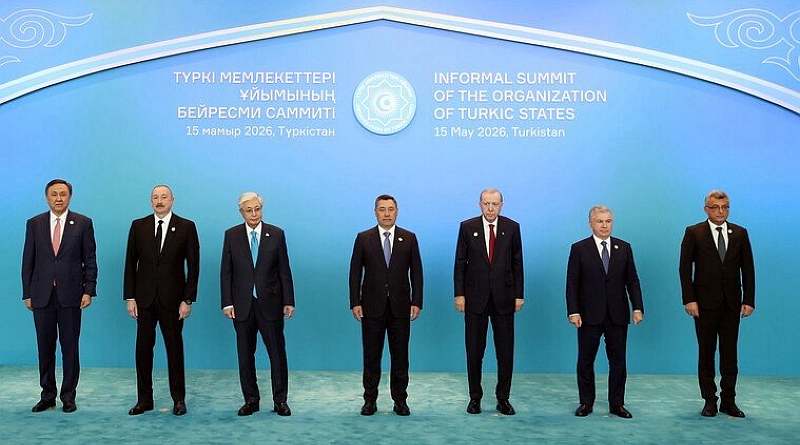

The informal summit of the Organization of Turkic States (OTS), held in the spiritual capital of Kazakhstan, the city of Turkestan, marks significant changes in the economic-political architecture of Eurasia.
Post-Soviet participants in the alliance openly demonstrate their desire to completely shed the status of objects of Russian geopolitics. They are actively diversifying external connections, developing their own logistical routes and technological solutions, effectively taking control of the region into their own hands, relying on equal and pragmatic partnerships.
The current Russian leadership is deeply entangled in solving internal problems and the consequences of the protracted “Special Military Operation,” while the former Soviet republics of Central Asia and the South Caucasus use this historical opportunity to strengthen their independence.
The unification of Turkic countries into a single bloc provides them with a reliable political support and allows them to speak with major global players on an equal footing. For local elites, this is an excellent opportunity to finally emerge from the status of Russia’s “sphere of influence” and to protect their state borders from its imperial pressure. The recent informal summit showed that the region no longer intends to settle for the role of the Kremlin’s “backyard.”
Central Asian countries and Azerbaijan no longer tie their expectations to Moscow’s technological support, which has found itself in deep international isolation and a technological dead end. At the summit in Turkestan, a principal agreement was reached on creating their own digital system, preparing specialists in the field of artificial intelligence (AI), and launching joint space projects. The development of independent platforms and new communication lines opens a direct path to development for the region without relying on the former, technologically lagging “arbiter.”
Simultaneously, the Turkic states no longer trust the Kremlin’s grand words about “friendship, common past, and brotherhood.” The region chooses specific, measurable, and mutually beneficial economic projects. A striking example of this new course is the decision of Kazakhstan and Uzbekistan to create a joint investment fund.
The combined economic potential of the union countries has already exceeded two trillion dollars. Such impressive economic weight allows the region to confidently conduct business with the largest global tech giants directly, completely bypassing intermediaries from Russia.
As for transportation, previously Russia was the main transit hub for Central Asia; now its routes have become too toxic and risky due to harsh international sanctions and military risks. This situation motivated the OTS countries to radically rethink their approaches to logistics and put all efforts into developing the Middle Corridor (TITR), linking Asia and Europe bypassing Russia. The construction of new railways through Kyrgyzstan and Uzbekistan, the modernization of Caspian ports, and the implementation of seamless digital permits will allow goods to be transported faster and, importantly, completely independently of the political whims and desires of the Kremlin.
Instead of the old Soviet ties and Russia’s imposed cultural influence, the new regional leaders offer youth a completely different, progressive vision of the future. The “Five Million AI Leaders” program and the creation of a special network of Turkic universities aim to connect the new generation’s plans with development within the Turkic space. This lays a solid foundation for the future elites to be mentally, culturally, and professionally completely independent of Moscow, finally closing the chapter of the colonial past.
