
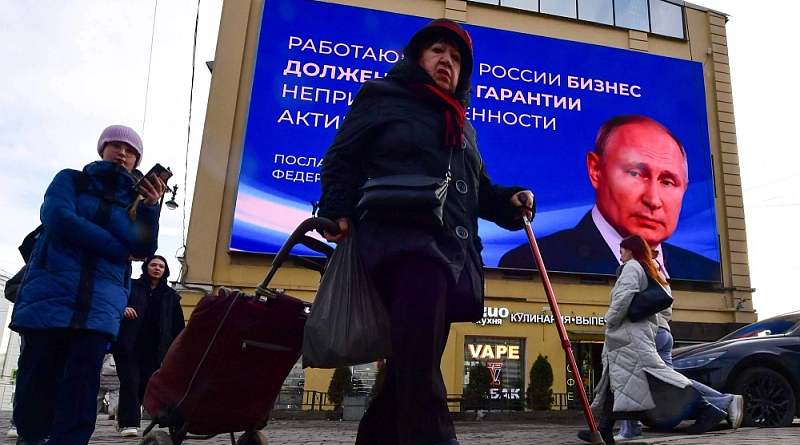
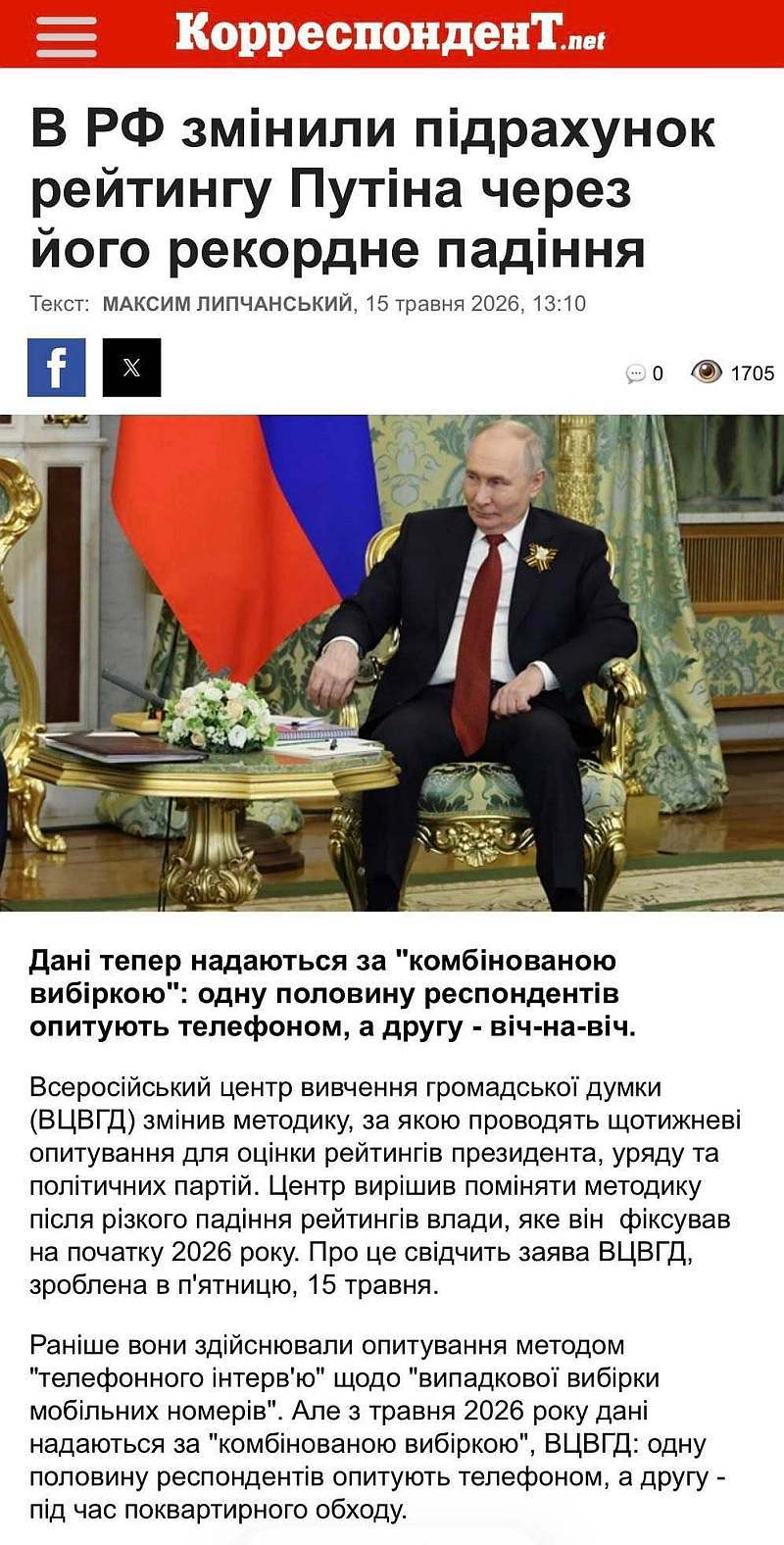
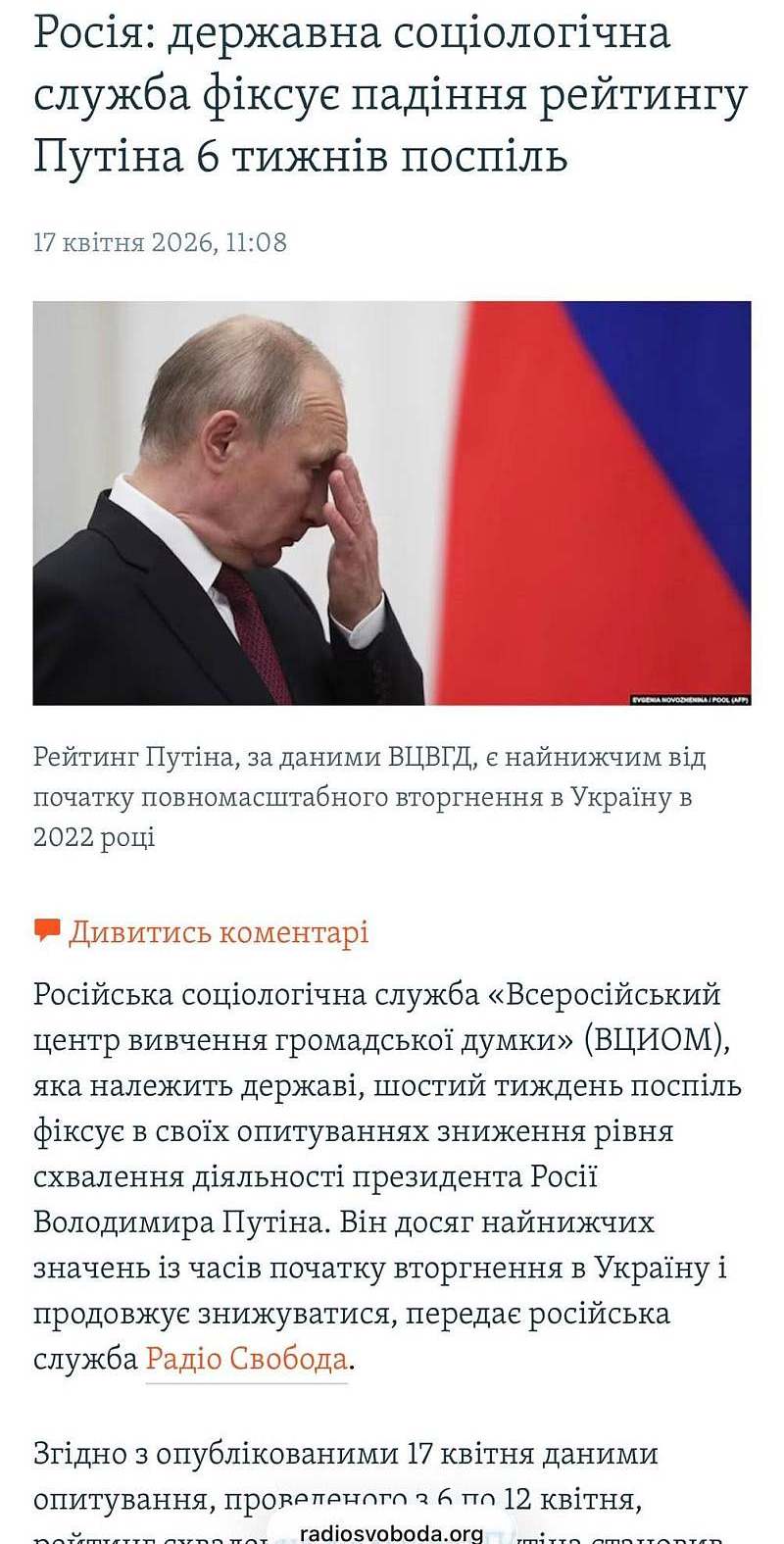
Even the state-run VCIOM recorded the largest spike in dissatisfaction with Putin’s internal, external, and economic policies in Russia in many years. The “approval” rating has fallen to its lowest levels – 65.6%. For a politician in a democratic country, this would be a decent figure. But not for dictators, for whom paranoia is a professional affliction.
Moreover, for the first time during the war, there are more people dissatisfied with internal policy than those who are satisfied. And this trend has been continuing for several months (see illustrations).
 |
 |
The interesting part is not the decline in ratings itself. It’s the reason. Because the Russian system relies on a simple formula: “we take away your freedom and politics, but we give you stability”.
After all, the Kremlin isn’t afraid of protests. It isn’t afraid of the opposition. The memory of the delusion of the “Prigozhin march” allows hope to survive even such outbursts.
But the feeling of prolonged hopelessness is something else. In 2014, Russians were sold the euphoria of “Crimea”. In 2022, a “small victorious war”. But an endless war, inflation, new taxes, mobilization fear, and an increasingly deteriorating economy slowly undermine the main myth of Putin’s system: that it guarantees a peaceful life. And this is far more dangerous for the Kremlin than any loud statements.
The most dangerous thing for the Kremlin isn’t even the drop in ratings. It’s the gradual destruction of the main social contract of Putin’s system: “we take away your freedom, but we guarantee stability”.
After all, Russians can endure fear, corruption, and even war for a long time. But when the sense of any normal life ahead disappears, the system begins to rot from within—due to apathy, cynicism, and loss of belief in the point of silent submission. Especially after a failed war.
Examples? 1905, 1941, 1986, 1988-89.
However, the servants “skillfully” found a way to satisfy the master. They changed the format of the surveys. Added a face-to-face component. Naturally, those surveyed “in person” show much greater loyalty. Support figures went up. Perhaps the tsar is pleased.
For now.
