

Information on current Russian losses due to sanctions as of 11/13/2026.
1. On the night of November 13, Ukraine’s Defense Forces attacked the Volgograd Oil Refinery in the Volgograd region of Russia.
– A fire broke out on the premises. Local residents reported multiple explosions and subsequent fires. The fire site was identified as the “LUKOIL-Volgogradneftepererabotka” refinery.
– Preliminary assessments suggest that the primary oil processing units ELOU-AVT-1 and AVT-6, which together provide about 70% of the plant’s primary capacity, may have been affected. There were also reports of possible damage to the tank farm.
– The Volgograd refinery is one of the largest oil processing enterprises in Russia. Its design capacity is about 14.8 million tons of oil per year — approximately 5% of Russia’s total oil refining capacity. The plant produces automotive gasoline, diesel and aviation fuel, fuel oil, petroleum coke, bitumen, and base oils, supplying petroleum products to southern regions of Russia.
– The enterprise has already suffered significant damage from previous attacks. Notably, after the strike on October 2, the plant completely halted crude oil processing due to equipment damage.
2. Ukrainian attacks on refineries, ports, and industrial infrastructure are stalling Russia’s economy.
– The Russian economy is increasingly suffering from the consequences of Ukrainian strikes on industrial enterprises, oil refineries, logistics hubs, and port infrastructure.
– According to the median estimate, Russia’s GDP grew by only 0.9% year-on-year in the third quarter of 2026 compared to 1.3% in the previous quarter. One of the most significant consequences was disruptions in the operation of refineries. According to Rosstat, oil refining volumes decreased by 18% year-on-year in the third quarter — the sharpest decline since 2020.
– Stoppages at enterprises have increased the fuel shortage, and the reduction in the production of oil products has adversely affected related industries.
– At the same time, mining output decreased, and wholesale trade moved into negative dynamics. Strikes on oil terminals and port infrastructure, as well as the escalation in the Azov-Black Sea basin, created additional obstacles for Russian exports.
– According to Oxford Economics, the reduction in crude oil and oil products exports decreased the annual growth rate of total exports by about 3.75 percentage points in the third quarter and subtracted about 0.7 percentage points from GDP growth.
– Beyond military production and consumer demand, which is also losing momentum, there are increasingly fewer economic drivers in Russia. The growth of consumer spending slowed to 4.2% year-on-year compared to 7.2% in the second quarter.
– Production in several consumer goods industries is shrinking, with enterprises facing more expensive loans, rising costs, and a shortage of working capital.
– Pressure on businesses is increasing due to high inflation. In October, it accelerated to 7.07% from 6.35% in September, while the Central Bank’s target is 4%. High interest rates and rising fuel costs further increase the expenses of businesses and the population.
– Oxford Economics considers the official forecasts for Russian economic growth of 1.4% in 2027 and 1.9% in 2028 to be overly optimistic. Restrictive monetary policy and government plans to reduce the budget deficit contradict the stated goals of accelerating economic growth. At the same time, double-digit growth in military production increasingly contrasts with the stagnation of civilian sectors.
3. Foreign companies seized by Putin are transferring billions of rubles to finance the Russian army.
– Enterprises of international companies in Russia, transferred to so-called temporary management by local managers after being effectively seized from foreign owners, fund the needs of the Russian army. They channel billions of rubles into the purchase of drones, vehicles, communication tools, electronic warfare systems, and other military equipment.
– Although these contributions are insignificant compared to Russia’s state military expenditures, which will exceed 17 trillion rubles in 2026, they demonstrate how the Kremlin uses seized foreign assets to support the war.
– Specifically, after the transfer of Russian assets of Danish insulation material manufacturer Rockwool to temporary management, the new management structure transferred 600 million rubles for the purchase of all-terrain vehicles, communication tools, reconnaissance drones, and electronic warfare systems. Later, the same management was given control of the Russian enterprises of Dutch paint manufacturer Akzo Nobel and Italian company DKC. Together, they donated another 3 billion rubles for military needs.
– The brewing company AB InBev Efes, whose Russian division also came under local control, transferred 1 billion rubles to the “People’s Front” in 2026. Another 1 billion rubles in support of the army was pledged in October by the Russian chain Metro after coming under temporary management.
– The Kremlin turns the seizure of foreign enterprises into an additional tool for financing the war: assets taken from international investors continue to operate in Russia, but now part of their resources is directly allocated to supplying the Russian army. This also creates additional incentive for new management to demonstrate loyalty to the authorities.
4. The United Kingdom has imposed sanctions on all 10 of Russia’s largest oil production companies.
– The new restrictions affected the Russian oil company “Slavneft,” whose inclusion in the sanctions list completed the coverage of all the ten largest oil producers in Russia. The United Kingdom became the first country to impose sanctions against all companies in this top ten.
– The package also includes restrictions against shadow fleet vessels transporting Russian oil and liquefied natural gas (LNG), major coal companies, and the “Vostok Oil” project of Russia’s “Rosneft,” aimed at developing oil fields in the Arctic.
– UK Prime Minister Andy Burnham stated that the new measures are intended to increase pressure on Russia’s oil revenues and restrict funding for the war against Ukraine. Previously, London had already imposed sanctions on the largest Russian energy companies, including “Transneft,” “Rosneft,” and “Lukoil.”
– The new restrictions were announced on November 12 during a meeting of European leaders in Dublin. According to the British government, the sanctions cover practically the entire chain of obtaining Russia’s energy revenues — from extraction to trade, supply, and maritime transport.
5. Brazilian traders refuse Russian diesel due to unfavorable prices after failed shipments to the US.
– Russian exporters are trying to redirect shipments of diesel fuel to Brazil that were initially intended for the American market under the so-called “diesel deal” between Donald Trump and Putin.
– However, Brazilian buyers are not in a rush to make deals, as the offered prices have proven uncompetitive: American fuel is cheaper.
– The Russian side has offered local distributors at least four batches of diesel for delivery in November. According to the analytical company Kpler, four tankers — Leruo, Cerrado, Primorye, and Athina M — are heading to Brazil. Altogether, they are carrying about 1.1 million barrels of Russian diesel fuel.
– If Brazilian companies agree to purchase these shipments, the volume of one such purchase will almost double the entire import of Russian diesel into the country for October. However, so far Russian suppliers have not been able to find buyers on the proposed terms.
– This indicates that redirecting shipments from the American market does not guarantee Russia the preservation of sales channels. The Kremlin’s attempt to use agreements with the Trump administration to return Russian diesel to the American market has not yet brought results.
– Now Russian exporters have to search for alternative buyers, but even in Brazil’s large import market, their fuel is losing out to competitors on price.
6. Greek shipowners have more than halved the transport of Russian oil, redirecting tankers to more profitable routes.
– In October 2026, Greek shipowners transported only 8.3 million barrels of Russian oil compared to 17.3 million barrels in September. This is the lowest level since December 2024. The reasons were the increase in profitability of tanker shipments on alternative routes and increased military risks in the Black Sea.
– According to S&P Global, at least eight Greek tankers — four Aframax and four Suezmax class — left Russian oil transportation routes and switched to other directions. In particular, the demand for tankers has increased on routes east of the Strait of Hormuz, where high freight rates are supported by increased transportation needs and military risks amid the US-Iran conflict.
– In October, the profitability of transporting Russian oil by Suezmax tankers from the Baltic Sea to the western coast of India was on average $46,300 per day lower than the global index for ships of this class. In September, the difference was $23,200.
– Additional deterrents included risks in the Black Sea. In October, only one tanker managed by Greek companies loaded Russian oil in this region, while there were 11 such ships in other regions.
– According to Platts, the additional premium for military risk during oil exports from the Black Sea on November 6 reached $5 per barrel — the highest level since monitoring began in October 2022. The departure of Greek shipowners is accompanied by a reduction in the presence of the Western fleet in Russian oil trade.
– In October, tankers linked to G7 countries and their allies transported about 906,000 barrels of Russian oil per day, or 24.2% of sea exports. In September, their share was 29.2%. This is the lowest level in seven months.
– Meanwhile, tankers not linked to G7 countries, mostly shadow fleet vessels, transported 2.8 million barrels per day. Overall, Russia’s sea oil export in October decreased by 9% compared to September and by 10% year-on-year — down to 3.7 million barrels per day. This is the lowest level since April 2026.
– The reduction in vessel availability, rising insurance costs, and competition from more profitable routes increase logistical costs for Russian exporters and complicate oil delivery to buyers.
7. Finland will restrict entry for Russians, including athletes, even with a neutral status.
– The Finnish government is tightening restrictions on the entry of Russian citizens. From November 16, 2026, Russians may be denied entry with Schengen visas if the purpose of the trip is not critically important for the national interests of the country.
– The new rules specifically apply to short-term work trips and include Russian athletes, even those competing under a neutral flag. Finland’s Foreign Minister Elina Valtonen stated that amid ongoing Russian aggression, there is no place for Russian athletes in Finland, and their entry might pose a threat to the country’s international relations.
– The restrictions will apply regardless of the country from which a Russian citizen arrives. They may also extend to holders of Schengen visas issued by other EU states and transit trips through Finland to other Schengen countries.
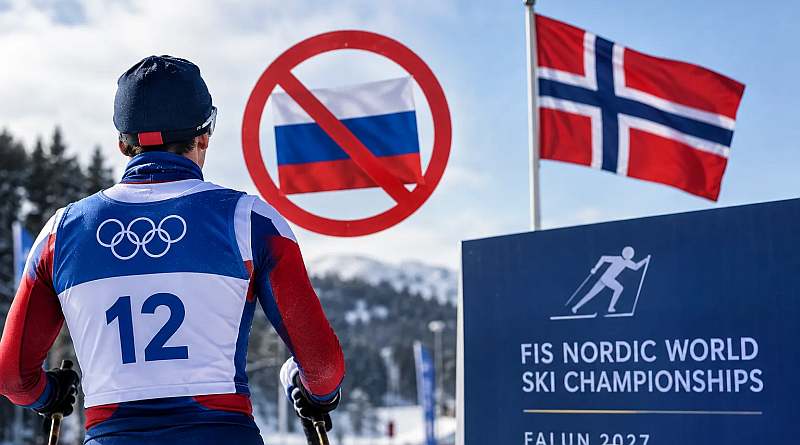
8. Norway will prohibit the participation of Russian and Belarusian athletes in international competitions on its territory.
– Norway will not allow Russian and Belarusian professional athletes and their team members to participate in sporting events in the country. The authorities will also deny them entry if they attempt to enter the country to participate in competitions. The decision will come into effect soon.
– The restrictions may affect the participation of athletes from Russia and Belarus in several World Cup stages this winter. Specifically, this concerns the first stage of the Ski Jumping World Cup, which will take place in Lillehammer, Norway, from November 20-22.
– The Norwegian government emphasized that Russian professional sports are closely linked with the authorities and state structures, so the participation of Russian athletes in international competitions cannot be separated from the aggressive war against Ukraine. Belarus, according to the government, also supports and facilitates Russia’s war efforts.
– Norway has joined a number of countries that are tightening restrictions on the participation of Russian and Belarusian athletes in international tournaments. Finland has banned the admission of Russian athletes, including those competing under neutral status, to the World Cup stage in cross-country skiing in Ruka. Canada will deny entry to Russian hockey players and officials for the World Junior Championship in Alberta in December, and Poland will not issue visas to Russian ski jumpers for the World Cup stages in Wisła and Zakopane.
– The new restrictions create additional obstacles for the return of Russian sports to the international arena, despite steps by the International Olympic Committee and individual federations to restore the participation of Russians in international competitions.
