

Shadow of War in Europe: How Russia Recruits Ukrainian Refugees
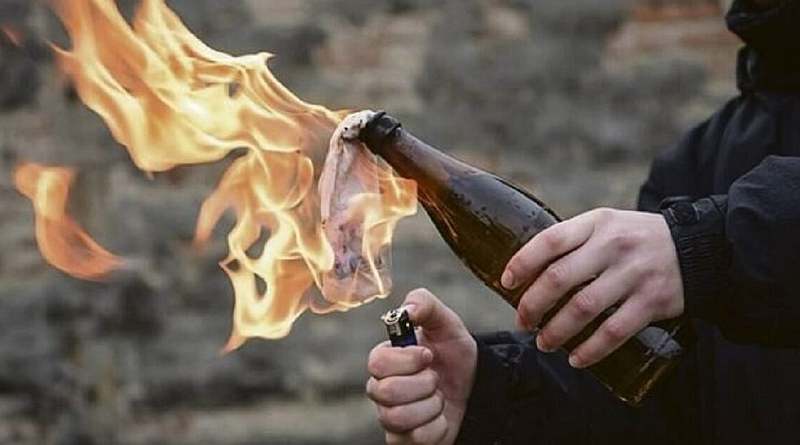
In September this year, a fire broke out near the defense plant “Carfil SA” in Brașov, Romania. Days ago, Romanian intelligence established that a network of agents controlled by Russian special services was behind the arson. Among the suspects are one Ukrainian citizen and two Belarusians. They were detained in the EU, where they were planning similar crimes.
This case is just one element of a broad hybrid campaign that Russia is conducting in European countries, including with the help of Ukrainians. Although millions of our fellow refugees are law-abiding, Moscow tries to find vulnerable people among them to replenish the expendable resources for sabotage. Therefore, the impact of each such case is quite loud, which the Kremlin consciously counts on.
Since 2022, around 200 diversions linked to Russia have been recorded in Europe. Most incidents (21%) occurred in Poland. More than 170 perpetrators have already been identified, among them Ukrainians. All traces lead to Russia, but Moscow traditionally denies its involvement in forming agent networks for hybrid operations in the EU.
The Kremlin’s main goals: intimidating Europeans and undermining military aid to Ukraine. Therefore, Poland, through which the primary flow passes, has become the main focus of Russian special services. Its rail lines, warehouses, logistics hubs, and defense enterprises are featured in most known cases.
Why does the Kremlin seek to use Ukrainians? Firstly, due to the desire to impose a toxic image on our refugees, secondly, to incite anti-Ukrainian sentiments, and primarily to confuse the traces. Involving Ukrainians gives Moscow a “plausible alibi”: the perpetrator is not only not connected with Russia but indeed has a Ukrainian passport.
Russian special services target refugees with vulnerable situations: low-income individuals, people from temporarily occupied territories, or those associated with crime, and teenagers looking for easy earnings. Recruitment often occurs through social networks and messengers, particularly in job search chats. After establishing contact, the Russian curator gives simple tasks: taking photos of an object, posting stickers, etc. Later tasks become riskier: monitoring objects, property damage, arson, or even bombing. Executers are required to record the result on video for reporting to the curator. Sometimes saboteurs are unaware of whom they are working for, and often remain without any reward after the task is completed. Once the operation is over, the executer has effectively committed a crime and is controlled through blackmail. Then, bleak prospects await: detention and a long prison term. Russia uses such people as “torpedoes,” not guaranteeing them cover or assistance after the sabotage work.
Agent networks are being exposed, and perpetrators are quickly apprehended, yet this has an effect: European services are forced to spend resources on protecting facilities and strengthening security measures. For Moscow, this is a rather profitable cost-to-result ratio: a few hundred or thousand dollars for a saboteur against significant damage and pressure on European societies.
The Ukrainian Foreign Intelligence Service actively counters this threat by constantly exchanging information with European colleagues, participating in identifying the methods and practices of Russian special services, and detecting recruitment channels and potential sabotage targets.
To avoid becoming a recruitment target, it is important to be cautious of new contacts seeking personal information, offering “easy” money, or promising to “solve” pressing financial issues. One of the indicators of communication with a representative of hostile special services is the condition for maintaining confidentiality in relationships.
An effective way to prevent recruitment is to seek legal assistance from the law enforcement agencies of the host country or the diplomatic representation of Ukraine.
Recruiting Ukrainians for hybrid operations in Europe is a systematic campaign. Its goal is to impose the perception on Europeans that supporting Ukraine is too costly for them. In response, Europe should remain strong and united in supporting Ukraine, improve counterintelligence activities, and increase accountability for aiding the enemy. After all, the slightest weakness always encourages Russia to take more aggressive actions.
Russia Exports Chaos to Europe, But Its Own Rear is Becoming Increasingly Vulnerable
While European intelligence agencies uncover Russian sabotage networks, the number of arsons and other underground actions is rapidly increasing in Russia itself. According to the InformNapalm Fire OSINT database, 242 sabotage cases have been recorded in Russia during the incomplete 2026 year—more than during 2024 and 2025 combined. This trend adds a new dimension to the European discussion: is it enough to defend against Russian sabotage if the cost of aggression for Moscow itself can be increased?
European Infrastructure Targeted
In August 2026, a fire occurred at the facility of the Estonian defense company Milrem Robotics, known for producing unmanned ground systems, particularly for Ukraine. On September 29, the Estonian Ministry of Foreign Affairs reported that the internal security service had determined the arson was ordered by Russia. Tallinn summoned a Russian diplomat to express protest.
On September 14, a fire broke out at an industrial site in Brasov, Romania, near the defense enterprise CARFIL SA, part of the ROMARM group. On October 26, the Romanian Intelligence Service (SRI) announced the exposure of a sabotage network coordinated from Russia. According to intelligence, its tasks were not limited to Romania: among the potential targets were defense and industrial enterprises in other European countries.
These are not isolated incidents. In February 2026, researchers from the International Centre for Counter-Terrorism (ICCT) and GLOBSEC documented 151 cases of Russian sabotage operations in Europe since the beginning of the full-scale invasion. By the end of September, their database included over 180 incidents, comprising executed, failed, and thwarted attacks. Most involved arson or the use of explosive devices.
An important methodological clarification: the increase in the cumulative database does not equate to an increase in attacks specifically in 2026. Some incidents from previous years were identified retrospectively by researchers. However, new cases, particularly in Estonia and Romania, confirm that the campaign continues, and the defense industry remains one of its targets.
In an October study by the Swedish Centre for Eastern European Studies (SCEEUS), it was noted: Russia increasingly links sabotage activities in Europe with obstructing military assistance to Ukraine and defense production.
Arson as a Tool of Physical and Informational Pressure
Russian sabotage operations have a particular feature: even relatively cheap attacks can create disproportionately large informational effects.
An illustrative example is the investigation of arson attacks on commercial sites in Poland and Lithuania. In April 2026, the Polish prosecutor’s office filed an indictment against five individuals in connection with a sabotage network that, according to the investigation, acted in the interests of Russian intelligence.
Prosecutors established that during the arson of an OBI store in Warsaw in April 2024, the perpetrator documented their actions, and some of the video materials were later published by Russian propaganda resources. During the arson of IKEA in Vilnius, group members also filmed the fire and the work of rescuers for future propaganda use.
Another network participant was tasked with arriving at the Marywilska 44 shopping center in Warsaw and filming the fire that occurred on May 12, 2024. The video was forwarded to a curator in Russia.
Thus, in the specific investigated cases, filming the fire was not an incidental accompaniment to the crime but part of the assignment.
Another informational effect arises from the involvement of perpetrators with Ukrainian passports.
Following the sabotage on Polish railways in November 2025, the Polish Ministry of Digitization recorded a campaign aimed at shifting responsibility to Ukraine and discrediting Polish special services. Pro-Russian accounts spread messages about alleged Ukrainian terrorism.
On November 6, 2026, the Foreign Intelligence Service of Ukraine separately warned about the systematic recruitment of socially vulnerable people, including Ukrainian citizens, for sabotage in Europe.
For Russian special services, this is a way to simultaneously obtain executors and create informational pretexts. At the same time, the citizenship of the detainee does not determine the state affiliation of the sponsor, and the involvement of a specific individual cannot serve as a basis for accusations against Ukrainian refugees in general.
242 Sabotages in Russia in 2026
In parallel with the Russian sabotage campaign in Europe, another trend is developing — the rise of underground activity within Russia itself.
The international intelligence community InformNapalm has been maintaining the Fire OSINT database since the beginning of the full-scale invasion, systematizing publicly known incidents on Russian territory. The database allows tracking events by years, months, dates, types of incidents, and categories of objects.
A separate analysis of the “Sabotage” category revealed a significant trend:

According to InformNapalm’s calculations, in 2026 alone, the number of recorded sabotage incidents already exceeded the entire 2025 figure by 87.6%.
Moreover, 242 incidents in 2026 is more than in 2024 and 2025 combined, when a total of 239 cases were recorded.
In total, from the start of the full-scale invasion to November 6, 2026, the database contains 569 incidents of this category.
The sample includes arson of railway relay cabinets, military recruitment centers, telecommunications towers, infrastructure damage, and other publicly known underground activities. However, temporarily occupied Ukrainian territories are excluded from the count. Drone attacks, missile strikes, and other types of events are recorded separately.
This is a fundamental methodological distinction: it specifically concerns the category of sabotage, not the overall number of fires, explosions, or combat strikes.
The presence of an incident in the database confirms its documentation from open sources, but does not mean that the organizers were necessarily Ukrainian special services. Some cases may be associated with autonomous actions of ideological underground, and the attribution of each operation requires additional evidence.
The database is constantly updated, and the latest events may be added with a delay for OSINT verification.
Despite these limitations, the collected statistics show a significant increase in publicly known sabotages in Russia. The rise in registered incidents does not automatically assess the entire underground’s scale, but it indicates increased pressure on Russia’s internal security system.
From Passive Defense to Proactive Deterrence
While Russia tries to increase the cost of European support for Ukraine, the growing vulnerability of the Russian rear raises another strategic question for European governments: can the continuation of aggression be made more costly for Moscow itself?
In March 2026, the European Council on Foreign Relations published a study “From Shield to Sword: Europe’s Offensive Strategy for the Hybrid Age”.
Its authors propose complementing Europe’s traditional defense model with more active tools to counter hybrid threats — in financial, informational, cyber, and other areas.
The logic of this concept is that protecting individual objects does not eliminate the enemy’s ability to organize new attacks.
In the January RUSI study, the financial infrastructure of Russian sabotage networks is examined separately. Researchers point out that financial intermediaries and payment channels for executors can become targets of preventive detection, sanctions, and law enforcement prosecution.
However, even effectively blocking individual networks does not guarantee the cessation of the entire campaign.
SCEEUS researcher Minna Alander warned in October that classical military deterrence is poorly applied to sabotage deliberately organized below the threshold of open armed conflict. In her opinion, a sequence of repetitive measures is needed to restrict the capabilities of Russian operators and gradually increase Moscow’s costs.
The Ukrainian experience adds another dimension to this discussion.
Supporting Ukrainian defense and intelligence capabilities, including operations against legitimate military targets on Russian territory, can be seen as one of the mechanisms for raising the cost of Russian aggression.
Conclusion: Sabotage warfare has a bilateral dynamic
In 2026, two parallel processes are becoming increasingly apparent.
The first is the continuation of the Russian sabotage campaign in Europe, aimed at intimidation, disruption of infrastructure, and weakening support for Ukraine.
The second is the growing number of publicly recorded acts of sabotage on Russian territory itself, accompanied by a separate campaign of Ukrainian strikes on objects of Russian military-economic potential.
In the incomplete year of 2026, the international intelligence community InformNapalm recorded more acts of sabotage within Russia than in the previous two years combined.
This is a clear statistical trend. It does not justify attributing every successful sabotage to Ukrainian intelligence services. However, it indicates that the issue of rear infrastructure security is becoming increasingly relevant for Russia itself.
Moscow was the first to launch a large-scale war against Ukraine and continues to use sabotage as a tool of pressure on European states. But the same logic of costs, chaos, and the necessity to protect numerous potential targets increasingly applies to Russian territory.
For Europe, the key issue is not mechanically copying Russian methods but combining counterintelligence, proactive destruction of agent and financial networks, sanctions pressure, and support for Ukraine’s legitimate defense capabilities.
The increasing vulnerability of Russia’s rear creates new conditions under which Moscow is forced to consider not only the cost of attacks on foreign infrastructure but also the expenses for protecting its own.
