

Information on current Russian losses due to sanctions as of 11/07/2026.
1. Ukrainian Defense Forces hit the Saratov Oil Refinery, which processes about 7 million tons of oil per year.
– Several ignition sources were recorded on the enterprise’s territory.
– The enterprise in the Saratov region has a design capacity of about 7 million tons of oil per year — approximately 2–3% of Russia’s total refining capacity. The plant produces AI-92 and AI-95 gasoline, diesel and marine fuel, bitumen, technical sulfur, and other petroleum products.
– The refinery is significant for supplying the Russian army with fuel, particularly diesel used by military vehicles and armored equipment.
2. The profitability of Russian refineries has started to decline due to falling global fuel prices and a decrease in damping compensations.
– After several months of growth, Russian refineries began to lose profitability, despite maintaining high domestic fuel prices. It is estimated that in October, the calculated return on oil refining decreased by 9% compared to September — to 30.3 thousand rubles per ton.
– The wholesale sales margin of gasoline decreased by 17%, to 31.8 thousand rubles per ton, and diesel fuel by 6%, to 52.9 thousand rubles.
– One of the main reasons was the decrease in global gasoline and diesel fuel prices, which fell for the first time in four months in October. This reduced the difference between the export value of petroleum products and the price of raw materials, worsening the refining economy.
– Additional pressure was created by the reduction in damping compensations, the size of which depends on the ratio of external and internal fuel prices.
– In October, the compensation per ton of gasoline was 36.7 thousand rubles, and diesel was 53.4 thousand rubles. This is 7.1 thousand and 4.1 thousand rubles less, respectively, than in September. A slight increase in Russian wholesale prices could not offset the reduction in state support.
– Meanwhile, total payments to oil companies for damping remain extremely high. In October, 415 billion rubles were allocated from the budget as compensation for September — against 305.5 billion rubles a month earlier. Payments for October will amount to about 370 billion rubles and will be paid in November.
– Thus, it is not about stopping state support but reducing the amount of compensation per unit of fuel and the expected decrease in total payments.
– In the fourth quarter, the profitability of wholesale diesel fuel sales may decrease by approximately 46% compared to the third quarter — to 29.8 thousand rubles per ton, and gasoline by 38%, to 24.5 thousand rubles.
3. Investment plans of Russian businesses have sharply declined due to lack of funds and demand.
– In the third quarter of 2026, the proportion of Russian companies planning to maintain or increase investment programs fell from 19.2% to 7.3%. Meanwhile, the number of enterprises intending to cut capital investments increased from 12.3% to 18.2%.
– Companies are delaying not only development and modernization but also current purchases. Among the enterprises planning to reduce costs, the share of those reducing purchases of raw materials and components rose from 25.4% to 40.4%.
– Savings also affect personnel: among the companies cutting employee expenses, 82.1% plan to limit hiring, and 28.2% allow for layoffs. Meanwhile, 16.4% of survey participants have already reduced production.
– Notably, only 11.5% of respondents identified sanction restrictions as a problem, while 9.8% mentioned the inability to purchase imported equipment. Internal issues proved much more acute for businesses: weak demand, lack of financing, and difficulties with payments.
– The reduction in investments primarily threatens manufacturers of machines and industrial equipment, as enterprises postpone technical re-equipment and modernization.
4. Russian agricultural sector reduced production by 12.3%: falling grain prices and demand for machinery worsen the situation.
– In September 2026, agricultural production in Russia decreased by 12.3% year-on-year after growing by 6.6% in August. Falling grain prices create additional pressure on producers. The price of wheat on the domestic market has dropped to about 8,000 rubles per ton — almost 40% below last year’s level. A reduction in export demand and logistics issues exacerbate pressure on the domestic market, where significant grain stocks are accumulating.
– The worsening situation is also affecting the agricultural machinery market. In September, shipments of Russian-made grain combine harvesters decreased by 65.3% year-on-year to 41 machines, and tractors by 30% to 182 units.
– Over nine months, sales of combines and tractors still showed growth, but this was primarily driven by the results of the first half of the year.
5. Underfunding of healthcare in Russia exacerbates the demographic crisis: natural population decline could reach 600,000 people.
– Government funding of Russia’s healthcare system is almost three times lower than that of developed countries and nearly twice below the benchmarks recommended by the World Health Organization (WHO). In 2027–2029, total government spending on healthcare will account for only 3.6–3.7% of GDP, whereas in developed countries this figure reaches 8–10%, and in countries with comparable levels of economic development, it’s 5–6%.
– In 2027, total budget spending on healthcare will increase by approximately 6%. This is less than the projected inflation rate, which will mean an actual reduction in funding considering price growth. Meanwhile, the federal budget foresees a nominal 3% reduction in healthcare spending.
– Particularly significant cuts are being made to specific medical programs. Spending on the federal cancer treatment project will be reduced by 12 times, and on healthcare infrastructure development by 30%.
– Amid chronic underfunding, the Russian healthcare system shows poorer results compared to developed countries. Specifically, Russia has higher mortality rates from cardiovascular and oncological diseases, as well as among the working-age population. By the end of 2026, the natural population decline in Russia is projected to be about 600,000 people.
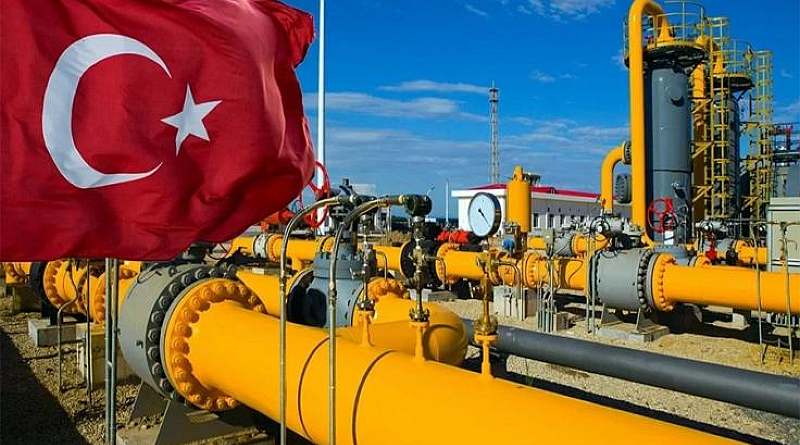
6. Turkey demands Russia lower gas prices and threatens to reduce purchases.
– Turkey may reduce purchases of Russian gas in favor of cheaper suppliers if Moscow does not agree to lower prices. Ankara does not plan to completely abandon Russian gas but intends to choose more economically advantageous offers.
– The reason for reviewing purchases is the high cost of Russian fuel compared to alternative supply sources. Over the last two decades, Russia’s share in Turkey’s gas imports has decreased from 64% in 2006 to about 37% by early 2025. In 2025, Gazprom’s supplies to Turkey amounted to 21.2 billion cubic meters, down from 26.3 billion cubic meters in 2021, a decrease of nearly 20%.
– Azerbaijan’s share in Turkey’s gas imports is about 22%, and the USA’s is nearly 16%. In 2025, Turkey purchased 9.19 billion cubic meters of American liquefied natural gas (LNG).
– Ankara also aims to expand cooperation with American suppliers Cheniere Energy and ExxonMobil through long-term contracts. Russia is gradually losing ground in one of its largest gas markets.
– Turkey uses competition between suppliers to secure better prices and reduce dependence on Russian fuel.
