
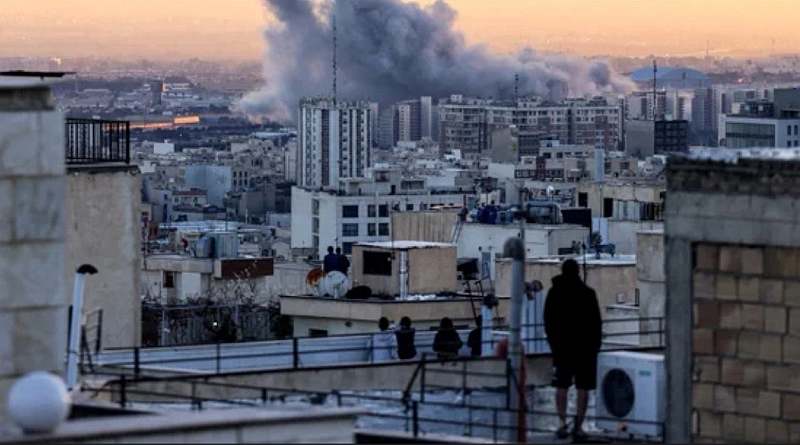

The geopolitical chessboard in the Middle East is rapidly approaching a critical position, where any diplomatic maneuvers lose their initial meaning in the face of inevitable military confrontation.
Iranian President Masoud Pezeshkian will visit Moscow next week on an official visit to hold crucial meetings with Vladimir Putin, although the prospects for real help from the Kremlin remain quite vague and uncertain.
Amid rising anxiety, the Russian side has effectively begun evacuating its own personnel from Iran, as directly follows from the leaks of current messages published by the well-known blogger and journalist Yulia Yuzik. According to her verified operational data, several heavy Russian military transport planes Il-76 have already landed at the strategic Bushehr airbase, which is in close geographical proximity to the nuclear power plant of the same name. Such logistical maneuvers clearly indicate that Moscow prefers to preemptively remove valuable specialists from the site, rather than risk their lives for empty declarations of partnership and mutual support amid the impending storm.
The implementation of a large-scale military scenario, according to leading military experts, will unfold immediately after the parliamentary elections in Israel, when the Israeli political establishment gains full freedom of action to launch a preemptive strike.
Many observers are keenly discussing the possible repetition of the destructive spring “Epic Wrath,” capable of sweeping away all previous agreements and plunging the Middle Eastern region into chaos of unprecedented scale.
At the same time, the American administration shows absolute confidence in its own strength, as loudly declared by President Donald Trump during his recent campaign rally. Addressing residents of Florida, the American leader uttered a phrase that instantly spread through global news: “Don’t worry about Cuba, because we’ll deal with Cuba on the way back from Iran.”
This loud statement not only highlights the scale of American strategic plans but also indicates that the White House perceives the Iranian direction as a key foreign policy objective.
There is serious concern among independent analysts that in order to make large-scale comprehensive deals with the United States, the Russian leadership will completely betray its Iranian ally at a crucial moment, trading its vulnerability for long-term economic dividends.
Such a grim scenario seems increasingly likely, as the Kremlin traditionally puts pragmatic material interests above any diplomatic vows of friendship, leaving Tehran face-to-face with an impending military disaster that could permanently rewrite the history of the entire Islamic world.
