

Yesterday, I asked myself: have we not learned to adapt quickly over these years of war? And I should note, there was no “whining” in that post.
And today I read Kalashnik’s statement – and I have even more questions. I just read now that this is the Minister of Recovery, Infrastructure, and Transport (apologies, of course).
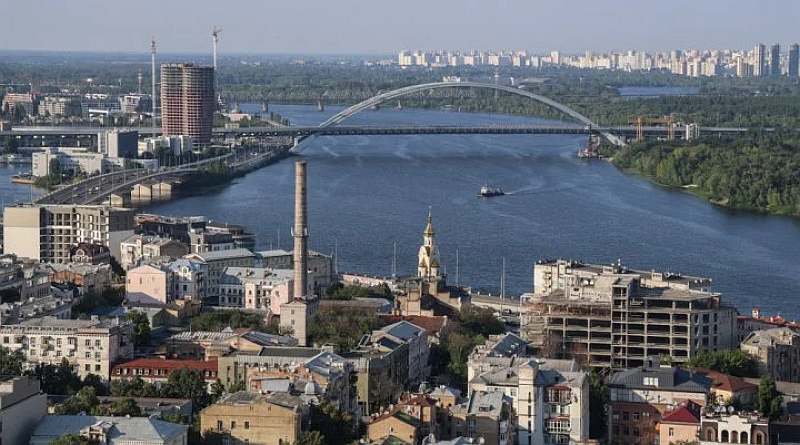
In Kyiv, starting next week, they plan to build embankment dams and pontoon crossings over the Dnieper in case of bridge damage. Construction may take up to three months. The goal is to ensure at least half of the current bridge throughput capacity.
They are also considering rapidly constructed concrete structures. In the long term – even a tunnel under the Dnieper, the cost of which may measure in tens, and for large projects – hundreds of billions of hryvnias.
Of course, the first question that arose: where have we all been until now? And I’m not talking about Klychko right now. About him, it seems labels have been glued on for several years ahead.
But Kyiv during the war is not just one person.
There is the Kyiv City Military Administration.
There is central government.
There is the relevant ministry.
There is the Recovery Agency.
There are military forces.
Moreover, one of the official tasks of the KMWA explicitly states: preparing the city for defense, civilian safety, and ensuring the city’s viability.
So the next question is simple:
- who was supposed to prepare a scenario for the case of one or more bridges over the Dnieper being damaged all these years?
- who was supposed to calculate reserve routes, movement organization, and places where transport wouldn’t gather in large masses at one point in case of restrictions?
Because, when after no answers to these questions, I read: now we will build dams, pontoons, concrete structures, and in the perspective – even a tunnel, a number of new questions arise.
Has all this already been calculated?
Are there projects?
Budgets?
Funding sources?
Responsible parties?
Deadlines?
Or is this just a list of what can theoretically be done so that society hears: “we are working on it”?
Because the minister himself says that the decision was made after a coordination meeting with the President, and now the ministry, the Recovery Agency, and the military, together with the metropolitan authorities, have to deal with the issue.
I no longer want to look for who will be blamed this time.
I want to understand something else: where were all the structures created precisely for such situations? And most importantly, I want them to ACT, not promise.
Photo: Oleksandr Ratushniak
