
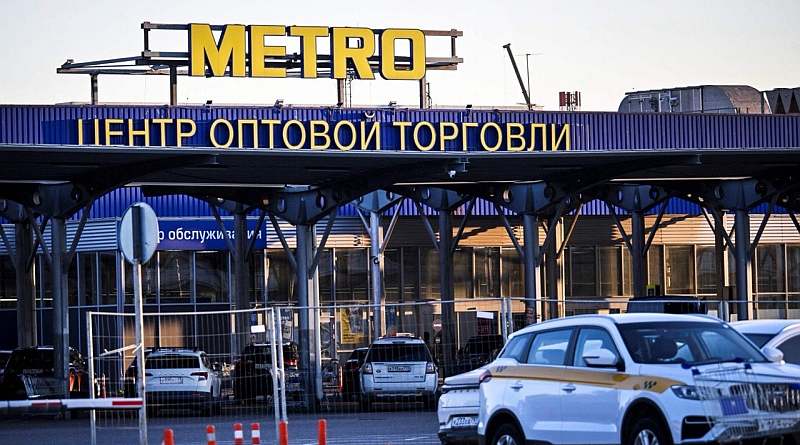

The military conflict between Russia and Ukraine has effectively dismantled the legal system protecting international investments in Russia. The signing of another round of Putin’s decrees on the temporary management or sale of assets of foreign corporations confirms that the Kremlin has shifted to systematic expropriation of foreign businesses. Such decisions have affected the German retail chain Metro, the Russian branch of Western Union, as well as companies like Auchan, Nestle, “Leman Pro” (formerly Leroy Merlin), and the logistics operator FM Logistic.
Official government representatives explain that these actions are because the mentioned structures belong to investors from unfriendly countries that are actively involved in opposition against Russia. However, the term “temporary management” hides a legal facade for the indefinite seizure of property from European owners, depriving parent companies of access to management, financial flows, and dividends.
The strategy of waiting, adhered to by remaining international capital in Russia after 2022, has resulted in a complete loss of control over enterprises. In the initial phase, the state blocked the withdrawal of profits abroad, and then initiated the transfer of management to local structures.
Previously, foreign investors could hope for an agreed exit from the market with a sale of business at a significant discount, but now the Kremlin has completely abandoned the practice of legal transactions in favor of actual gratuitous expropriation.
A characteristic mechanism of the process has been the registration of control to shell companies, created literally a few days before the signing of presidential acts. The transfer of Metro retailer assets under the management of the company “UC Torg Rus” under Johannes Thol demonstrates that previous agreements and the status of a major taxpayer no longer assure the inviolability of private property. Appointing operating managers with Russian or dual citizenship allows maintaining jobs and supply continuity, but permanently cuts off European shareholders from their capital.
Forced redistribution of Western assets has become a key element of economic compensation.
The situation surrounding French retail chains and international industrial giants clearly highlights the scale of the created precedent, destroying trust from any external investors.
The transfer of management to structures like “L.E.V. Management” marked the final shift of legislative focus towards de facto nationalization without any monetary compensation. The legal vacuum, resulting from the total non-compliance with international guarantees, forces international capital to acknowledge the complete eradication of the concept of private property within the country. True Putin Bolshevism and the dispossession of foreign business!
Any calculations by European directors for a civilized dialogue with Russian regulators result in the irrevocable loss of commercial buildings, logistics hubs, and patents.
The attempt to give the process the appearance of legitimacy through regular administrative decrees only emphasizes the artificial nature of the created management bodies. Foreign shareholders no longer have levers of influence over the decisions made, while the local infrastructure transfers into the ownership of trusted individuals controlling the supply of the domestic market at the expense of foreign material resources.
The resulting reality excludes the possibility of returning to previous investment agreements even in the event of a hypothetical normalization of international relations in the distant future. Systematic expropriation of warehousing capacities, large commercial and entertainment spaces, and sales networks undermines the fundamental institutions of a market economy, making dealings with any foreign partners a continuous source of risk for legal confiscation.
