

The tension around the Baltic countries continues to steadily increase, turning the entire eastern flank of NATO into a zone of heightened military and informational activity.
Latvian President Edgars Rinkevics has repeatedly emphasized that hybrid operations, including systematic provocations, cyberattacks, and sabotage against critical infrastructure, have long been an everyday reality for the entire region. Western intelligence services and military analysts are recording increasingly frequent cases of airspace violations of Alliance states by Russian drones and helicopters, forcing allies to urgently develop emergency collective defense scenarios.
While the deployment of NATO’s main forces in the event of an open confrontation may take some time, regional structures like the Joint Expeditionary Force are already at a heightened state of readiness. Particular concern is caused by the so-called “Narva scenario,” in which hybrid methods might be used to directly test the North Atlantic Alliance’s resolve to invoke the basic Article 5 on mutual defense.
Against this backdrop, the top leadership of the Russian Federation exhibits a markedly dismissive attitude toward the military potential of its Baltic neighbors. Vladimir Putin characterized any statements about a possible preemptive strike by Estonia on Russian territory as mere “political clowning,” specifically reminding the public that the total size of the Russian army significantly exceeds the entire population of Estonia combined.
At the same time, the head of the Russian Federation severely criticized the persistent institution of “non-citizens” that exists in some Baltic countries, calling it an absolute legal nonsense since hundreds of thousands of people are effectively deprived of basic political rights while being neither foreigners nor stateless persons. Putin specifically emphasized that Russian authorities intend to continue the most active fight for the rights of compatriots living in the Baltics, which is perceived in Western capitals as a potential pretext for further intervention.
The information and political space is further heated by extremely contradictory signals systematically broadcast by Russian mass media.
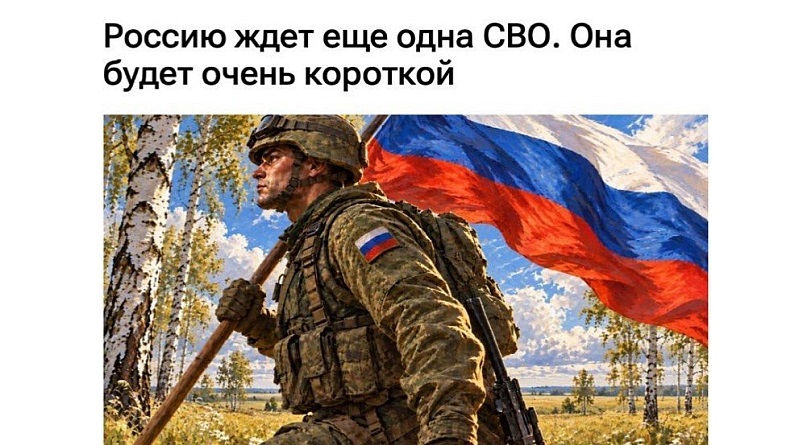
A recent incident involving the publication and subsequent hasty removal by the state agency RIA Novosti of a sensational column by political scientist Nosovich about “another very short special military operation” sparked heated discussion both within the country and beyond.
Although the material was officially withdrawn by the editorial team on the grounds of complete inconsistency with the current state policy, the very fact of such a publication clearly indicates the presence among analysts of forces openly advocating for immediate escalation of conflict.
The vacillation of state propaganda from radical calls to restrained denials demonstrates internal Russian tension after the parliamentary elections in determining the limits of acceptable risk.
Nevertheless, the top Kremlin leadership, judging by the available indirect signs, is trying to avoid sharp steps with unpredictable consequences, preferring to continue the current strategy of attrition until all previously announced objectives, especially in Ukraine, are fully achieved, but this does not mean that the Baltic states can relax—they remain priority targets for Putin’s aggression.
Collage: Occupier Media
