

Information on current Russian losses due to sanctions as of 27.09.2026.
1. The General Staff of the Armed Forces of Ukraine reported the targeting of two Russian factories involved in the production of rocket fuel.
– On the night of September 25, Ukrainian forces struck two large chemical enterprises in Russia that produce materials and components for rocket fuel.
– In the Tula region, the Efremov Synthetic Rubber Plant was hit. It is one of the largest synthetic rubber producers in Russia and the only producer of high-molecular polyisobutylene in the country. This material is used for the production of solid rocket fuel, as well as special lubricants and technical fluids.
– The second enterprise was “Voronezhsintezkauchuk” in Voronezh, which produces synthetic rubber and other industrial materials. According to the General Staff, both plants are involved in the production of solid rocket fuel, particularly for the Iskander ballistic missile complex.
– The Efremov plant was previously attacked in December 2025. At that time, the authorities of the Tula region reported a fire at the enterprise.
2. In Russia, utility tariffs will increase by an average of 11% from July 1, 2027.
– The Russian Ministry of Economic Development raised the forecast compared to the May plans, which expected a rise of 8.7%. Another tariff increase will occur on October 1, 2026—on average by 9.9%. Thus, utility payments will grow significantly for two consecutive years.
– The department explained the revision of the forecast by higher actual and expected inflation. The inflation forecast in Russia for 2026 was raised from 5.2% to 6.8%. For 2027–2029, it remains at 4%. New forecasts for gas and electricity prices also influenced the increase in utility tariffs.
– In particular, electricity for the population in 2027 could rise by 14.4%, in 2028—by 12.1%, and in 2029—by 10.1%. Earlier predictions were 8.6%, 9.1%, and 5%, respectively.
– In 2027–2029, the authorities also plan to additionally include funds in the tariffs for the modernization of utility infrastructure—1.5% annually from the revenues of resource supply companies.
– In the following years, the increase will also be significant: from July 1, 2028, the average tariff is planned to increase by 8.6%, and from July 1, 2029—by 7.6%.
3. Russians have been withdrawing money from banks into cash for the eighth consecutive month.
– The amount of cash in circulation in Russia rose by 386.3 billion rubles from September 1 to 24. Thus, for the eighth consecutive month, the population is withdrawing money from banks in the form of cash, according to data from the Russian Central Bank.
– In August, the amount of cash increased by 434 billion rubles, and in July by a record 620 billion rubles for the year. In total, from February to September, the population withdrew about 2.9 trillion rubles in cash from banks.
– The Central Bank predicts that by the end of the year, the amount of cash in circulation could rise to 3.7 trillion rubles. Meanwhile, banks are facing a reduction in the funds held in personal accounts.
– According to the Central Bank, the balances in individuals’ accounts decreased by 107 billion rubles, or 0.2%, in August. The banking sector attributes the increased demand for cash, in part, to changes in tax regulations.
– Since the beginning of the year, the population has been withdrawing about 500 billion rubles from deposits each month.
4. Russian industry will decline for the first time since 2020.
– Russian industry will shrink by 0.2% in 2026 compared to the previous year. In May, the Ministry of Economic Development had predicted a growth of 0.6%. This will be the first decline in industrial production since 2020, when the decrease was 2.9% due to the pandemic.
– From January to August, industrial production essentially stalled — there was no growth. In August, it declined by 0.8% year-on-year.
– Oil product manufacturing is particularly affected, declining by about 20% for the third consecutive month following Ukrainian attacks on Russian refineries. Due to processing issues, oil companies have been reducing production for seven months in a row.
– According to the new forecast by the Ministry of Economic Development, Russia will produce 494 million tons of oil in 2026. This will be the lowest figure in 17 years.
– Other sectors are also experiencing difficulties. From January to August, clothing production decreased by 4.2%, the chemical industry by 3%, and metallurgy by 5.2%. Elevator production fell by more than 20%, and freight carriages by more than 30%.
– The industry is suffering from a shortage of workers, high credit rates, problems with purchasing and repairing equipment due to sanctions, and logistical disruptions. Some enterprises are reducing production or halting operations due to losses.
5. Russian oligarchs are seeking ways to lift EU sanctions after the success of Usmanov and Fridman.
– Russian billionaires are studying how Alisher Usmanov and Mikhail Fridman managed to be removed from the EU sanctions list. Some hope to use their experience to challenge their own sanctions.
– Usmanov and Fridman became some of the most prominent Russians excluded from the EU sanctions regime. This decision was made following lobbying by France and Luxembourg. At the same time, sanctions against other list members were extended for another 36 months.
– At least two Russian businessmen plan to closely examine Fridman’s case. According to Sergey Glandin, a partner at Moscow’s BGP Litigation, investment arbitration may become a tool to pressure governments and help remove businessmen from sanctions lists.
– Fridman previously filed an arbitration claim against Luxembourg for approximately $16 billion, asserting that the freezing of his assets violated an investment agreement.
– Meanwhile, some Russian businessmen fear that the situation might have a reverse effect and provoke tighter sanctions against other companies still operating in Europe.
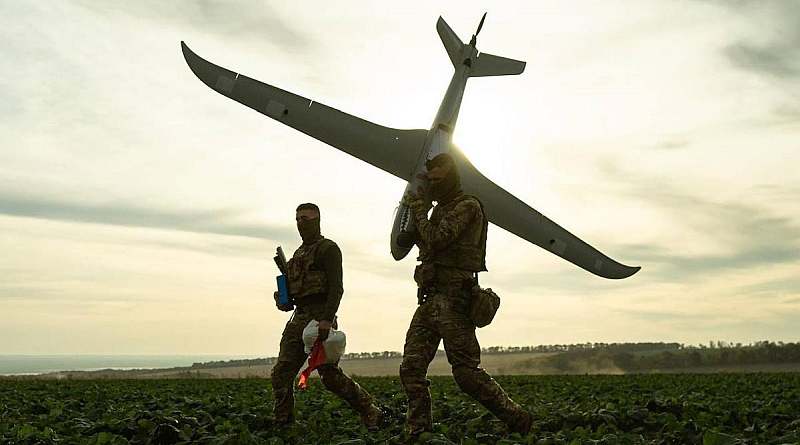
6. The Kremlin has mandated companies to independently ensure protection against Ukrainian UAV attacks.
– Russian authorities have begun shifting an increasing portion of the costs of protecting industrial enterprises from UAV attacks onto businesses. Companies are paying for the development of their own anti-drone systems, renting military air defense complexes, and hiring people to detect and destroy drones.
– Some enterprises are hiring engineers from Russian defense plants to create their protection systems and renting air defense systems from the Ministry of Defense or defense enterprises.
– According to WSJ, some companies pay for these systems monthly while military instructors service them. It was previously reported that military complexes, including “Pantsir,” were placed at enterprises without payment from businesses.
– The demand for anti-drone systems has sharply increased. According to the “Tenderplan” system, in the first half of the year, commercial companies publicly placed tenders for UAV protection means amounting to 441.3 million rubles — 6.6 times more than in the same period last year.
– Actual business expenses may be higher, as companies are not required to disclose all such purchases.
– In August, Putin signed a decree allowing temporary management to be introduced at critical infrastructure sites if their owners do not meet protection requirements. In September, he stated that previously, enterprises were not required to spend their own funds on air defense, but now such requirements have emerged.
– Thus, Russian businesses are forced to independently pay for the increasingly expensive protection of industrial facilities from UAV attacks, as the state directly places the responsibility for the security of enterprises on the owners.
