

The sky over the world’s largest country by area is transforming into a vast spatial isolation trap, where the risk of a large-scale aviation disaster increases daily. The extensive Russian airspace, which for decades served as the shortest bridge between Europe’s and Asia’s economic hubs, has become a system of blocked routes and a zone of constant military threat.
International experts analyze the situation, highlighting the critical decline in flight safety due to the use of unmanned aerial vehicles, massive GPS system disruptions, and emergency closures of major airports.
A statement by Ukrainian President Volodymyr Zelensky marked a new stage of escalation, warning civil aviation of the direct risks of being under the jurisdiction of the aggressor state. “Today we want to warn every airline using Russian airspace, every insurer, everyone still using key Russian airports: Russian skies are becoming completely unsafe,” the Ukrainian leader emphasized, pointing to the inevitability of regular drone appearances in various regions.
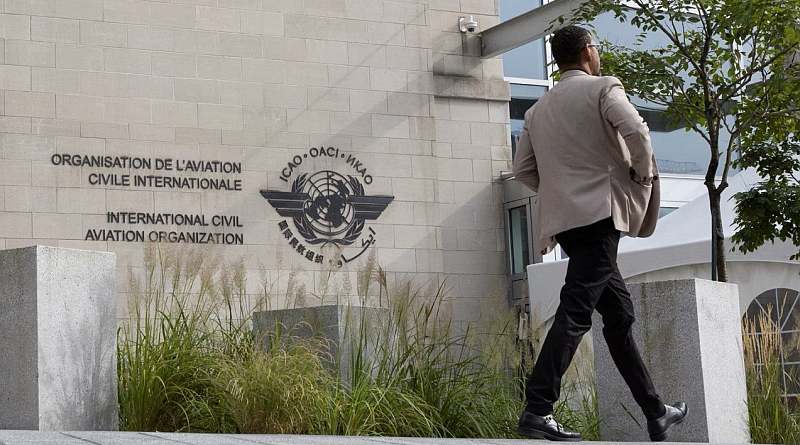
The warning from Ukraine’s top leadership through ICAO is addressed to insurance pools and carriers whose continued operations under current conditions pose a direct threat to the lives of passengers and crews.
Detouring around closed spaces forces international airlines to spend millions of tons of additional fuel. Aviation regulators in Europe and North America have recommended that national operators completely avoid flying over potential conflict zones, leading to significant flight extensions and the relocation of logistics hubs to the Middle East.
Foreign companies lose competitive advantages against residents of states maintaining neutrality, yet even such carriers face rising premiums for military risk insurance.
The lack of direct access to original components forces Russian aircraft operators to use gray supply schemes, significantly undermining the technical maintenance standards of civilian aircraft.
Systematic failures in navigation equipment, caused by the active use of electronic warfare means, create additional hazards during landings in Moscow and southern air hubs.
The regular implementation of the “Cover” plan results in schedule collapses, cancellations of hundreds of flights, and prolonged passenger delays in terminals.
Russian airspace is turning into a mosaic of restricted zones, changing in real-time without prior notification to movement participants. The dependence of civil aviation on military department decisions starkly demonstrates the complete loss of control over ensuring basic international safety standards.
The economic damage from space isolation continues to grow, striking a blow to aeronautical service revenues, which previously amounted to billions of dollars. The loss of a favorable geostrategic position sets the transportation industry back decades, turning what was once an important transit corridor into a closed area of increased danger.
The increasing frequency of drone attacks shows the absolute inability of current air defense mechanisms to guarantee the protection of civilian infrastructure.
The gradual transformation of vast territories into an international isolation stain demonstrates the inevitable consequences of Putin’s aggressive foreign policy for the state’s internal infrastructure. Russian airspace, which provided global connectivity, finally loses the trust of insurance institutions and global carriers, confirming its status as the planet’s most risky region.
