
Marc Champion, Bloomberg / Translation by iPress
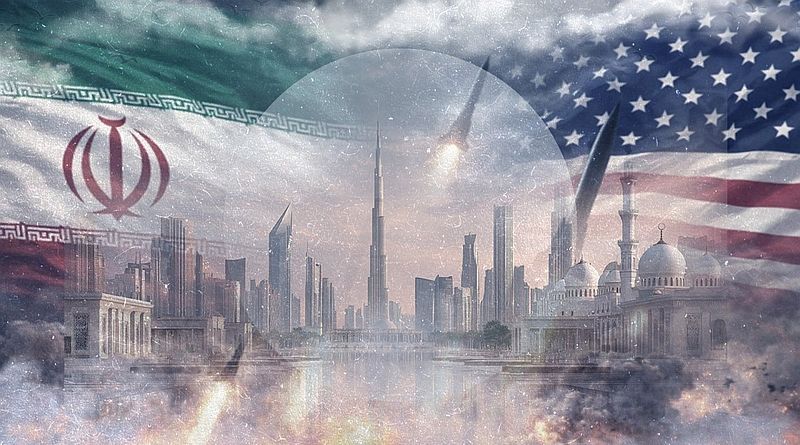
Bloomberg columnist Marc Champion examines the stalemate faced by US President Donald Trump in the confrontation with Iran, explaining it not as a weakness of previous administrations, but as a misunderstanding of the increasingly apparent limitations of American power. He argues that globalization has democratized access to modern warfare technologies—from satellite imagery to drones—which is why the US can no longer impose its will cheaply and guaranteedly even on much weaker opponents. Marc Champion believes that Trump must recognize the limits of American power and seek a long, phased path to an acceptable agreement involving US allies in the Gulf and Europe, as well as China and Israel after Netanyahu’s departure.
It is not the first time since US President Donald Trump began a six-week war with Iran five months ago that he finds himself at an impasse. Just last week, he promised Tehran a hell the world had never seen, suggesting that the Iranian leadership had not yet received a powerful enough blow to realize the futility of resistance. But now he has refrained from strikes, apparently after being explained that there are no acceptable military options.
Two questions arise. First, why can’t the US impose its will on Iran—a country with a much weaker army—even after destroying its regular naval forces and air defenses? Second, how can Trump so misunderstand this incapacity that he must be restrained from embodying the popular definition of insanity—doing the same thing over and over, expecting different results?
The answer to both questions is the same: Trump and several key figures in his entourage came to power having drawn the wrong conclusion from America’s increasingly evident inability to impose desired geopolitical outcomes through the threat of force or its use. They blamed this on the weakness of previous administrations, the misguided adherence to a “rules-based order” supposedly not aligned with US interests, a woke approach to armed forces, the misallocation of resources in favor of Europe, and a focus on pursuing “doing good”—providing aid and building nations instead of waging war.
Undoubtedly, leadership indecision has played a role in the failures of American foreign policy more than once, but overall the administration’s diagnosis is fundamentally flawed. The US is failing in Iran and is likely to continue doing so because technologies have changed the very nature of warfare, shifting the balance of power between large and small states. Trump’s belief in the omnipotence of the American military is simply outdated.
In an article published last week in the Foreign Affairs journal, University of Chicago professor and author of the book “Bombing to Win: Air Power and Coercion in War,” Robert Pape argues that the same globalized economy made possible by American dominance after the end of the Cold War in 1991 has also democratized the spread of new military technologies—from satellite images to microchips and drones.
Therefore, unlike Saddam Hussein’s Iraq during the Gulf War of 1991 or Serbia, which tried to withstand NATO airstrikes in 1999, so-called rogue states that dare to challenge the US today have both the means for an asymmetric response and partners whose power approaches that of the US and who are willing to help them. As a result, in pursuing its interests, Washington can no longer rely on always winning or that victory will be inexpensive.
Iran has already shown that if Trump carries out his threats to destroy the country’s physical and energy infrastructure, Tehran is capable of doing the same to US allies in the Gulf and will almost certainly not surrender, no matter how much damage it suffers. Consequently, the US will expend reserves of vital, hard-to-replenish weapons, ultimately not achieving its goal. Tehran has also demonstrated that it can rely on foreign partners: on China for economic support and on Russia for target data. Proximity to the Strait of Hormuz—one of the critical chokepoints of global oil logistics—allows Iran to significantly amplify the effect of its arsenal of missiles, cheap drones, and fast boats.
Trump is right about one thing: the diplomatic course he pursued with Iran has exhausted itself. This occurred some time ago and was reflected in an extremely blurred ceasefire agreement, which is now falling apart. Its phrasing combined incompatible US and Iran visions for ending the war—a contradiction that made the agreement unviable from the start. Such a construction was inevitably doomed to crack.
The recent article by Mohammad Javad Zarif, former vice president and foreign minister of Iran, shows how this confrontation is viewed in Tehran. According to Zarif, under the current circumstances, the two countries can never become friends, but they are capable of managing their differences with a kind of détente reminiscent of the Cold War era. Zarif—a relatively moderate representative of the Iranian regime, who once negotiated the 2015 nuclear deal that is despised by hardliners in his own country as well as Trump and Israeli Prime Minister Benjamin Netanyahu.
The rest of Zarif’s text clearly illustrates how difficult it is to achieve such a détente in reality. For instance, he explains: Tehran’s control over the Strait of Hormuz is a matter of survival, as for decades the US has used this strait as a weapon, supplying military bases in the Gulf that later were used to strike Iran. According to his version, the lack of Iranian control over the waterway also allowed US allies to continue exporting oil, while the US blocked Iranian oil sales during the “maximum pressure” sanctions regime of Trump’s first term. Free shipping, says the former diplomat, has turned out to be a luxury of peacetime that the Islamic Republic can no longer afford to allow others.
Zarif’s proposed solution is a new security system involving regional states, without the US and Israel. Separately, he proposes a truce agreement with Washington, under which the US must lift sanctions and pay war reparations, and Tehran only has to declare an obligation not to create nuclear weapons. No US president could agree to such an outcome, which completely ignores Iran’s destabilizing regional role: its support for non-state armed groups in Iraq, Lebanon, and Yemen, and the approval of the terrorist attack on Israel on October 7, 2023—factors that contributed to the decision for the US and Israel to strike.
Now Trump has no choice but to find a way to end the war that accounts for the limits of American power and uses a much more inventive “carrot and stick” policy to persuade Iran to accept an acceptable deal. This will require a python strategy that leads to the goal much more slowly than Trump would like. For such a prolonged “squeeze,” he should involve US allies in the Gulf and Europe, who are at greater risk in this conflict than the US itself, and bring in China and Israel after Netanyahu’s departure. He can start this work now—or after another round of military escalation fails, further depleting American arsenals and creating new problems that will need to be resolved.
