

Information on current losses of the Russian Federation due to sanctions as of 07/26/2026.
1. Russia extended the ban on gasoline exports until the end of 2026 due to the fuel crisis.
– Russia will extend the ban on automotive gasoline exports until the end of 2026, announced Deputy Prime Minister Novak.
– The decision will apply to both fuel producers and traders. The ban was implemented in April as a temporary measure until the end of July amid a severe fuel shortage caused by Ukrainian strikes on oil refining infrastructure.
– Its extension indicates that the authorities failed to stabilize the domestic market. Meanwhile, the government plans to lift restrictions on diesel exports after restoring market balance.
– It has also agreed to reduce the diesel stock exchange sales standard to 2%, and the freed volumes are planned to be supplied to farmers and other consumers through direct contracts.
2. Russian state companies and oligarchs are massively cutting investments despite Putin’s demand to accelerate the economy.
– Putin called on the largest state companies and Russian billionaires to increase investments to support the economy, but in practice, businesses sharply reduce capital investments due to sanctions, high credit rates, and declining profits.
– According to Rosstat, in the first quarter of 2026, investments in the Russian economy fell by 14.3% — the worst figure since 2009. The largest companies have collectively reduced their investment programs by 307 billion rubles.
– Among the largest cuts:
– “Gazprom” reduced capital investments from 411 billion to 376 billion rubles, and its investment program for 2026 was cut by almost 32%.
– “Rosatom” will halve investments from 1.66 trillion to over 900 billion rubles.
– “Novatek” nearly halved funding for the “Arctic LNG-2” project — from 87 billion to 46 billion rubles due to sanctions restrictions.
– RZD is reducing investments for the second consecutive year — this year’s will be half of those in 2024.
– “Severstal” cut its investment program by a quarter.
– Against this backdrop, Putin admitted that economic growth had practically halted: in the first five months of the year, Russia’s GDP grew by only 0.2%.
– Due to sanctions, high risks, and lack of property protection guarantees, foreign capital is not entering Russia, and domestic investors are also reluctant to invest.
– According to the Prosecutor General’s Office of the Russian Federation, since the start of the full-scale war, the authorities have nationalized private assets worth about 4 trillion rubles, further undermining the country’s investment appeal.
3. The EU allowed the confiscation and sale of Russian oil from detained “shadow fleet” tankers.
– The European Union, within the framework of the 21st sanctions package, has introduced a mechanism allowing member states to confiscate and sell oil from detained “shadow fleet” tankers that violate the sanctions regime.
– After the detention process is completed, EU states will be able to sell seized cargo to third parties, and the proceeds will not be transferred to Russian individuals or legal entities. The new rules apply not only to oil but also to other cargo, including grain.
– The impetus for introducing the mechanism was the Smyrtos tanker case, whose oil the UK plans to sell after completing the investigation. The new regulations also allow for detained cargo to be stored within the EU until it is sold.
– According to the European Commission, the new restrictions could deprive Russia of about $3.5 billion in oil revenues over a year, assuming the average price of Urals is around $60 per barrel.
– The effectiveness of this mechanism will largely depend on actual world oil prices and the level of compliance with sanctions.
4. The EU has imposed sanctions on one of the world’s largest cryptocurrency exchanges, HTX, for assisting Russia in circumventing restrictions.
– The European Union, as part of the 21st sanctions package, has included the cryptocurrency exchange HTX (formerly Huobi) in the sanctions list, accusing it of facilitating the circumvention of sanctions imposed on Russia. HTX was included in a list of 18 companies that, according to the EU, provided cryptocurrency services to help Russian users circumvent international financial restrictions.
– At the same time, EU sanctions do not entail a complete blockade of the exchange’s activities or the freezing of its assets, but they significantly limit European companies’ cooperation with the platform.
– HTX was founded in China in 2013, and in 2022, control was taken over by Hong Kong entrepreneur Justin Sun. He is also one of the largest investors in the crypto project World Liberty Financial, co-founded by Donald Trump and his sons. Previously, in May 2026, the UK imposed sanctions against HTX, calling the exchange part of a “shadow financial system” that supports Russia’s war economy.
– This was the first case where one of the world’s largest cryptocurrency exchanges faced sanctions.
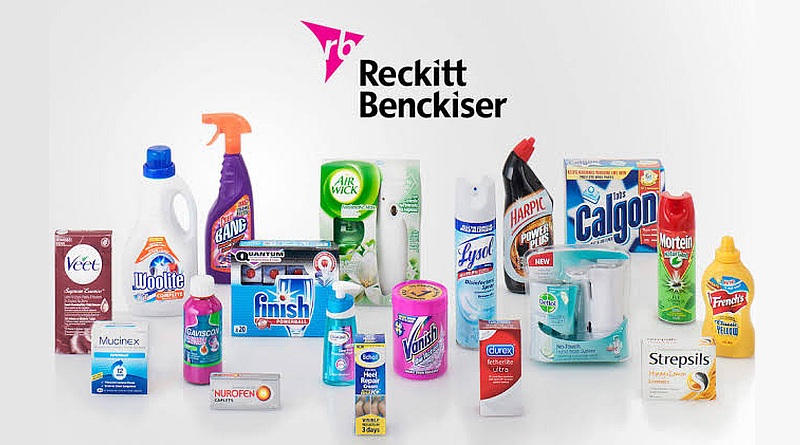
5. British Reckitt is selling its Russian business of household chemicals and hygiene products.
– British company Reckitt has agreed to sell its Russian division to the local group “Arnest,” continuing to reduce its presence in the Russian market.
– The deal includes a manufacturing site in Moscow, rights to local brands, and the transfer of about 400 employees to the new owner.
– Meanwhile, rights to Reckitt’s global brands are not included in the deal, and the company will retain its health business in Russia. Reckitt noted that due to restrictions imposed by the Russian authorities on the exit of foreign companies, the revenue from the sale will be limited.
– In connection with the deal, the company expects to record a post-tax loss of around 175 million pounds (233 million dollars).
