
The appointment of the new Commander-in-Chief of the Armed Forces of Ukraine stirred up a storm in the informational space. Complete confusion of expectations, powers, tasks, and personal assessments. But voices on how war management is structured are rare — barely heard.
Let’s set aside names and faces and look at who should do what.
The Supreme Commander-in-Chief’s Headquarters
The provisions on the Headquarters are a classified document, not publicly available. However, Article 8 of the Law of Ukraine “On Defense” stipulates that the Headquarters of the Supreme Commander-in-Chief is created to provide strategic leadership of the Armed Forces of Ukraine, other military formations, and law enforcement bodies during a special period, as the highest collegiate body of military defense management of the state in this period.

This means that the Headquarters decides how and where to conduct the war, carry out the Kursk operation or Belgorod, land in Krynky or Murmansk, bomb Wildberries or Ozon. It’s not the Commander-in-Chief of the Armed Forces of Ukraine, but the Headquarters that decides.
The Headquarters consists of 25 members, of whom seven are military personnel. Conditionally, the Minister of Internal Affairs of Ukraine, the Head of the State Security Administration of Ukraine, the First Deputy Secretary of the National Security and Defense Council of Ukraine, and the Head of the State Service of Special Communication and Information Protection of Ukraine can also be considered military-related.
Here, decisions are made on what operations to plan and conduct.
Ministry of Defense of Ukraine
The Cabinet of Ministers’ Resolution No. 671 dated November 26, 2014, “On Approving the Regulation on the Ministry of Defense of Ukraine,” defines that the Ministry of Defense is the main body in the system of central executive bodies, which forms and implements state policy on national security in the military sphere, defense, and military construction in peacetime and in special periods. It also handles state military-industrial policy, state policy in the defense-industrial complex, in the aviation industry, and forms and implements state policy in the field of space activities.
Among the tasks of the Ministry of Defense are ensuring the formation and implementation of state policy on national security in the military sphere, defense, and military construction; forming state policy concerning digital development, digital innovations, and technologies in the field of defense; conducting military-political and administrative management of the Armed Forces; forming and implementing state policy on national resistance; organizing work on creating equipment for the needs of defense and state security, and other strategic industrial sectors.

The Ministry of Defense DOES NOT MANAGE combat operations and does not send combat orders to storm specific positions or sink any tanker or freighter.
Article 10 of the Law of Ukraine “On Defense” assigns the Ministry of Defense the task of ensuring the proper level of combat readiness, staffing, combat and mobilization readiness, and training of the Armed Forces of Ukraine. It acts as a state customer during defense procurements according to the needs, requirements, and priorities determined by the General Staff of the Armed Forces of Ukraine, providing staffing for the Armed Forces of Ukraine, other military formations, and relevant law enforcement agencies. It also cooperates with ministries and other central executive bodies, the Council of Ministers of the Autonomous Republic of Crimea, local state administrations, and local self-government bodies on measures to prepare citizens for military service, conscription for military service or acceptance for contract-based military service, during mobilization. It ensures the rights and freedoms of service members upon demobilization.
Simply put, the Ministry of Defense is supposed to procure everything listed as a need by the General Staff, supply personnel, and prepare the population for military service.
Not the Commander-in-Chief, not the General Staff, not the Ground Forces Command, not the Military Commissariat, but precisely the Ministry of Defense ensures the staffing of personnel. How it manages this process is what will determine what kind of vehicle arrives.
Commander-in-Chief of the Armed Forces of Ukraine

According to the Decree of the President of Ukraine dated March 27, 2020 No. 123/2020, the Commander-in-Chief carries out direct military leadership of the Armed Forces of Ukraine, manages the application of the Armed Forces of Ukraine, forces and means of other Defense Forces components under his command, determines the set of combat-capable forces and means of the Armed Forces of Ukraine to be transferred to the Commander of the Joint Forces, organizes control over the provision of the Armed Forces of Ukraine with military equipment, weapons, and other property and resources, approves documents (doctrines, instructions, standards, etc.) on the application of the Armed Forces of Ukraine and other Defense Forces components during the state’s defense tasks, organizes the development and submission for approval of the Strategic Intent of the application of the Armed Forces of Ukraine, other Defense Forces components to repel armed aggression, and the Strategic Plan for the application of the Armed Forces of Ukraine.
Many interesting points, let’s consider some:
• carries out direct military leadership of the Armed Forces of Ukraine, management of the application of the Armed Forces of Ukraine and forces and means of other Defense Forces components under his command
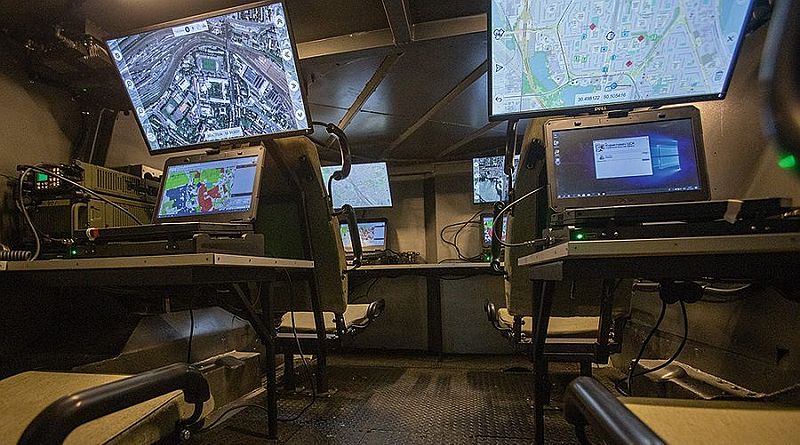
The Commander-in-Chief does not sit on the front line, does not lead tanks into attack; he manages the troops through subordinate control bodies from the command post and periodically operates at control points of groups acting in the most important or threatening directions;
• determines the set of combat-capable forces and means of the Armed Forces of Ukraine for transfer to the Commander of the Joint Forces
The strategic operation (in our case, defensive) is planned and conducted by the Commander of the Joint Forces, using the set of troops determined and transferred by the Commander-in-Chief;
• organizes control over the provision of the Armed Forces of Ukraine with military equipment, weapons, and other property and resources
It does not ensure but organizes the monitoring of the state of provisioning, which is fundamental. This means the commander-in-chief regularly and systematically pressures the minister of defense, inquiring about weapons, ammunition, and personnel. This is not a “personal conflict,” it is the duty of the commander-in-chief. Therefore, the commander-in-chief cannot spend 100% of the time at command posts; they need to regularly invigorate the minister and direct the chief of the General Staff. Another detail: the commander-in-chief DOES NOT MONITOR the provisioning state of the formations of the National Guard, State Border Service, and all others transferred to him. Whether they have bullets-shells-tanks-machine guns-food-fuel is the problem of their commanders, mostly the minister of internal affairs of Ukraine;
• approves documents on the use of the Armed Forces of Ukraine and other components of the Defense Forces.

The General Staff planned a strategic operation and sent the corresponding directive to the Commander of the Joint Forces. The Commander of the Joint Forces led the planning, preparation, and provisioning of the operation, went to the commander-in-chief with the plan and reported how it would all be executed, received “approval” — and on the appointed day at a certain hour, the troops began to implement the agreed plans, for example, breaking through the Surikov line.
General Staff
The General Staff handles the defense planning of the state, strategic planning for the use of the Armed Forces, other components of the Defense Forces, organizes the preparation of the Armed Forces to fulfill the tasks assigned to them, coordinates and controls the preparation of other components of the Defense Forces to carry out tasks concerning the state’s defense.
The General Staff organizes the development of operational plans for the deployment of military groupings (forces) and plans for individual operations of the Armed Forces, plans the territorial defense of Ukraine, ensures the implementation of measures for organizing and maintaining the activities of the resistance movement (i.e., all partisans and underground fighters must be provided for by the General Staff), develops a draft mobilization plan for the Armed Forces and designated components of the Defense Forces (long completed and now simply absent), implements the planning of measures for the creation, maintenance in readiness, and timely deployment of strategic reserves (everyone except the Armed Forces forms their own strategic reserves), determines the personnel needs for the Armed Forces (i.e., calculates how many people are needed and when), organizes the conscription of citizens for military service (that’s who organizes the mobilization conscription!), determines the needs, requirements, and priorities of the state defense order for the development, production, modernization, repair of weapons and military equipment, the execution of works and provision of services for the needs of the Armed Forces (it’s not the Ministry of Defense that determines the circle of people close for supplying what they produce, but the General Staff determines the volume needed by the troops).
Overall, the General Staff has 153 tasks. Count how many “parquet colonels” are needed for all this to work. In 2010, the number of the General Staff was set at 750 positions, currently unknown, as there is no open information. But in 2024, a reduction of 60% was announced. To make it clear: the brain volume is reduced by 60%. How will the organism react to such innovations? With seizures? Heart attacks? Breathing issues? In 1945, the General Staff of the Soviet Army had a strength of 3500–4000 people, who managed an army of 11.3 million bayonets. Taking into account the structures subordinated to the General Staff, such as the military connection service, the total strength of the General Staff reached 10,000–12,000 people. Given the Defense Forces’ strength of approximately one million people, the General Staff’s staff of 1000–1200 positions does not seem abnormal.

In summary, we can build a chain:
• The Commander-in-Chief’s Headquarters determines the strategy of the war, including its objectives, indicates which operations to conduct and where;
• The Ministry of Defense provides the Defense Forces with everything necessary for waging war, including personnel;
• The Commander-in-Chief carries out direct military leadership of the Armed Forces (not an operation/operations!), ensuring that the Ministry of Defense timely supplies what is necessary for combat operations;
• The General Staff plans the strategic use of the Armed Forces, determines their needs, and organizes the conscription of citizens for military service. The results of strategic planning are transferred to the commander of the Joint Forces for planning and conducting the appropriate strategic operation together with the corresponding set of troops.
We won’t delve into lower instances, there’s still a lot of interesting things there, but we’ll note that the defense of the capital is the responsibility of the Commander of the Land Forces of the Armed Forces of Ukraine. Not the Commander-in-Chief, not the General Staff, but specifically the Commander of the Land Forces. A corresponding grouping of troops has been created for this purpose, which will be used. Just as it was in February-March 2022. No spontaneity or chaos, everything is planned. Even the hustle and bustle of volunteer formations in territorial communities. Of course, not everything went smoothly, but Kyiv was defended, and the combat actions were managed by the generals and officers of the Land Forces Command, many of whom I have the honor to know personally.
Next week, we’ll talk about the thoughts of former Commander-in-Chief General Muzhenko regarding changes in approaches to the Armed Forces of Ukraine and within them, illusions and expectations of citizens regarding the appointment of a new commander-in-chief and Chief of the General Staff, the challenges they face, particularly the old nomenclature system.
Cover photo: Ministry of Defense of Ukraine
