
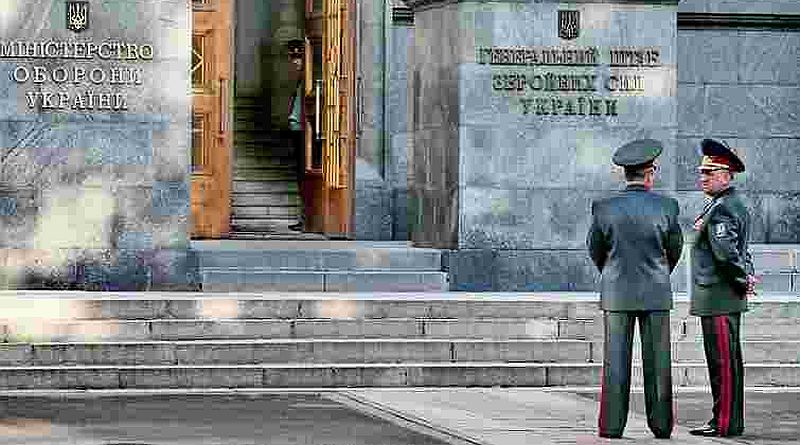
Lately, there is an increasingly populist notion in the public space that “only the military can evaluate the military.” In reality, the concept of civilian control is one of the fundamental principles of democracy and a key mechanism that makes the army stronger and the state accountable to society.
This was noted in her post by strategic communications expert and hybrid threats specialist Lyubov Tsibulskaya.
The Essence of Civilian Control
According to Tsibulskaya, the notion that only the military has the exclusive right to evaluate themselves is best refuted by the concept of civilian control, which developed after World War II as a system of checks and balances.
“It is intended to prevent the concentration of power in the hands of either politicians or the military. One of the fundamental principles of democracy is that the military is subordinated to civilian leadership. That is why there are civilian defense ministers, parliamentary control, judicial control, and public control,” emphasizes the specialist.
The expert highlights that the idea of civilian control is embedded in several major strategic documents of Ukraine. She agrees, however, that civilians should not dictate to the military how to plan operations, when to withdraw brigades, or what tactical decisions to make, as these are areas of professional military competence.
“But this does not mean that society does not have the right to ask questions about the style of management. About attitudes towards people. About the rules that operate within the army. About how clear, fair, and uniform they are for everyone. About how human resources are utilized. About whether accountability mechanisms work,” explains Tsibulskaya.
As an example of a systemic response to violations, she cites the events of 2004 in the USA when the world saw photos showing American soldiers abusing Iraqi prisoners at Abu Ghraib prison. The entire country talked about it: the media wrote about the events, human rights activists sounded the alarm, Congress held hearings, and then-Defense Secretary Donald Rumsfeld personally testified before the Senate and the House of Representatives. The US Army conducted a series of official investigations, and the main discussion focused on whether these were just individual offenders — “a few bad apples,” or evidence of systemic problems in management and command.
Protection of Servicemembers’ Rights
Another reason why the claim “only the military can evaluate the military” is flawed, according to Lyubov Tsibulskaya, is the fact that the vast majority of Ukrainian defenders are former civilians. Upon entering the strict hierarchical system, they are often unable to openly speak about issues if they arise.
“Sometimes it is the civilian society that must become their voice. When we say that only the military can criticize military command, we effectively leave many servicemembers without the opportunity to be heard,” states the hybrid threats specialist.
The expert emphasizes that only professional military personnel should speak about operational decisions, and there is no debate or manipulative need to reduce everything to this issue.
“It concerns the quality of management, adherence to human rights, fairness of procedures, and the accountability of military institutions to society. Citizens have the right to speak about this. Because it is frightening to imagine what could happen if society is further prevented from asking inconvenient questions,” Lyubov Tsibulskaya asserts.
She concludes that civilian control is precisely the mechanism that makes the army stronger and the state democratic, which is in everyone’s best interest.
