

Information on current losses of the Russian Federation due to sanctions as of 30.06.2026.
1. The Ukrainian Defense Forces have struck three bridges and Russian military logistics facilities.
– The Ukrainian Defense Forces reported a series of strikes on military infrastructure, logistics routes, and command posts of the occupying forces.
– A road bridge near Novoazovsk, two railway bridges in the Luhansk region, a supply depot near Novosvitlivka, as well as three UAV command points in the areas of Hulaypole, Tyotkino, and Bakhmut, and an EW point near Velyka Novosilka were hit.
– Additional analysis confirmed the successful targeting of two military communication facilities in the Minyaevo area of the Moscow region. One building was destroyed and another suffered significant damage with partial destruction.
– Strikes on bridges, depots, communication hubs, and command points complicate Russia’s military logistics, impair troop management, and create additional challenges for supplying the occupying forces.
2. Ukraine has struck Russia’s largest space communications center for the second time this month.
– On the night of June 30, the Ukrainian Defense Forces conducted a massive UAV attack on the Moscow region. One of the targets was the Dubna Space Communications Center — the largest such facility in Russia, which has come under attack for the second time in June.
– According to Ukrainian monitoring resources, one Russian serviceman was killed as a result of the attack. The Dubna Space Communications Center is a crucial element of Russia’s military infrastructure, providing satellite communication and control of space systems.
– The repeated targeting of such a facility indicates the systematic nature of Ukrainian strikes on key elements of Russia’s military command and communication.
– Besides Dubna, Russian authorities reported the operation of air defense systems in several other districts of the Moscow region, including Domodedovo, Chekhov, Kashira, Kolomna, Ramensky, and Voskresensk.
3. Russia has started installing machine guns on gas carriers due to increased risks in the Baltic Sea.
– Russia has begun arming its gas carriers with large-caliber machine guns amid increasing tensions in the Baltic Sea and concerns about possible ship detentions.
– On the LNG tanker “Marshal Vasilevsky,” which supplies liquefied natural gas to the Kaliningrad region, two firing points with “Kord” machine guns were recorded for the first time. Nearby, fortifications made of sandbags were equipped for firing. Photographs of the vessel were taken in May 2026 by the Estonian border service during aerial surveillance.
– At the same time, the effectiveness of such armament is minimal. Danish analyst Jens Wenzel Kristoffersen noted that single machine guns are practically incapable of effectively countering modern drones.
– A representative of the intelligence service from one of the Baltic countries also emphasized that integrated systems with several automatic installations, rather than separate machine gun positions, are usually used to combat aerial targets.
– The appearance of machine guns on a civilian gas carrier indicates Moscow’s growing concern for the security of its maritime fleet. It also demonstrates that Russia is forced to strengthen even vessels that ensure strategically important energy supplies amid increasing risks to maritime logistics.
4. The financial stress index in Russia has reached its highest level since 2022.
– The Financial Stress Index (FSI) at the end of June rose to 2.47 points — the highest level since October 2022. The index almost reached the crisis threshold of 2.5 points, exceeding which historically indicates serious problems in the financial system.
– The last time the indicator exceeded this level was in October 2022 — after the announcement of mobilization in Russia.
– The absolute maximum was recorded in March 2022, when the index reached 10 points amid massive sanctions and financial shock after the start of the full-scale war.
– The current rise in the index is caused by the simultaneous deterioration of several key factors: the fall in global oil prices, a sharp increase in stock market volatility, and rising risks in the financial sector.
– In just recent weeks, the Moscow stock exchange index fell to a three-year low, and government bonds also significantly lost in value. The FSI’s approach to the crisis level indicates increased financial tension in the Russian economy.
– The worsening situation in the oil market, the decline in the value of financial assets, and increasing uncertainty are creating additional pressure on the budget, banking system, and the ability to finance the Russian economy under conditions of war and sanctions.
5. The fuel crisis in Russia has reached Moscow: the largest gas station networks have restricted gasoline sales.
– Russia’s largest oil companies, Gazprom Neft and Lukoil, have started implementing stricter fuel sales restrictions in Moscow and the Moscow region amid a worsening fuel crisis.
– At Gazprom Neft gas stations in the capital, an individual customer can purchase no more than 30 liters of gasoline or 60 liters of diesel per fill-up. Filling fuel in canisters is prohibited. On highway stations, the limit for gasoline is also 30 liters, and for diesel up to 200 liters.
– Lukoil has also tightened restrictions. At some stations in Moscow, only 20–30 liters of fuel are sold to each customer, and dispensing in canisters is also prohibited. Earlier, the company had already implemented limits in the Moscow region, but they have now become much stricter.
– The introduction of restrictions in the capital region indicates a further escalation of the fuel shortage. The fuel crisis, which previously mainly affected remote regions, is now increasingly impacting Moscow — a key consumption and political center of Russia.
6. Production of ammonium nitrate in Russia has declined following strikes on chemical plants.
– A decline in the production of ammonium nitrate has been recorded in Russia amid a series of strikes on chemical plants important for the military-industrial complex.
– According to Rosstat, from January to May 2026, the output of nitrate decreased by 9% year-on-year — to 4.7 million tons, with a decline of 14% in May alone, to 786.1 thousand tons. Ammonium nitrate is used not only as a nitrogen fertilizer but is also an important raw material for the production of explosives.
– The main producers in Russia remain Acron, EuroChem, Uralchem, and the Azot Group, which provide about 80% of production and 90% of exports of this product.
– In early 2026, Ukrainian drones intensified strikes on Russian chemical enterprises that could supply components for the military industry. The attacked facilities include the Redkino Research Plant, Metafrax Chemicals, Dorogobuzh, PhosAgro enterprises, KuibyshevAzot, Minudobrenia, and the Azot plant in the Stavropol region.
– At the same time, the production of ammonia — a key raw material for the production of nitrate — has also decreased. Over five months, its volume decreased by 7.5%, to 7.6 million tons. In the spring, Russian authorities temporarily suspended the export licenses for ammonium nitrate to meet domestic demand.
– Despite partial recovery of production in the second half of the year, the industry will not be able to compensate for the losses accumulated in the spring.
– According to estimates by Metals & Mining Intelligence, by the end of 2026, production of ammonium nitrate in Russia will decrease by approximately 5%.
7. China is reducing purchases of Russian oil and timber, increasing pressure on Russian exports.
– China, which became the main purchaser of Russian energy resources after 2022, has begun to reduce imports of certain key goods from Russia.
– Seaborne oil deliveries to China in June decreased by approximately 8% compared to the previous month, dropping to about 6.4 million barrels per day — one of the lowest levels in the last decade.
– At the same time, the situation with the export of Russian timber is also worsening. In the first four months of the year, shipments to China decreased by nearly 30% — to 2.6 million cubic meters, and foreign exchange earnings fell by about a quarter, to $603 million.
– The reasons for the reduction vary, but the consequence for Russia is the same — the narrowing of one of the most important export markets. Demand for oil in China is gradually declining due to the rapid spread of electric vehicles and reduced gasoline consumption, while the construction crisis is holding back timber imports.
– For Russia, this means additional pressure on export revenues. China became the main direction for the reorientation of Russian resources after losing a significant part of the European market.
– If Chinese demand continues to weaken, Moscow will either have to look for new buyers or agree to even greater price discounts, which will reduce foreign currency inflows into the budget.
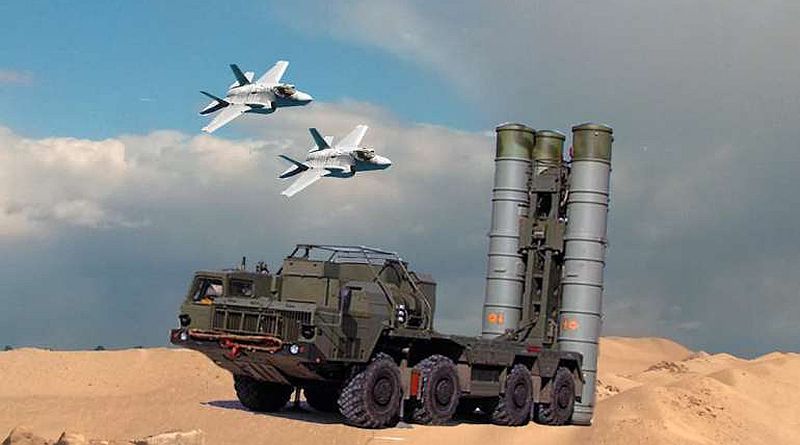
8. Turkey may get rid of Russian S-400s for the sake of American F-35 fighters.
– Turkey is considering selling Russian S-400 air defense systems to a third country to pave the way for purchasing American F-35 fighters. The potential buyer of the systems could be South Korea.
– After purchasing the S-400 from Russia in 2017, the U.S. excluded Turkey from the F-35 program, arguing that the Russian systems could be used to gather data on American planes and pose unacceptable security risks.
– No final decision has yet been made regarding Turkey’s return to the F-35 program. However, progress is possible only if Ankara disposes of the S-400 systems without returning them to Russia.
– The administration of U.S. President Donald Trump has already informed Congress of its intention to approve the supply of American engines worth 613 million euros for the latest Turkish fighter KAAN. This deal has a high chance of being realized.
