
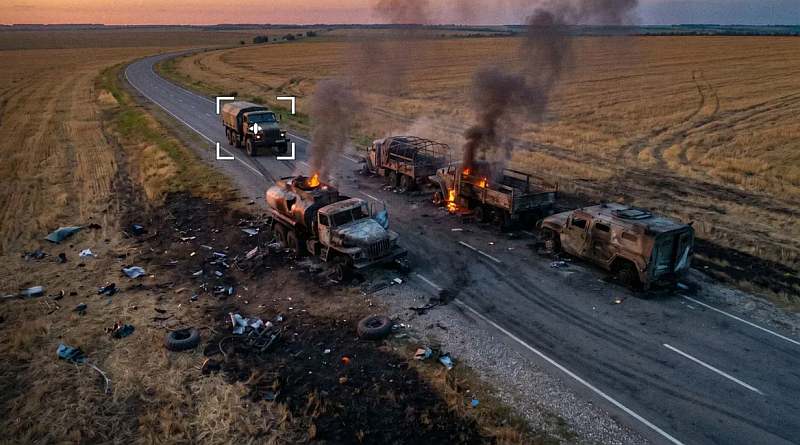
In this war, some changes occur not sharply, but gradually. So gradually, in fact, that they are difficult to capture in real time. Ukrainian medium-range strike campaigns against Russian logistics belong to such changes. There is no one pivotal date or dramatic moment after which it can be said that everything became different. But if you look at the map of confirmed strikes over the past months and compare it to what is happening at gas stations in Crimea or on the R-280 highway, which the occupiers pathetically called “Novorossiya”, the picture becomes quite clear.
How did it all start? Blinding the bear and pulling its fangs
To understand the scale of what is happening, one needs to step back a year. In the spring of 2025, the HUR unit “Ghosts” began systematically launching “Rubak” type drones into Crimea at a distance of over 200 kilometers from the line of contact. The main targets were radars, air defense systems, equipment, and military infrastructure on the peninsula. These were the first systematic strikes of the so-called “midstrike” class — medium-range strikes covering the zone from 30 to 300 kilometers behind the front line. The Russians closely studied our campaign and even gave it an unofficial name in the military correspondent community: “Blinding the bear and pulling its fangs”.
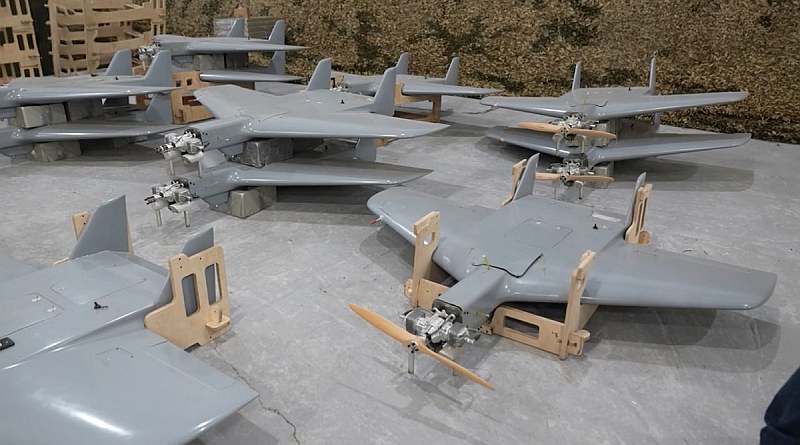
Initially, the campaign looked like a specialized project of several elite units. But by early 2026, the Special Operations Forces, the SBU, and other Defense Forces structures began to join the strikes.
Currently, at least 27 units from various structures are involved in operations deep in the rear. Meanwhile, a significant increase in production took place: at the beginning of 2026, the Ministry of Defense increased midstrike contracting fivefold. Thus, between February and April 2026, the number of medium-range strikes quadrupled. As of the end of May, the total number of confirmed strikes exceeded one thousand, according to calculations by French OSINT analyst Clément Moulin, who has been tracking the campaign since its early weeks.
The main goal in the initial stage was air defense. In the first year of the campaign, the Defense Forces reported over 365 confirmed targets hit, the majority of which were air defense systems. The effect was strategic: under systematic pressure, the Russian air defense began to retreat deeper into the rear. Crews, fearing becoming another victim of a Ukrainian drone, did not spare munitions to intercept even small targets, rapidly depleting already limited stocks of anti-aircraft missiles. The media impact was as significant as the tactical one: Russians moved an additional 43 “Pantsir” complexes to protect Moscow. Then the focus shifted.
Why did this become possible now?
A question that most materials on this topic avoid: why did mid-range strikes “break through” specifically in 2025-2026 and not earlier? After all, the mid-range zone between 30 and 300 kilometers has always existed. The answer lies not in the quantity of drones, but in a qualitative technological leap that changed the very logic of confrontation in the electronic warfare space.
By 2025, the mid-range truly was Ukraine’s Achilles’ heel. Ordinary radio control beyond 50-70 kilometers became unreliable: a dense field of electronic warfare, systematically built by the Russians, effectively suppressed control signals, turning the drone into an uncontrolled target. All attempts to close this zone faced one technical wall — the need to provide a stable, jamming-proof communication channel at depths of hundreds of kilometers.
The breakthrough was ensured by a combination of three factors.
- The first is Starlink as a control channel. Unlike radio waves, satellite communication fundamentally reacts differently to ground-based electronic warfare means: it cannot be jammed by traditional interference setups. Starlink has allowed the effective control range to expand to several hundred kilometers. It is worth noting that this capability was initially widely used by Russia, integrating Starlink terminals into their “Molniya” drones for strikes on Ukraine. However, after SpaceX imposed restrictions on the use of terminals on the Russian side, this asymmetry shifted significantly in favor of Ukraine.
- The second factor is the radio-transparent materials of the body. The FP-2 drone by Fire Point is mainly made of polystyrene and foam polymer: these materials are not only lightweight but also almost transparent to most frequencies used by electronic warfare stations. This complicates both the drone’s detection by radar and the impact on its onboard electronics with jamming. The Hornet’s body, in turn, is made of a material with similar characteristics — expanded polypropylene.
- The third factor is autonomous targeting with artificial intelligence. Even if communication with the operator is interrupted or suppressed in the final segment of the route, the drone can independently identify and attack the target. This is the key feature of the Hornet, developed by the American company Perennial Autonomy (formerly known as Swift Beat), founded by former Google CEO Eric Schmidt. According to Kyiv Independent, the 1st Azov Regiment of the National Guard initiated the installation of Starlink terminals on the Hornet, significantly increasing its range and resistance to Russian jamming. The manufacturer supported these modifications. The result is that the medium zone has become an area of constant fire control. Currently, from several dozen to several hundred devices of various classes operate simultaneously within it.
The Middle Strike Zoo, or The Hunt Begins!
As of mid-2026, the middle strike park includes at least a dozen platforms of various purposes and ranges. Fire Point’s FP-2 is one of the main striking tools for static and semi-static targets. The drone carries a warhead weighing 105 kilograms and operates at a distance of up to 200 kilometers. The company’s designer, Denis Shtilerman, confirmed that work is underway on a version with the same warhead but with an increased range equivalent to a full deep strike. It is worth noting that Commander of the Unmanned Systems Forces Robert Brovdi publicly criticized the quality of warheads from external suppliers. According to him, instead of two, six FP-2s had to be used to destroy the command post of the 58th Guards Army in Kadiivka.
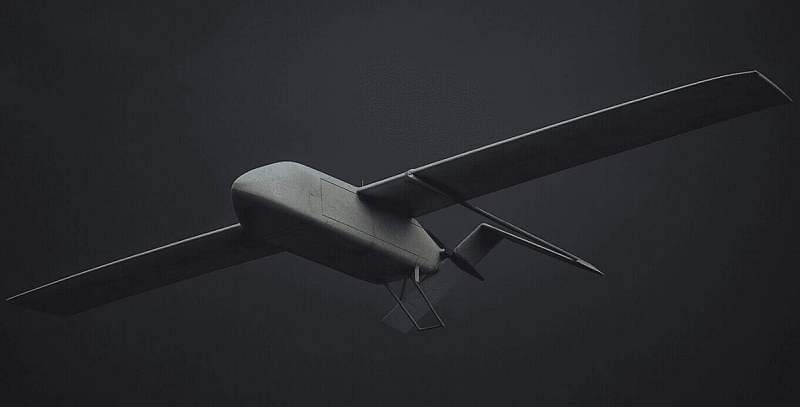
For mobile targets—primarily transport columns—lighter platforms such as RAM-2x and “Bulava” are more effective for operations up to 120 kilometers, as well as Hornet for depths up to 160 kilometers. The Hornet weighs about 15 kilograms, has a wingspan of 2.2 meters, and a cruising speed of 100–120 km/h. A warhead weighing up to 4.5 kilograms is sufficient to confidently destroy any light transport. The drone is known for its image quality even when operating from a distance of 60–70 kilometers, allowing precise target identification before striking. It’s also worth mentioning the Darts drones from the British manufacturer Modini, which previously operated on regular radio control and are now switching to Starlink connection.
The range of mid-strike platforms is constantly expanding. In the past six months, several dozen models of varying degrees of seriality have been added to the already known systems. Since early March 2026, when the increased number of drones became noticeable on the battlefield, military transport has become the main target. Fuel trucks, trucks with ammunition, rotation columns—all movement along key supply arteries of the occupying group has become a legitimate target for the Defense Forces.
A symbolic video of the new campaign stage was published by the 1st Corps of the National Guard “Azov” on May 9, 2026. In it, the Hornet drone flies over occupied Mariupol. It was a message that the rear, previously considered safe, is no longer so.
But even more striking than the flight itself were the videos of the strikes. “Azov” operators recorded how the Hornet attacked a truck on the road, followed by a second drone striking the stopped vehicle and the repair team that came to assist. Then, a third strike on an evacuation vehicle. This is systematic targeting of any movement in the control zone. This iterative logic of strikes became the news of spring 2026. Each mid-strike shot allows immediate result recording through the camera of the next drone coming to finish the task. Continuous feedback and instant evaluation of each strike’s effectiveness is something previous generations of missile strikes did not provide.
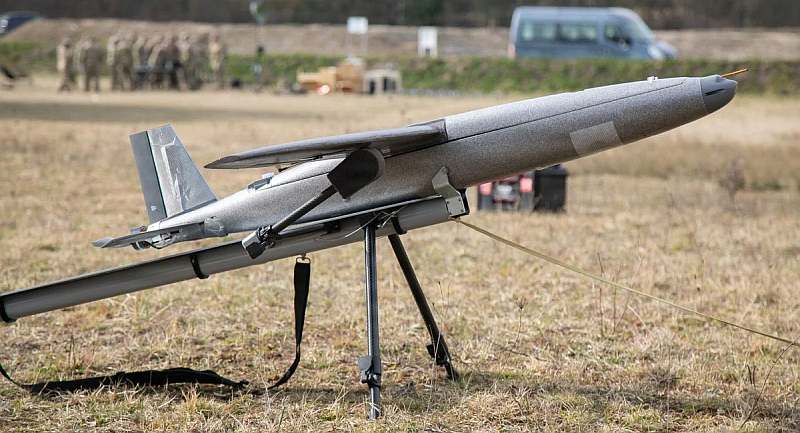
According to Defense Express analysis, the “hunting corridors” for the Hornet are primarily the R-280 route that leads from Rostov through Mariupol and Melitopol to Crimea, as well as the Donetsk — Mariupol N-20 road. The greatest concentration of destroyed equipment has been recorded there. For the entire southern grouping of occupants, this road serves as a vital supply line. Ukrainian commanders report that traffic on the route has decreased by 71% over two weeks of an active campaign.
Simultaneously, bridges and railways used by the occupants to transport military cargo have come under attack. The geography of the strikes gradually expanded: initially, these were mostly in the Zaporizhzhia region and Crimea, but later the roads of Donetsk, Luhansk, and Kherson regions came under fire control. The OSINT community “Cyberflour” analyzed activity dynamics using the OchiAI platform, which processed over 6000 reports from chats and monitoring groups in occupied territories: the number of mentions of drones on roads increased tenfold since the campaign began. Currently, fire control is effectively established along the entire border with Russia. Data for May 2026, published by the Ministry of Defense, confirm the scale: in a month, 19 air defense systems and radars, 8 headquarters and command centers, as well as 50 logistics and storage sites of the occupants have been destroyed.
The Physics of Logistical Pressure
To understand why disrupting logistics is strategically important, not just tactically effective, we need to look at how the supply chain of the advancing group is physically organized.
The American Army field manual FM 54-30 provides a reference: one armored division can consume about 1.9 million liters of fuel per day in active combat. Even with a more conservative estimate for a motorized infantry brigade conducting offensive operations, we’re talking several hundred tons of fuel daily just to maintain mobility. To this, you must add ammunition, food, technical materials, and spare parts. According to RAND Corporation, each combined brigade maintains a 3-5 day supply and requires regular deliveries to avoid depletion. This system must operate continuously: a delay at any point in the chain results in the offensive beginning to slow down before the troops even feel the shortage. This is where the concept of the “logistical tail” comes into play, referring to the distance between the supply depot and the consuming unit.
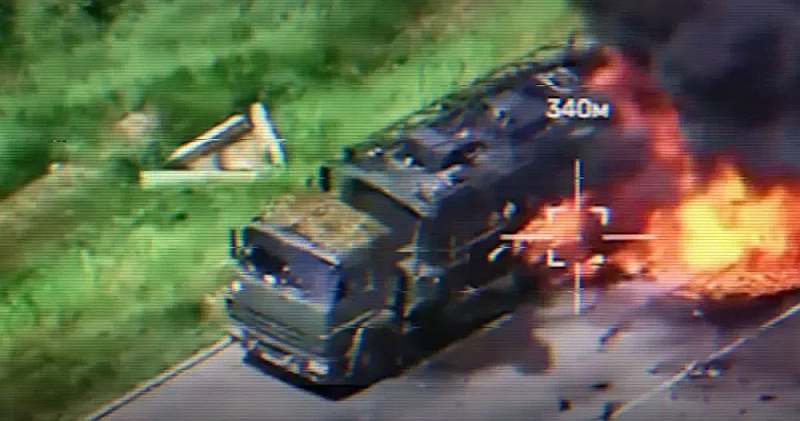
Now, under the pressure of missile strikes, the Russians are forced to look for bypass routes. According to “Oboronka,” these detours increase the logistical range by 1.5–2 times. But what does this mean operationally? If the standard route from the warehouse to the unit was 150 kilometers, the detour extends it to 225–300 kilometers. Each truck consumes an additional 70 to 150 liters of fuel on the extra segment. Travel time increases from 2–3 hours to 4–6 hours in an area already under fire control. Each additional hour on the route increases the column’s vulnerability. Security, which previously ensured one route, now has to cover a route three times longer. Accordingly, the need for personnel, protective armored vehicles, and, again, fuel for the security vehicles themselves increases.
The partisan network “Atesh” recorded another effect: the Russians began transporting fuel by rail from distant regions of Russia, avoiding the formation of large depots due to the threat of strikes. This increases the cost and time of delivering each liter of fuel by several orders compared to pre-war norms.
The cost of logistics for the occupying group is rising even without direct losses in equipment. Deputy Chief of Staff of the Third Army Corps Danilo “Boroda” Novytsky formulates the fundamental logic simply: any system, even mediocre in quality, defeats any “wonder weapon” if it acts systematically. What matters is not a single spectacular attack, but constant pressure accumulation, causing the system to start malfunctioning.
Prayer and “Christmas tree”: how do the occupiers manage?
The fuel deficit is spreading not only in Crimea but also in other occupied territories, even in Russia itself. Analysis by partisans from the “Atesh” network notes that the occupiers have already restructured fuel supply routes, avoiding the formation of large reserves due to the threat of strikes. A refined illustration of the general state is the photograph that spread across the network: priests blessing the R-280 highway “against drones.” It is hard to come up with a more concentrated testimony that technical means of protection are no longer sufficient.
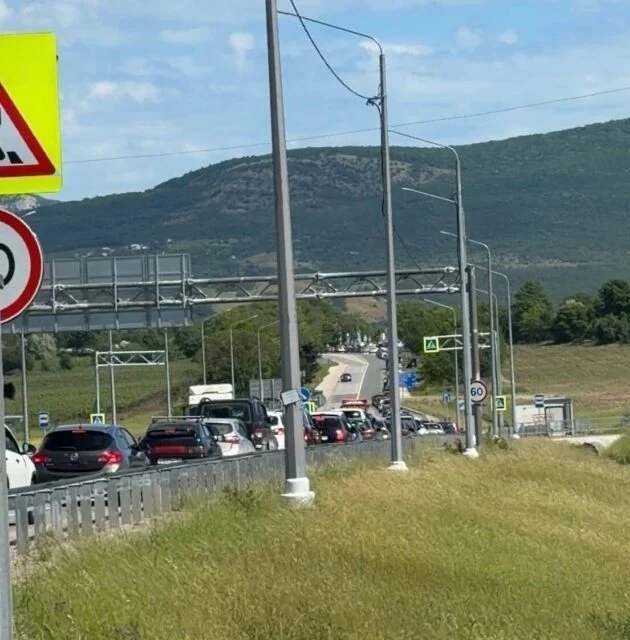
Queues at gas stations |
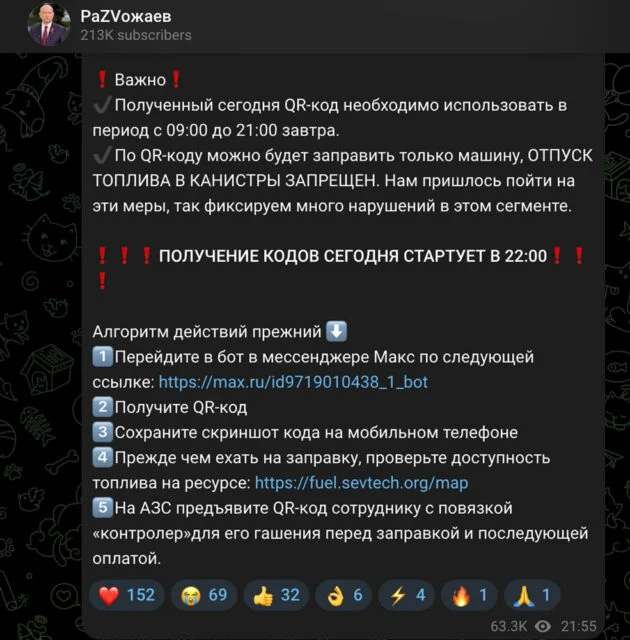
Fuel purchasing rules |
Russians are trying to adapt. The movement of civilian transport is prohibited on highways. More mobile fire groups have been deployed along major roads to shoot down drones with small arms and “Yalynka” drone interceptors. More exotic methods are also being used: trucks are painted in black and white stripes, attempting to fool machine vision algorithms. Movements are shifted to nighttime and routes where drones have not yet flown are sought.
However, the effectiveness of these measures still leaves much to be desired. At night, equipment is perfectly visible through thermal cameras on drones. The “zebra” for fooling artificial intelligence doesn’t work, as confirmed even by the Russian military-tech blogger “UAV Developer.” Safe bypass routes become known to Ukrainian intelligence within a few days, and the logistics shoulder often increases by 1.5–2 times because of this. Any counteraction requires additional resources and complicates the logistics itself that they are trying to protect. Clément Monin assesses the situation cautiously but accurately: on the southern front, where there are few places for cover, all logistics are in sight and become targets. Before the Russians have enough means of counteraction, the Ukrainians will have already moved on to the next stage.
It’s important not to overestimate what’s happening. Military analysts urge not to turn midstrikes into another “game-changer” — a weapon capable of overturning the course of the war in one blow. Logistics has a certain resilience. The enemy adapts, seeks alternative routes, and redistributes resources. The Telegraph in its analysis directly states that “strangling Crimea from air and sea” is unlikely to itself become a turning point in the war. But it’s not about the turning point.
Military observer Igal Levin formulates the logic more precisely: the main indicator of the effectiveness of such actions is not the number of destroyed vehicles, but the reduction in the volume of cargo that the enemy is able to deliver to the right place at the right time.
The degradation of logistics doesn’t require “chasing” every truck. Just as defeating an army doesn’t need the destruction of every soldier, logistical pressure achieves its goal through the accumulation of systemic dysfunctions, not through individual spectacular strikes. The critical question is not “does the campaign work,” but “is sufficient pressure maintained?” So far, the answer is positive. Analysts are already noting the first signs of this process. In certain areas, a decrease in the intensity of attacks is observed. Less fuel in the rear means fewer generators for charging drones. Fewer charged drones result in less intense strikes in the area. Fewer munitions lead to less dense fire. And less rotational transport means more fatigued units that stand longer without replacement. One destroyed tanker is not just one less piece of equipment in the report. It’s a brigade that spends several days solving fuel issues instead of fighting.
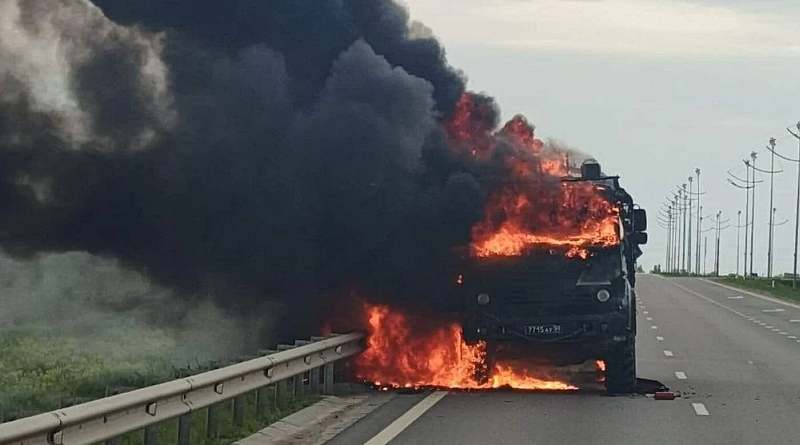
So the main question this summer is not how many kilometers of the front line will change in one direction or another. It’s simpler: can Russia deliver what it needs to the front to support the life of its nearly 800,000-strong grouping on time and in the needed quantity? So far, the answer is increasingly leaning towards “no.”
Cover photo: Ministry of Defense of Ukraine
