

Information on current losses of the Russian Federation due to sanctions as of 28.05.2026.
1. The Ministry of Finance of the Russian Federation is preparing to cut budget expenses due to the worsening economic situation and increasing deficit.
– The authorities are reviewing the budget parameters in light of changing macroeconomic conditions and the need to concentrate resources on the war and the security sector. Almost all areas may be subject to cuts except for social payments and defense and security expenses.
– Among the risky items are infrastructure projects, regional support, business subsidies, state programs, and government apparatus costs. It is also planned to reduce budget loans to regions: if over the last four years, Russian entities received 1.1 trillion rubles, they are promised only 750 billion in 2026–2030.
– The Russian government already acknowledges that reserves are being depleted. The share of budget expenditures in recent years increased from 16.6% to 20% of GDP, and the federal budget deficit for January–April reached 5.8 trillion rubles — 1.6 times more than the plan for the entire year.
– This year the government will have to cut expenditures by 300–700 billion rubles due to a sharp slowdown in the economy. The GDP growth forecast for the Russian Federation in 2026 has been lowered from 1.2% to 0.4%.
– Despite a temporary rise in oil revenues due to the crisis in the Middle East, the Kremlin does not plan to direct additional funds to patch the budget gap. They plan to transfer them to the National Wealth Fund, whose reserves are rapidly decreasing.
2. Strikes by Ukrainian drones on Russian oil refineries are increasingly affecting Russia’s fuel sector.
– According to Rosstat, in April 2026, the production of coke and oil products in Russia fell by 12.3% compared to March and by 9.2% year-on-year. The decline is mainly due to a series of attacks on oil refining infrastructure.
– Estimates indicate that in April alone, Ukrainian forces attacked oil facilities more than 20 times, including at least nine refineries. Five major plants were forced to fully or partially halt production: “Norsi,” Tuapse, Novokuybyshev, Syzran refineries, and “Permnefteorgsintez.” The Tuapse refinery, which is among Russia’s top ten, did not operate in the second half of April after the April 16 strike.
– Earlier damage was also sustained by “Kirishinefteorgsintez” in the Leningrad region — one of the country’s three largest refineries. The enterprise was able to partially resume operation only at the end of April.
– Overall, in the first four months of the year, oil product output in Russia has already decreased by 2.7%. The refinery attacks are gradually becoming a systemic factor putting pressure on the Russian economy.
– Disruptions in processing hit not only the Kremlin’s export revenues but also the domestic fuel market, where authorities have already been forced to impose restrictions on gasoline exports.
3. Ukrainian drone attacks on Russian oil refineries in May have become systematic and are increasingly impacting Russia’s fuel sector.
– It is estimated that the facilities hit account for over 30% of gasoline production and about 25% of diesel fuel in the country. Against this backdrop, gasoline prices in Russia continue to rise.
– Over the week, AI-92 gasoline on the St. Petersburg exchange increased by 2%, and AI-95 by 3%. Annually, the increase is even more noticeable: gasoline is now 19–24% more expensive than last year.
– Rosstat has concealed official fuel production statistics since 2022, making it increasingly difficult to assess the true scale of industry problems. At the same time, the market is reacting not only to actual losses but also to the fear of further attacks and the risk of shortages.
– On May 20, gasoline sales on the St. Petersburg exchange fell to a three-year low. The volume of unmet applications exceeded actual sales, signaling further market tension.
– Despite attempts to downplay the consequences of the attacks, the industry’s problems are becoming increasingly apparent. Some refineries are forced to reduce throughput or temporarily halt certain units, and repairs after the attacks require additional expenses and time.
4. Growth in Russian industrial production slowed again in April.
– Industrial production increased by only 1.9% year-on-year, after 2.3% in March. For the first four months of the year, growth was just 0.7%. The situation remains weak despite a low base comparison and substantial cash inflows into the military-industrial complex.
– The main source of growth remains war-related industries: the production of transport equipment, including aviation and shipbuilding, as well as metal products for the defense industry.
– Meanwhile, the extraction sector is already showing a decline. In April, the extraction of minerals decreased by 0.4% after growth in March. Against this backdrop, the Russian Ministry of Economic Development sharply lowered its industrial growth forecast for 2026 — from 2.3% to just 0.6%.
– Problems in Russian industry have been accumulating for years. In 2025, the growth rate of industrial production fell almost fourfold — to 1.3% compared to 5.1% the previous year. Moreover, a decline was recorded in 21 of 28 key economic sectors, while growth persisted mainly in sectors related to military orders.
– This indicates the growing dependence of the Russian economy on war and defense spending, while civilian sectors continue to lose momentum due to sanctions, investment shortages, and a general deterioration in the economic situation.
5. The Russian fuel market is increasingly reliant on external supplies, even in the gasoline segment, which Moscow traditionally considered fully self-sustained through domestic refining.
– In May, Belarus sharply increased gasoline sales on the St. Petersburg Exchange: from May 1 to May 22, sales volume reached 17.3 thousand tons — almost 58 times more than a year earlier. Formally, these volumes are not capable of radically changing the market balance.
– Even deliveries at the level of 2 million tons per year would cover only about 5% of gasoline consumption in Russia. However, the very fact of increasing imports demonstrates how sensitive the Russian market has become to disruptions in refinery operations after regular Ukrainian drone attacks and a wave of repairs at oil refineries.
– Belarusian suppliers took advantage of the situation and began selling resources at significantly higher prices. In May, Belarusian AI-92 traded at 96–97.5 thousand rubles per ton — significantly more expensive than Russian gasoline.
– This indicates a local shortage and the willingness of Russian traders to overpay for quick deliveries in conditions of unstable internal processing. The problem for the Kremlin is that imports from Belarus cannot stabilize the market in the long term.
– Due to small volumes and high costs, such deliveries can only temporarily cover individual shortages. If attacks on refineries continue and plants continue to operate intermittently, pressure on prices and risks of fuel shortages in Russia will only intensify.
6. The situation with salary payments is rapidly deteriorating in Russia, with problems increasingly affecting not only the private sector but also public sector workers.
– According to Rosstat, as of April, overdue wage arrears in the country reached 2.879 billion rubles — 35% more than a month ago and almost twice as much as a year ago. The most alarming signal for the Kremlin is that problems have begun in the public sector.
– Arrears due to “untimely receipt of funds from budgets” in April jumped 62 times, and over the year — more than 3,600 times, to 787.6 million rubles. Nearly the entire sum falls on regions where local budgets are increasingly struggling with financial burdens.
– This essentially points to the consequences of a deep budget crisis in Russia’s regions. Last year, the cumulative deficit of regional budgets reached a record 1.5 trillion rubles.
– Amid economic slowdown, falling revenues, and rising military expenses, the situation continues to worsen. For the Russian authorities, this is particularly dangerous as delays in salary payments to public sector workers are traditionally considered one of the most sensitive social indicators.
– This indicates that resources are increasingly being redirected to finance the war, while regions lose the ability to support even basic social payments.
7. At least 30 companies from China, India, Turkey, the UAE, Kazakhstan, and other countries supplied aircraft parts purchased from Western manufacturers to Russia in 2025.
– Most of such operations directly contradict sanction restrictions. From March 2022 to February 2026, China exported aircraft components to Russia worth at least $961 million — more than four times the amount before the full-scale war began.
– At the same time, Indian companies have begun to play an increasingly noticeable role. For example, the firm Marine Equipments Centre (MEC) from the city of Kochi sharply increased the trade volume of aircraft parts after 2022.
– Before the war, the company exported components worth only $172,000, but in the last four years — $41.5 million, mainly for the Aeroflot group. Overall, MEC supplied Russian airlines with parts worth more than $41 million. The parts were sold at inflated prices, indicating increased costs for bypassing sanctions for the Russian aviation sector.
– Despite the Kremlin’s official statements about “import substitution,” Russian civil aviation is critically dependent on Western technology and foreign components. Of the 838 passenger aircraft in the Russian fleet, 460 are Boeing and Airbus, which would quickly become unfit for flying without constant access to spare parts.
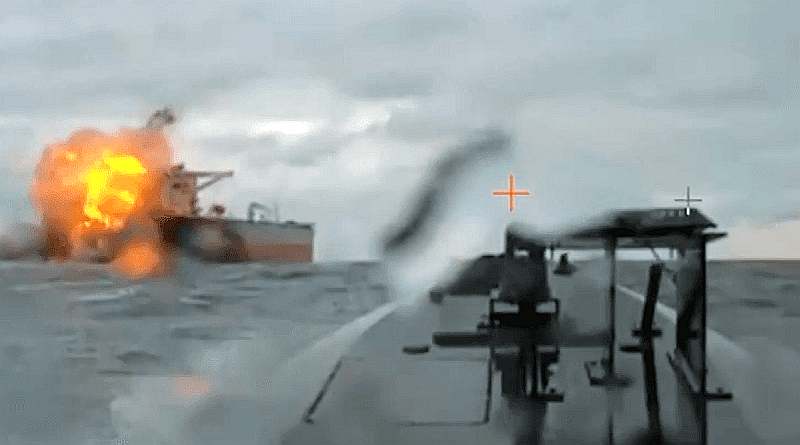
8. In the Black Sea near the coast of Turkey, drones attacked three tankers that had previously transported Russian oil and petroleum products.
– The incident occurred amid growing risks for Russia’s “shadow fleet,” which Moscow uses to circumvent sanctions and support oil exports. The tanker James II, flying the flag of Palau, was attacked about 80 km from the Turkish district of Türkeli. The ship was sailing without cargo.
– Two more tankers — Altura and Velora, flying the flag of Sierra Leone — were attacked during cargo transfer between ships. Turkey dispatched coast guard vessels to the area. It is reported that crew members were not injured.
– All three ships were previously used for transporting Russian oil and are under sanctions. Altura and Velora transported Rosneft oil and were sanctioned by the EU in October 2025. Later, the UK, Switzerland, and Canada also imposed restrictions against them.
– The tanker James II was used for exporting Russian oil and petroleum products from June 2024, and in May 2025, it came under British sanctions.
Photo: screenshot from SBU video
