

Information on the current losses of Russia due to sanctions as of 09.05.2026.
1. Russia’s budget is entering a phase of imbalance: the deficit has reached 5.9 trillion rubles (2.5% of GDP).
– The dynamics are worsening: in April alone, the deficit increased by another 1–1.3 trillion rubles. With revenues of 11.7 trillion, the government spent 17.6 trillion, financing almost 40% of annual expenditures in the first four months.
– The key factor is the collapse of oil and gas revenues, which fell by almost 40%. Additional revenues from rising oil prices were minimal — about 21 billion rubles, while compensations to oil companies reached 359 billion.
– Non-resource revenues (+10%) and VAT growth (+20%) did not cover the losses, while expenditures increased by 15.7%, deepening the gap between income and expenses. The Ministry of Finance is already demanding regions cut deficits, benefits, and “ineffective” programs.
– A fiscal trap is forming: declining revenues combined with rapid growth in expenditures, primarily military. Even high oil prices do not stabilize the situation, so the government will either have to cut spending or increase debt and spend reserves.
2. Russia’s construction industry is entering a prolonged crisis phase that could last at least two to three years.
– Even analysts close to the Kremlin, such as CMACP, predict this, highlighting the scale of the problem. The recession has already become systemic: construction volumes in the first quarter decreased by about 10% y/y, and in some regions housing output fell by 10–65%.
– The market is effectively shrinking against a backdrop of high rates, winding down of preferential mortgages, and budget cuts. A critical debt load also has a significant impact.
– The net obligations of construction companies have reached 481% of EBITDA, meaning total debt is almost five times their operating profit. In conditions of expensive loans, this sharply increases the risk of mass defaults and project stops.
– The situation is directly linked to the general budget crisis. Against a deficit of almost 6 trillion rubles, the government is already forced to limit expenditures, leading to the postponement of infrastructure projects and cutting construction funding. Even large projects are delayed due to a lack of funds.
– Construction, which traditionally served as one of the drivers of domestic demand, is now becoming a source of additional risks for Russia’s economy.
3. Russia continues to be pushed out of international professional institutions.
– The International Federation of Journalists has finally expelled the Russian Union of Journalists from its ranks — the decision was made at the congress in Paris. This concludes a process that began back in 2023 when membership was suspended.
– The main reason was the establishment of structures by the Russian organization in the occupied territories of Ukraine, which was seen as a violation of the principles of international journalistic solidarity.
– Notably, the Russian side did not participate in the congress where the issue of its expulsion was decided.
– The decision highlights Russia’s further isolation on the international level and reinforces the perception of its journalistic structures as elements of state propaganda rather than part of an independent professional community.
4. Russian oligarchs attempt to bypass the European judicial system to recover frozen assets worth hundreds of billions of euros.
– This concerns about 258 billion euros blocked in Belgium. After the failure of approximately 200 lawsuits in European courts, plaintiffs are moving to arbitration strategies.
– They are attempting to use old investment protection agreements made in the late 1980s with the USSR, which are formally still in effect. Such a mechanism allows for the creation of an arbitration tribunal whose decision is final and cannot be appealed.
– This opens the possibility of bypassing standard EU legal procedures. At least nine official “notices of dispute” have been filed — the first step toward compulsory arbitration against Belgium. Parallel legal proceedings are ongoing within the EU structures.
– In Europe, such actions are seen as a potential threat: essentially, it involves an attempt to exploit legal loopholes to unlock assets that have become key pressure tools against Russia since the start of the full-scale war.
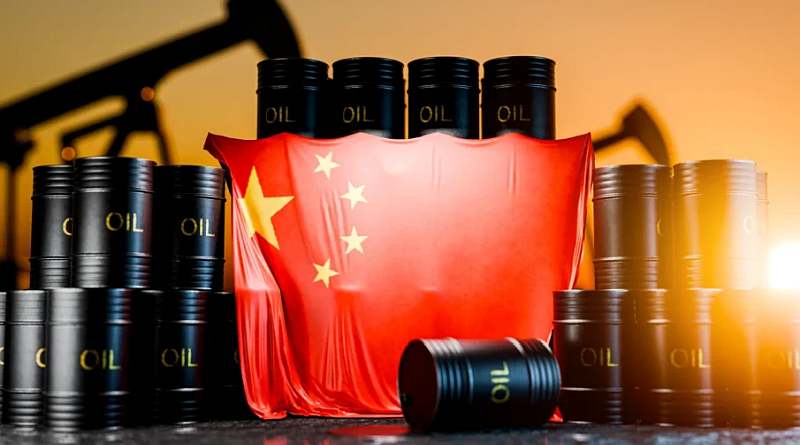
5. The invisible hand of China is restoring the balance in the oil market.
– China is effectively restraining global oil prices by neutralizing part of the effect of the conflict in the Middle East. As noted by commentator Javier Blas, Beijing has sharply reduced imports — by about a quarter from pre-war levels.
– This involves reducing purchases from 11.7 to 8.2 million barrels per day. This has created a surplus on the global market: the oil that China previously absorbed is now being redirected to other buyers.
– Additionally, Chinese state companies are reselling part of the already purchased oil to European and Asian players. This further enhances the surplus effect and limits the potential for price increases, which, despite the war in the region, remain near $100 per barrel.
– For Russia, this means a reduction in the expected benefit from rising oil prices. In a situation where the budget already faces a deficit of nearly 6 trillion rubles and falling oil and gas revenues, China’s behavior effectively deprives the Kremlin of one of the key external support factors. As a result, even a favorable geopolitical situation does not translate into corresponding revenue growth for the Russian economy.
