

Another good week has passed for Russian aviation – negative growth was recorded.
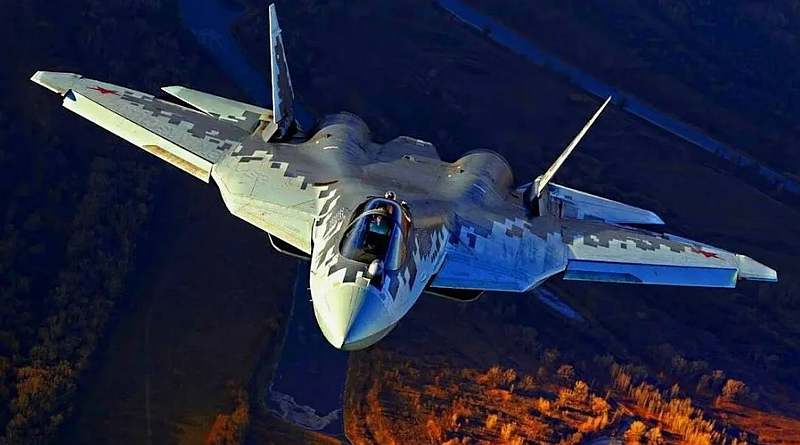
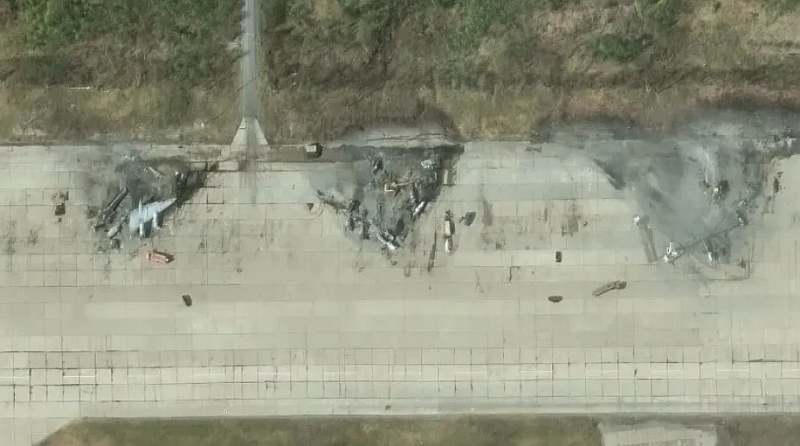
Initially, on April 25, the Defense Forces hit the latest Su-57 aircraft and burned a Su-34 bomber. The Su-34 is the main workhorse of the front, a carrier of KABs priced at about $36 million each. Russians spent over 20 years and billions of dollars developing the Su-57, barely serially producing 10–15 units (the cost of the aircraft is estimated at $35–50 million). The Su-57, which was supposed to drive NATO beyond Lisbon, was destroyed by a piston drone costing several tens of thousands of dollars that clattered to the target for hours.
The aircraft were hit at an airfield in the Chelyabinsk region – so deep into Soviet territory they were not bombed even during World War II.
Then on April 29, at a jump airfield in the Voronezh region, they smashed a Mi-28 and Mi-17: they caught a group of “Lutiy” and “Bober” long-range drone hunters during inter-flight servicing.
The Mi-28 (priced around $18 million) is specially designed to hit low-speed air targets. It has onboard radar and a 30 mm 2A42 cannon with a firing rate of up to 550 rounds per minute, ideal for shooting down kamikaze drones flying to coordinates.
The Mi-17 (price from $15 million) is a Sherpa and backup. It serves as a visual corrector and helps with onboard machine guns, carries a technical team behind the striker, and performs the functions of a search and rescue aircraft in case of emergencies. During the strike, technicians were present on the site, at least one was destroyed at the moment of the attack.
Russians cannot chase helicopters for interception from main airbases – they simply won’t have time due to flight time, plus there is a huge overconsumption of engine resources. VK-2500 turboshaft engines have a strict hour limit. Therefore, jump airfields are organized on probable flight routes of our drones, where helicopters await the command to take off, undergo inter-flight inspection, and refuel.
The combined crews of the 429th Achilles Brigade, the 43rd Artillery Brigade, and the SSU Special Operations Center “A” caught them at their most vulnerable moment – during operational refueling. The operators worked precisely: the drones struck precisely at the rear central part of the engine compartment, bypassing the main rotor blades. This means our long-range attack was planned considering their blind spots and maintenance schedules.
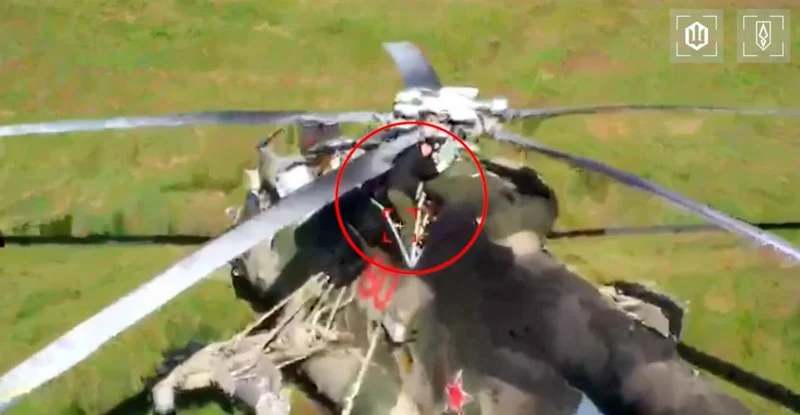
The damage is severe — the helicopters didn’t burn completely only because there was no fuel in the tanks, but it definitely requires a major factory repair. The 33 million dollar value of the two aircraft isn’t completely lost, but such repairs under sanctions will be painful, expensive, and take a long time.
By knocking out the helicopter group, we have seriously thinned the Russians’ ability to intercept in this sector. They will have to pull such jump platforms further back (at least 50–100 km), which will increase their reaction time and give our UAVs more chances to break through to objectives like the same refineries or airfields.
When the air defense is breached, SAMs are torn between the budget milking cows, the aqua disco, and the front line, and mobile ambushes are eliminated, the drones of the Unmanned Systems Forces (USF) calmly fly 1700 kilometers and approach the “Shagol” airfield in the Chelyabinsk region.
The Russians thought hiding their most expensive toy (Su-57) at a distance of 1700 km was safe. A 1700 km radius covers an area of over nine million square kilometers of Russian territory. But hiding aviation is becoming increasingly difficult. This is a colossal blow to their military-industrial complex and export potential because their strategic depth is being targeted. The fact that the Defense Forces placed a combat unit weighing 40-50 kg near the aircraft (and there were certainly both air defense and electronic warfare at the airfield) means that there are practically no safe places left in Russia.
And it’s only a matter of time before the power of warheads increases enough to target crude extraction installations and factories in areas previously unreachable even by the Luftwaffe.
They can transport the Su-57 to exhibitions in Abu Dhabi as much as they want — but the Russian equipment burns even without participating in battle. Minus four aircraft in a couple of days, including one irrecoverably.
This is precisely why the military parade is being canceled. Putin, who hides in a bunker when something happens, whether it is Hisham (a village in Syria near which in February 2018 the US destroyed a Russian armored group — Ed.), or Prigozhin, likely does not want to take risks.
But it is not only about the risk. The Russian air defense near Moscow, and such commands could have repelled the raid without having veterans run to shelters in disgrace. It’s just too disgraceful a picture. Over Red Square fly the “falcons” on Su-57s that “have no analogs” — and bam, satellite images of the scorched sides on every platform. Well, will you now count how many F-35s were supposedly shot down in Iran?
The S-500 drives past the mausoleum, the entire sky locked down — oh, the fifth attack on the Primorsk terminal and the seventh on the Tuapse oil refinery, oil rain, a 10–14% drop in production, a ban on gasoline exports. “Maybe they shouldn’t be driving boxes in front of Putin but carrying out their task right now?” even the most brainwashed Z-supporter will howl.
And there it is, the “Armata” — the enemy is terrified of it, but at the front T-55s in hairy coating and T-62s in the “barn” version with mounted turrets. Even the last raggedy supporter tastes the bitterness of copium in their mouth.
The parade has lost its minimal connection with reality. You can burn as many paper Reichstags as you want and wear Hitler’s cap, but that won’t change reality.
Strikes on forward airfields like Voronezh fulfill not only the function of physical destruction — they generate paralysis. Each bomber pulled back 100 km inland is lost reaction hours, burned tons of aviation kerosene, and critical turbine wear. Russians are forced to write off engine resources simply in the process of trying to protect them from damage.
We’ve all reached a point where an operator, sipping coffee hundreds of kilometers away, as during Operation “Web”, can crash a drone into the tank of a strategic aircraft. Where a resistance group with a soldering iron and access to the civilian market can place a fiberoptic drone 25 km away in a corridor window. And there are currently no 100% ways to counter this.
Where saboteurs, without leaving their cozy offices, recruit Russians, and they send “kind” drones to Russian knights at the front, which explode and cripple them.
And no T-34 mock-up on Red Square can cancel the fact that on Moscow’s frontline loss lists are “Gvozdikas,” and volunteers are collecting for electric scooters for stormtroopers — a situation unimaginable on February 22, 2022. Fifth-generation machines and a mobile intercept group, all this against the backdrop of dozens of beaten SAMs — more to come.
