
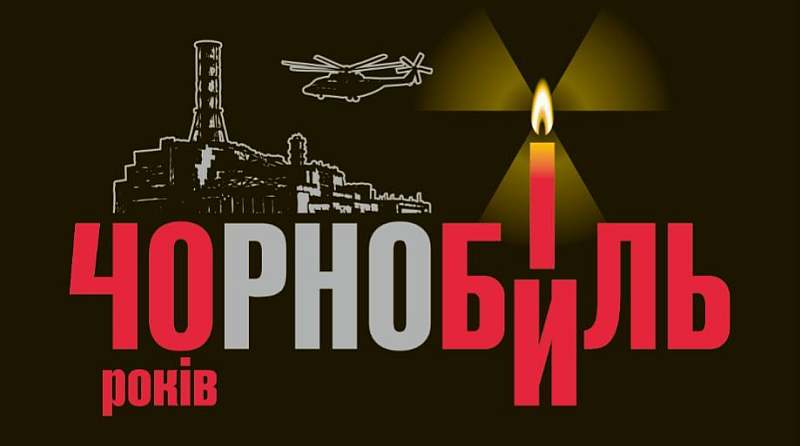

On the 40th anniversary of the Chernobyl tragedy, we are forced to acknowledge the bitter truth: the world has not drawn the necessary conclusions. While Ukraine honors the memory of the liquidators, Russian aggressors continue to cynically “play with fire” at the occupied Zaporizhzhia NPP.
The occupiers are not just blackmailing the world – they are crossing the line: a Russian drone damaged the new confinement (arch) over Unit 4 of the Chernobyl NPP, and systematic attacks on the 750 kV and 330 kV substations supplying operating NPPs are a direct attempt to provoke a catastrophe akin to the “Fukushima” scenario.
Nuclear power plants have become the most dangerous weapon in Europe for Russia. In the first months of 2026 alone, the Zaporizhzhia NPP experienced 14 blackouts. Yet the response of the IAEA and the UN is still limited to mere “concern.” We see institutional helplessness: the organization, tasked with ensuring nuclear safety, lacks real mechanisms to de-occupy the Zaporizhzhia NPP, and Russian influence in international structures still persists. As a result, coercive measures are unlawfully blocked.
The tragedy of 1986 once psychologically pushed Ukraine to renounce the third-largest nuclear arsenal in the world. Under pressure from Russia and the USA, powerful weapons were handed over to a country whose current ruling regime has today become a nuclear terrorist.
The Budapest Memorandum turned out to be an unfair game and historical deceit. Ukraine received a double blow: first with Chernobyl, and now with the nuclear threat from one of the “security guarantors of Ukraine.”
The Budapest Memorandum, like other international treaties, is being torpedoed but not dead! Nor is international law. It is just that everyone interprets it as they see fit, violates it, or refuses to fully comply.
The time has come to move from diplomatic courtesies to real demands and consequences for the aggressor:
Firstly, the Russians must immediately leave the Zaporizhzhia NPP.
Secondly, complete isolation of “Rosatom” is necessary: this corporation is a direct accomplice in the occupation of the Zaporizhzhia NPP. No exceptions – only a full embargo and strict sanctions against its leadership.
Thirdly, Russia must be stripped of its right to membership in the IAEA Board of Governors.
Fourthly, Russian attacks on NPPs (seizures, shellings, creation of dangerous conditions) should be classified not just as war crimes or nuclear terrorism, but equated with the use of weapons of mass destruction (WMD), as they pose a threat to the life, health of people, and the environment on a massive scale.
Fifthly, the commitments of the signatories of the Budapest Memorandum must finally be fulfilled: the security guarantors of Ukraine, primarily the USA and the UK, must recognize that the only fair compensation for Ukraine’s lost nuclear arsenal is Ukraine’s membership in NATO and providing Ukraine with a “nuclear umbrella” of security. The world must understand: either Ukraine receives collective protection, or the concept of nuclear nonproliferation and the NPT will definitively “die,” as no country will believe in “guarantees” anymore.
The anniversary of Chernobyl is a timely reminder to the world: if we do not stop nuclear terrorism today, tomorrow there will be even greater tragedies that can no longer be countered by the heroism of Ukrainians alone.

In April 1986, I was returning to Ukraine from Kazakhstan via Moscow, which was then a “hub” for the union republics. I planned to stay in the Soviet capital for a few days before going to study in Dnipro. But an inexplicable force – perhaps it was intuition, or maybe I was already sensing the approach of illness – compelled me to take a ticket to Kyiv immediately after landing at Vnukovo airport.
Thus unexpectedly, I found myself in a city about to face Chernobyl. Some might think I was unlucky, as I could have been far from the disaster, not in my hometown at the time of the greatest radiation danger. And indeed, when I later arrived in Dnipro, my classmates looked at me as if I were a living corpse – such was the general fear of “radiation” at that time. But both then and now, I continue to consider it real professional luck: if you have chosen this profession, you must see your country in the most important moments of its history – both in sorrow and in joy. From this point of view, being a witness to April 26, 1986, is as much a challenge as being a witness to August 24, 1991, or February 24, 2022. Amazingly, each time I ended up in the epicenter of events almost by accident. On August 18, 1991, the night of the coup, I had bought a ticket for a train from Moscow to Kyiv, and by February 2022, I had already planned a long-desired trip to Sinai. But, of course, I postponed it, as I realized that epic events were approaching, and it would be a crime against myself and the country to miss the first act of the tragedy.
So, I saw that April and May Kyiv not as thoroughly as I would have wished, because I brought “rubella” from Kazakhstan and lay in bed for a long time. Yet, this was also valuable experience, as doctors considered me one of the first victims of a radiation illness unknown to them until the real diagnosis emerged. They told my parents to say goodbye to me. Still, I saw the deserted city without children and watched as people gradually became aware of the danger and shifted from cheerful Soviet TV reports – Gorbachev’s, by the way – to monitoring Western radio stations.
And then I finally formulated a simple formula for myself: if I truly have to work in real journalism, it should be like Radio Liberty, not as deceitful and helpless as in my own country. So, my understanding of dignity in a profession I was already trying to engage in carefully, so as not to get contaminated, was also shaped by what I saw in those days.
And I saw that we were left to fend for ourselves. That the Moscow government treated Ukrainians like natives to whom it was simply unnecessary to tell the truth about what happened, lives and health that could be sacrificed for the sake of saving face and “preventing panic.” Again and again, I turned to the Jewish fate during World War II when my compatriots were seemingly abandoned by their own, yet actually foreign, governments. This comparison once again crystallized in my mind into one simple vision: no, the Ukrainian people cannot survive without their own state. There will be no chances.
Witnesses of that time might accuse me of manipulating history for contemporary narratives. After all, there was also an earthquake in Armenia, and Moscow made every effort to help, and the then-head of the Council of Ministers of the USSR, Nikolai Ryzhkov, who would later become one of the chief party conservatives and end his political career with fervent support for Putin’s aggression against Ukraine, would be regarded as a national hero of Armenia. But there is a very important moment of truth here. The leadership of the Armenian SSR during the tragedy behaved as national leadership, despite the fact that the first secretary of the republic’s communist party, Suren Harutyunyan, had come to power literally half a year before the earthquake, after a long era of his predecessor Karen Demirchyan, and could not boast significant authority either at home or in Moscow. And our then-leader, Volodymyr Shcherbytsky, was one of the most authoritative party apparatchiks at the union level, a member of the politburo, and a contender for a leading role in the Kremlin.
But he behaved like a gauleiter. It was during the days of Chernobyl, even though there were decent people among the apparatchiks trying to prevent the consequences of the tragedy despite Moscow’s directives, it became clear that this was foreign power. That this was Kremlin power for Ukrainians, even if it was composed of natives from our land. This was not a major revelation, since Soviet Ukraine from day one of its proclamation was, in fact, just a large “DNR”. But during the days of Chernobyl, it became evident even to those stubbornly unwilling to notice it.
However, my main impression from those days formed over the years and was connected to what I saw before the catastrophe. As I flew to Kyiv, an incredibly beautiful spring Ukrainian landscape unfolded before my eyes from the windows—stunningly beautiful also because I saw it after leaving the Kazakh steppes in the distance. And here everything blossomed, everything greened and whitened, everything burst with happiness, everything seemed to protect you and urged you to live—in youth such feelings, of course, are perceived even more vividly.
And only over time did I realize that then, before my eyes, was the spring landscape of Chernobyl.
Chernobyl remains synonymous with pain and the lies that Russia used as ideology.
40 years have passed since the Chernobyl disaster — a crime of the Russian empire against the Ukrainian people. On April 26, 1986, at 1:23 am, a powerful explosion occurred at the fourth reactor of the Chernobyl nuclear power plant, which forever changed thousands of human lives. The threat of nuclear catastrophe loomed not only over Ukraine but also over Europe.
For years our country has struggled with the ecological and economic consequences of the Kremlin’s careless and deceitful policies. We thought that Chernobyl was a tragedy that would never be repeated. Until February 24, 2022…
Then, without any hesitation, the aggressor country captured the Chernobyl nuclear power plant, taking employees and national guards as hostages. From February 24 to March 31, they attempted to seize control of the station, endangering Ukraine and the world with the risk of a nuclear catastrophe. Without proper nutrition and medical supply, the station employees maintained control over the reactors while Russian soldiers looted everything around. The barbarians destroyed monitoring systems, causing radiation to spread from nearby forests.
Baseness, looting, and irresponsibility — such is the trace left by the Russians. This is what we saw with Marina when we first arrived at the station with humanitarian aid. Food, medicine, household items — everything was needed. We were struck by the madness perpetrated by the occupiers. Only the courage of the station employees, who defended the Chernobyl nuclear power plant, saved the world from disaster.
Every day Russian rockets fly over the nuclear reactors, aiming to cause as many civilian casualties as possible. This is what we are forced to fight against now.
Today we remember all those who are no longer with us because they paid the highest price for mitigating the disaster’s consequences. Our deep respect and gratitude to the brave people who have averted and continue to avert disaster from the world.
* * *
At the end of April, for 40 years we have not just remembered Chernobyl. We have never forgotten it and never will.
We change, new generations come, and Ukrainians during these days again and again evaluate bravery and cowardice, truth and lies, solidarity and irresponsibility — everything that happened not only in the explosion and contamination zone but also far from it.
The Chernobyl disaster was a tragedy that irreversibly changed Ukraine. Suspicions, feelings, and quiet memories about the falseness of imperial ideology and the losses of our people during the USSR became a call for change, a call for independence.
Not much time passed before the first environmental rallies turned into mass protests. In the struggle to overcome the consequences of the disaster, Ukrainian civil society was born and rapidly strengthened. Its active participants were the first to challenge the communist system: in the 1989 elections in Kyiv, Yuriy Mykolayovych Shcherbak defeated the CPSU candidate for the first time. Among the delegates of the founding congress of the People’s Movement, among the deputies of the first democratic convocation of the Verkhovna Rada of Ukraine, we see many of those who bravely gave a political assessment of the Chernobyl disaster as yet another crime of the Russian empire against the Ukrainian people.
Unfortunately, this crime was not the last. We have been living for 12 years in an openly genocidal war that Russia is waging against Ukraine. It has struck the “Shelter” facility. In the occupied Zaporizhzhia NPP, the enemy systematically violates safety standards, and missile strikes on power grids threaten accidents at nuclear power plants.
Threats of nuclear strikes on Ukraine are heard from Moscow. The murderous nature of the empire was and remains unchanged. Chernobyl has been reminding us of this for 40 years. And we will not forget about it.
Eternal memory to all who sacrificed their lives to save our people, Europe, and the world from disaster.
Glory to those who worked to eliminate the consequences of the disaster!
Glory to our warriors and to all those who are now saving us from new catastrophes that the Russian aggressor seeks to cause.
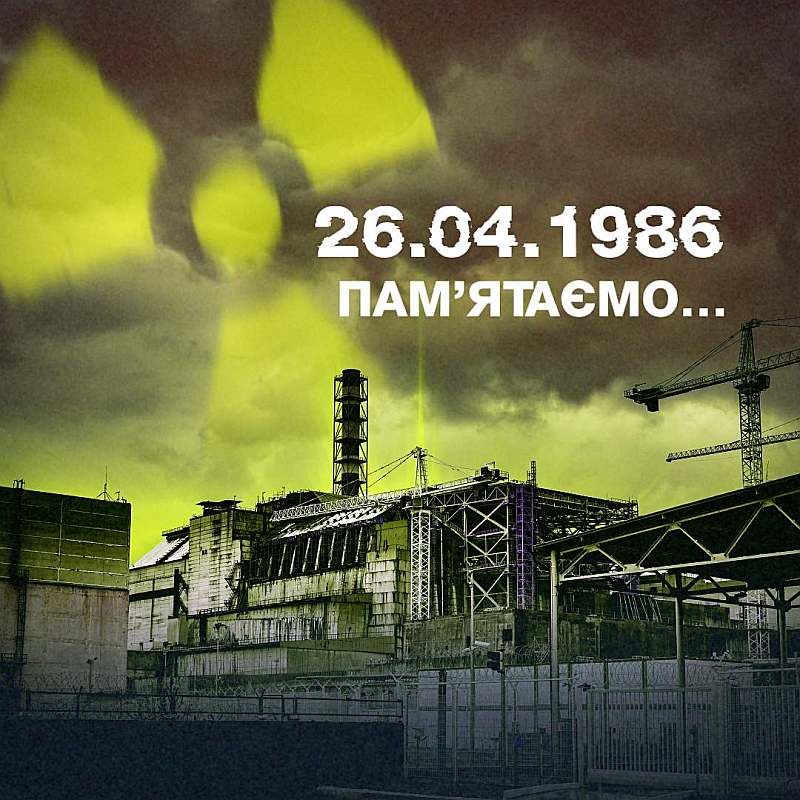
Radio Liberty: War and Chernobyl: Russia’s “Nuclear Terrorism”
During the current Russian-Ukrainian war, Chernobyl experienced another drama compared in intensity to the Chernobyl accident 40 years ago.
Illustration on cover: General Staff of the Armed Forces of Ukraine
