

Information on current losses of the Russian Federation due to sanctions as of 26.04.2026.
1. Ukrainian drones attacked fuel infrastructure facilities in the Tambov region of Russia.
– Explosions, air defense activity, and fires were reported outside the town of Michurinsk. The likely target was the “Nikolske” linear production-dispatch station, which is part of the main product pipeline system.
– The facility ensures the pumping and distribution of fuel, receiving raw materials from refineries in central regions of Russia through the “Druzhba” system and directing it to both the domestic market and for export through Belarus.
– If confirmed, the damage may disrupt fuel logistics and impose additional restrictions on exports, which are already under pressure from sanctions and infrastructure attacks.
2. Ukrainian drones attacked large industrial facilities in Russia on the night of April 26, striking oil refining and chemical infrastructure.
– Drones hit the Cherepovets enterprise “Apatit” in the Vologda region — one of Europe’s largest producers of phosphate fertilizers. The attack damaged a high-pressure pipeline with sulfuric acid at the “Ammiak-3” complex.
– Simultaneously, one of the country’s largest refineries, “Yaroslavnefteorgsintez” in the Yaroslavl region, was attacked. Local sources reported a massive fire at the site after a series of explosions, with thick smoke rising above the plant.
– Strikes on such facilities have a systemic effect: Refineries are key to fuel supply, while chemical enterprises produce products related to the military-industrial complex.
– Attacks on infrastructure of this level increase pressure on Russian industry and complicate support for its military economy.
3. The Central Bank of Russia admitted that even a sharp rise in oil prices cannot significantly improve the state of the economy.
– Due to the war in the Middle East, the price of Urals surged to multi-year highs; however, this does not alter the overall trend of slowing down. In the new macro forecast, the regulator increased the expected average oil price from $45 to $65 per barrel.
– This could bring in about $58 billion in additional export revenue: total export incomes are estimated at $485 billion, up from the previous $422 billion, and the trade balance surplus is $155 billion instead of $90 billion.
– Despite this, economic growth will remain weak: GDP in 2026 is estimated to grow by only 0.5–1.5%. Consumer demand also remains subdued, with population spending projected to increase by only 0.5–1.5% after 3.6% the previous year.
– Businesses are not receiving the impetus for development: investments are essentially stagnating and will remain at last year’s level. The Central Bank openly acknowledges a slowdown in economic activity and increasing inflationary risks due to global instability.
– Additional oil revenues will also not benefit the economy. A significant portion of them will be withdrawn through the budget rule, as the state will channel funds into currency purchases for the National Wealth Fund.
4. Over half of the elevators in Russia could become hazardous due to lack of proper maintenance.
– This concerns approximately 400,000 elevators — about 55% of their total number. Russian officials themselves acknowledge the problem. According to their estimates, at least 70,000 elevators, whose service life has already expired, need to be replaced in the next four years.
– Meanwhile, the authorities were previously forced to extend the service life of old elevators by another five years, merely postponing accumulated risks.
– Overall, about 650,000 elevators are in operation in the country, and at least 110,000 of them already require replacement. An additional problem is the shortage of maintenance personnel: according to new regulations, one mechanic is responsible for at least 40 elevators.
– The situation indicates a systemic degradation of the housing and utilities infrastructure in Russia. Chronic underfunding, rising equipment costs, and limited access to imported components complicate modernization, increasing the risk of accidents and posing a threat to the population.
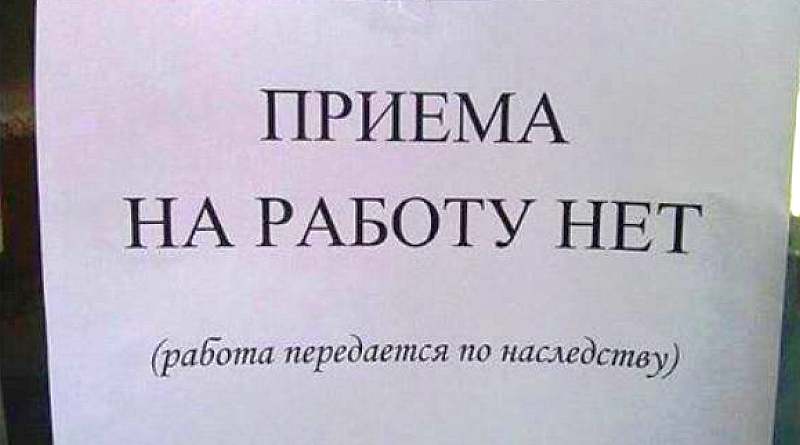
5. Most companies in Russia have effectively frozen hiring new employees until the end of the year amid deteriorating economic conditions.
– According to the Central Bank, 64% of enterprises do not plan to change their staff numbers due to weak product demand. The largest concentration of such companies is in the transport and storage sectors, while their share in industry, extraction, and processing is lower. The main reason for the easing of labor shortages has not been an improvement in the labor market situation but rather economic cooling.
– In March, the share of enterprises reporting a shortage of workers fell to 51% — the lowest in two years. Businesses are gradually moving away from mass hiring and towards targeted staffing decisions.
– The most significant decline in demand for workers is expected in construction and industry, particularly in the production of building materials, as well as in social sectors — education, healthcare, and culture. This trend indicates a deepening economic recession: instead of a labor shortage, which was previously seen as a sign of growth, the labor market is moving into a phase of stagnation, reflecting declining business activity and reduced domestic demand in Russia.
6. Italian luxury brand Brunello Cucinelli has strengthened internal controls for compliance with EU sanctions against Russia following accusations of potential circumvention of restrictions.
– The trigger was statements from American research company Morpheus Research, which accused the brand of continuing luxury goods sales in the Russian market despite sanctions. In this context, the company’s shares sharply declined, but Cucinelli repeatedly denied any violations.
– The company stated that they “promptly and decisively” confirmed full compliance with the EU’s sanctions regime against Russia and enhanced internal control procedures. Despite this, the group retains a fully controlled subsidiary in Russia.
– Meanwhile, the market itself holds limited significance for the company — according to its estimates, Russia’s share in global revenue is less than 2%.
