

Information on current losses of the Russian Federation due to sanctions as of 20.04.2026.
1. On April 20, in the Russian city of Tuapse, our drones attacked the port infrastructure and oil refinery again, causing a new large-scale fire even before the consequences of the previous strike were fully eliminated.
– According to available information, the fire encompassed at least 11 centers, indicating serious damage to the tank farm. The Tuapse Refinery, which is part of the Rosneft structure, is a key element of the export infrastructure, working in conjunction with the marine terminal and ensuring the transshipment of petroleum products.
– The repeat strike on this facility underscores the systematic nature of attacks on the Russian Federation’s energy logistics and their effectiveness in creating long-term disruptions. The fact that a new fire erupted immediately after the previous one indicates limited possibilities for quick recovery and increases risks for the stable operation of the enterprise.
– Such incidents complicate export operations, increase losses, and create additional pressure on the Russian fuel and energy sector.
2. On the night of April 19, the Armed Forces of Ukraine struck the Atlant Aero enterprise in Taganrog, Rostov Region, which specializes in the full cycle of development and production of strike-reconnaissance drones.
– According to the General Staff of the Armed Forces of Ukraine, a fire broke out on the premises as a result of the attack, indicating damage to the production infrastructure.
– The enterprise is an important link in Russia’s UAV program: it produces Molniya-type drones, as well as components for the heavy UAV Orion, which can carry up to 250 kg of combat load, including guided bombs and missiles.
– The strike targeted not only a specific facility but an element of the production chain supplying the Russian army with airborne strike means.
– The General Staff notes that damage to such an enterprise directly affects Russia’s ability to increase the production of drones and use them for attacks. This is particularly sensitive for the Russian military machine, which significantly relies on the mass use of UAVs.
3. The actual state of the Russian economy may be significantly worse than official statistics indicate, and this is increasingly confirmed by Western intelligence.
– According to Swedish military intelligence, the actual inflation in Russia may be three times higher than the official data, hovering closer to the key rate at around 15%, while the Central Bank claims only 5.9%.
– Such discrepancies are explained by the systematic underreporting of economic figures. Estimates from the Swedish side and German intelligence suggest Russia also underestimates its budget deficit by about $30 billion, indicating hidden financial problems and increasing pressure on public finances.
– An additional alarming sign is the accumulation of risks in the banking system. Intelligence reports indicate signs that may suggest approaching financial instability, consistent with existing data on rising non-performing loans and a deteriorating corporate sector.
– Despite rising oil prices, the Russian economy remains vulnerable: it is estimated that for the budget to balance, the price of Urals oil needs to exceed $100 per barrel for an extended period, which seems unlikely under stable market conditions. Without this, the deficit will only deepen, and the ability to fund the war will diminish.
– At the same time, the economic model itself raises increasing doubts: growth is predominantly driven by military spending, which does not create long-term value.
– Even the defense sector, according to estimates, remains problematic, dependent on state credit and plagued by corruption. The Russian government already acknowledges the complications: a combination of a strong ruble, labor shortages, high rates, and budget constraints puts pressure on all key sectors.
– In the end, more signs point to the Russian economy heading either towards a prolonged recession or a sharp financial shock, and avoiding this scenario is becoming increasingly difficult.
4. A payment crisis in the Russian economy is rapidly worsening, extending beyond individual sectors and taking on a systemic nature.
– Over the past year, company debts to suppliers have increased by 21% and for the first time exceeded 8 trillion rubles — about 3.8% of the country’s GDP, indicating significant liquidity problems in business.
– The worst situation is observed in the energy sector, where about 13% of payments are overdue. Next are mining companies with a 8.7% non-payment rate, industry — 7.7%, and trade — 6.5%. This means that problems cover almost the entire economy, from raw materials sectors to end consumption. However, the issue is not just a lack of money.
– High interest rates have created distorted incentives: companies intentionally delay payments, placing funds in short-term deposits and earning interest. Under such conditions, it is more profitable to pay penalties for delays than to settle with contractors on time.
– Similar behavior extends to tax payments — businesses effectively finance themselves at the state’s expense by deferring payments. This creates a vicious cycle: suppliers end up without working capital and are forced to take expensive loans, which increases production costs and ultimately puts pressure on prices.
– Thus, the strict monetary policy, intended to curb inflation, instead fuels new inflationary risks and undermines payment discipline in the economy.
– As a result, an unstable financial model is formed where growth is supported by mutual indebtedness, and any increased pressure — from banks or tax authorities — may trigger a wave of bankruptcies and a deeper economic downturn.
5. The Russian aluminum giant “Rusal” continues to show financial weakness.
– According to the latest data and market assessments, the company ended the first quarter of 2026 with a loss. The paradox of the situation is exacerbated by the fact that aluminum prices in April rose to multi-year highs, yet “Rusal” failed to take advantage of this situation.
– The main reason is a sharp increase in costs and dependence on imported raw materials, particularly alumina. Additional pressure comes from the financial situation: expensive loans and high interest rates. As a result, even amidst a global aluminum shortage, which may reach 3.5–4 million tons in 2026, the Russian company does not gain the expected benefit from price increases.
– A separate negative signal was a sharp reduction in access to key markets: imports of Russian aluminum to the EU collapsed — to about 1.2 thousand tons, which is a historical minimum. “Rusal” finds itself in a situation where even a favorable global market environment works against it.
6. Russian oil exports to China sharply increased at the beginning of the year, but financial indicators show a much more modest dynamic, indicating continued price pressure on Russian raw materials.
– Based on the results of the first quarter, oil supplies from Russia to China increased by 31% year-on-year and reached 31.9 million tons. In monetary terms, exports amounted to 14.4 billion dollars, indicating growth of only 8.8%.
– Supplies of liquefied natural gas also increased — by 6.7%, to 1.38 million tons, but revenues from this export decreased by 17.3% and amounted to 651.6 million dollars. China remains one of the key markets for Russian energy resources after losing a significant part of the European market.
– At the same time, the difference between the rapid growth of physical volumes and significantly weaker revenue dynamics suggests that Russia is forced to increase exports with significant price discounts to maintain its position in Asian markets.
7. The United Kingdom essentially refrains from active actions against the Russian shadow fleet due to possible financial costs.
– This allows Russia to continue bypassing sanctions and retain a significant part of oil revenues, despite the harsh public rhetoric of the British authorities. The Royal Navy has not detained any sanctioned tankers, although such opportunities were considered.
– The key reason was not the lack of tools, but financial and bureaucratic barriers: maintaining one detained vessel can cost tens of millions of pounds, and the British authorities could not agree on which agency should bear these costs.
– Additionally, legal risks, including potential problems with crews and possible asylum requests, became a restraining factor. As a result, the Russian shadow fleet, estimated at about 700 ships, continues to operate almost unhindered and ensures the transportation of about 40% of Russia’s oil exports.
– The lack of decisive actions by one of the West’s key allies effectively reduces the effectiveness of the sanctions regime.
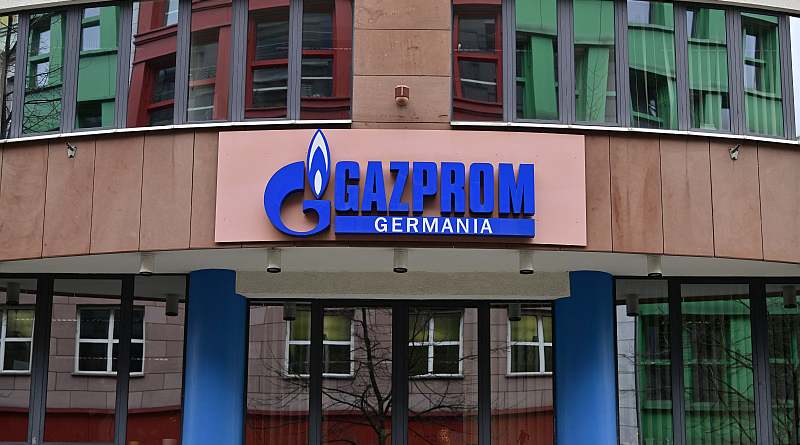
8. Germany launches the privatization process of the nationalized “Gazprom” division.
– The company Securing Energy for Europe (SEFE), which previously operated under the brand Gazprom Germania, plans to raise 1.5–2 billion euros through a capital increase and admit private investors to the asset for the first time.
– It concerns critically important infrastructure — gas storage facilities, pipelines, and an international trading business that was previously part of Russia’s energy expansion in Europe. Now, these assets essentially come out of Moscow’s control and become part of the European energy system without Russia’s participation.
– Berlin’s decision is not only economic but also strategic: according to EU requirements, Germany must sell at least 75% of the company by 2028. This means a gradual and irreversible displacement of Russian influence from one of Europe’s key gas hubs.
– SEFE itself does not rule out various scenarios for further privatization — from selling shares to an IPO or even asset division. A merger with another nationalized energy player, Uniper, is also being discussed, which could further strengthen Europe’s control over gas infrastructure.
– Russia loses not only sales markets but also instruments of influence that it used for decades through energy. The actual transfer of Gazprom’s assets to private and state structures of the EU demonstrates that it becomes practically impossible for the Kremlin to restore former positions in the European market.
9. India expands cooperation with the Russian insurance sector.
– The government has allowed more Russian insurers to provide coverage for ships entering Indian ports, increasing the number from 8 to 11. The list now includes companies like “Gazprom Insurance,” “Rosgosstrakh,” and “Balance Insurance.” For some companies, the permits will be valid until 2026–2027, indicating the long-term nature of this decision.
– This involves Protection and Indemnity (P&I) insurance, without which the operation of tankers and cargo ships in international ports is practically impossible. Following the exit of Western insurance companies from the Russian market due to sanctions, this segment has become one of the bottlenecks for Russian oil exports.
– However, expanding access to the Indian market does not resolve Russia’s key problems. Its insurance companies remain isolated from the global financial system, and trust in their policies is limited. This means that even with support from certain countries, the logistics of Russian exports become more expensive and complicated, and dependence on a narrow circle of partners deepens.
– As a result, the Kremlin is forced to build alternative infrastructure bypassing the West, but such a model is less effective and increases risks for the entire export system, which is already under pressure from sanctions and rising costs.
