
Phillips P. OBrien / Translation by iPress
Renowned American historian, Professor of Strategic Studies at the University of St. Andrews in Scotland, Phillips O’Brien, in his regular weekly review of the Russian-Ukrainian war, analyzes how the U.S. is betraying Ukraine and its allies, the strengthening of Ukraine-Germany cooperation in the defense sector, and the first successful fully robotic assault by Ukrainian troops on Russian positions.
While writing this review, it increasingly shifted towards the differences between European states, particularly Germany, and the U.S. regarding support for Ukraine. Last week, unlike any other, showed that while the U.S. government will do whatever is necessary for Putin, Europeans are beginning to realize two quite important things. Firstly, Ukraine’s fate is crucial for their own fate, and secondly, Ukraine contributes much more than they previously understood. Indeed, increasingly, some European states are transitioning from perceiving Ukraine as a supplicant needing help to seeing it as a new center of gravity in European defense and security.
This is encouraging (though still, unfortunately, insufficient), as it happens precisely when Ukrainians have stopped pretending they have any trust in the U.S. I have discussed this phenomenon twice recently—here and here, and you may also have seen the article “Ukraine Is Finally Disenchanted with Trump,” published in The Atlantic, which largely relied on these previous materials.
Interestingly, this Ukrainian shift does not come from despair. If it had happened in early 2025, it might have signaled a crisis, causing many to say Ukraine was doomed. Ukrainians are making this change now not because they are content with what is happening—they are certainly not—but because their position is such that pleading with the U.S. seems senseless to them, and furthermore, because they believe Europeans are increasingly understanding their importance. As stated in the last paragraph of the article:
But Ukrainians do not believe that the loss of American support will inevitably lead to their defeat. They see that they have supported the war effort, using their own resources and the help of European partners, even as the U.S. has stepped aside. The loss of the United States as a friend once might have been a portent of doom for Ukraine. Now, it is not.
Besides this story, another exciting event happened last week – a successful Ukrainian attack on Russian forces carried out solely by machines. After this story became known, Ukrainians shared more about their new units, intentionally created to minimize Ukrainian casualties and allow machines to take the risk. This deserves comment.
Germany raises the stakes for Ukraine
Often, the signing of defense production agreements by two European countries doesn’t attract significant attention. However, on April 14, Germany and Ukraine signed ten different agreements or memorandums – which attracted some attention. These agreements covered a wide range of issues, but if there was one overarching theme, it is that Germany was not simply supporting Ukraine – in many ways, it was betting on Ukrainian military-technical production.
This document, published by Ukrainians, contains a step-by-step description of the key agreements. Their overall value was significant, and Minister of Defense Fedorov noted in a tweet that they are worth $4.6 billion.
I won’t list all 10 agreements in the text (please read them yourself), but I’ll highlight a few that show how interesting all of this is.
First, one of these agreements will allow Ukraine to assist Germany by establishing new foundations for the exchange of defense data between Ukraine and Germany. This way, Germans will get the latest information on what works in combat, what doesn’t, new trends, and what is becoming obsolete. This will not only help the Germans in boosting their own production but also aid German manufacturers in producing weapons for Ukraine. In an especially interesting detail of the press release, Ukrainians noted that one of the key elements of this exchange is the joint work on “training and improving AI models and developing analytical solutions”.
Note: This is exactly the kind of cooperation Europeans should engage in among themselves, striving to ensure European production resilience while simultaneously freeing themselves from dependence on the USA.
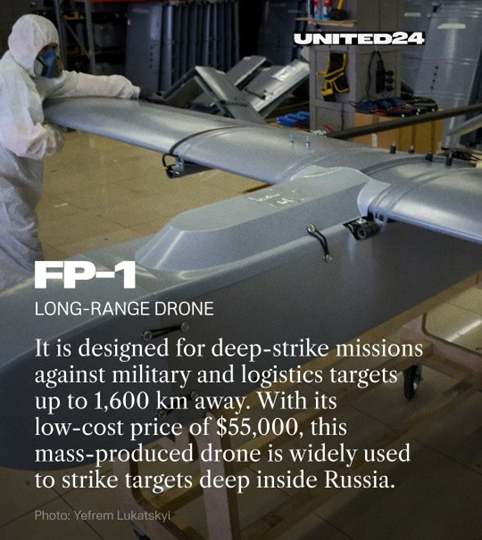
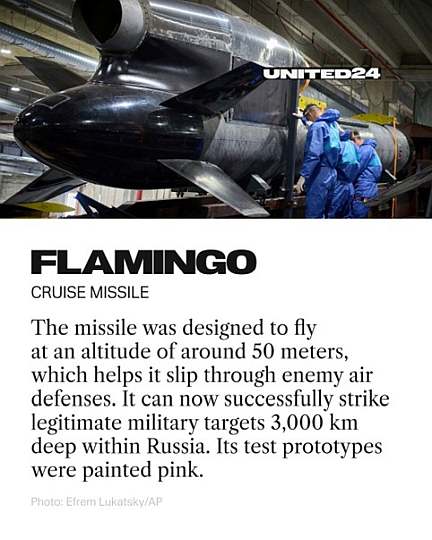
Secondly, there were specific and clear plans for joint development and production of both long-range and medium-range drones/missiles. This was one of the main topics Fedotov discussed. And we have some specifics. There is a separate agreement that the Germans will work with Fire Point, the developer of some of Ukraine’s most famous missiles, including the FP-5 (Flamingo) and the less known but cheaper and possibly more important long-range drone FP-1. Incidentally, last week Ukrainians published information about both types of weapons as part of highlighting their achievements in arms production.
 |
 |
In addition to the agreement, as we know, it mentions systems that are to be produced, including strike long-range Anubis drones and medium-range Seth-X drones. We even have an idea of the scale of production, since Fedotov stated that at least 5000 new systems should be produced this year.
Note: the agreement also mentioned making some of these systems available for sale to third parties – this is what I mean when I say that Europeans increasingly understand what Ukraine brings to the continent. Ukraine is now an asset in the fight for foreign contracts.
Thirdly, there will be significant investments in the development and production of air defense systems, primarily in the Iris-T air defense systems, which are manufactured by the German company Diehl. There will also be a large initiative to procure more missiles for the Patriot systems to help Ukraine cope with what looks like an expected shortage.
Note: this is a bit bittersweet. European states should have been working more on their own advanced air defense systems to be less dependent on Patriot. They are catching up here, but at least they are doing something.
And there was much more. There were agreements on investments in Ukrainian defense infrastructure, investments in mineral extraction in Ukraine (a real deal, not fictitious like with the USA), and even cooperation in social policy.
In other words, it is quite a comprehensive set of agreements that raises Ukrainian-German cooperation to a new level and makes it more of a bilateral process rather than one-sided assistance. In military terms, this means more and better aid for Ukraine this year. If it ensures thousands of new medium- and long-range drones/missiles, and more effective ones at that, it will further strengthen Ukraine’s growing power. It also means more and better production in the future.
And this also means that Germany “understands.” After years of hesitation and reluctance to do anything that might cause tension with the USA, the Germans are moving towards stronger and more comprehensive support for Ukraine. This should not be underestimated. As of today, Germany is probably the only country that can effectively lead Europe. The United Kingdom and France cannot do this for certain reasons (the UK is not in the EU, France is not effectively increasing its defense), but Germany is both investing and taking defense issues more seriously, and is increasingly concerned about Russia, understanding that the USA is moving towards Putin. It also remains the largest economy in Europe by a significant margin and has the largest population.
Of course, Germany cannot do everything alone. It was extremely encouraging to see that the Norwegians have also pledged 1 billion dollars for military production, and the British announced that they will supply Ukraine with at least 120,000 drones in 2026. However, Germany has become key. And the fact that it is betting on Ukraine for assistance, and for Ukraine to help Germany itself, makes this probably the most important topic of the past week.
The USA boasts, bluffs, and then backs down
Last week we saw some rather extraordinary days when it came to the issue of US support (or rather its absence) for Ukraine and the cover that the USA provides to Putin’s Russia. It showed that while Ukrainians understand what is happening and speak the truth, too many Americans refuse to acknowledge what their country has become.
Let’s start with J.D. Vance. At a meeting with Turning Point USA, a hard-line MAGA group, Vance was asked which Trump administration policy decisions he is currently most proud of. He immediately replied that it was the halting of aid to Ukraine, which, by the way, resulted in more Ukrainian deaths than would have otherwise occurred. Here is the exact quote from Vance:
One of the things I am most proud of as a member of this administration is that we told Europe: if you want to buy weapons – buy them, but the United States is no longer buying and sending weapons to Ukraine. We have stepped out of this process.
J.D. Vance boasts about helping to stop all aid to Ukraine
Now, as Vance intended, this comment sparked outrage, and many people rightly criticized him (which he wanted, believing it appeals to MAGA, techno-bro types, etc.). However, these attacks, while understandable, actually miss the main point. Vance did not make this decision. Trump was actually the only person responsible for stopping aid to Ukraine. Vance undoubtedly supported it, but it was Trump who made it possible and endorsed it as much, if not more, than Vance.
Criticizing Vance is fine, but if it leads to losing focus on the real problem, Trump actually wins.
The reversal process then happened the next day. It began on April 15, when Treasury Secretary Scott Bessent stated unequivocally at a press conference that the sanctions relief given to Russia at the start of the American-Iranian war would not be extended. Cross my heart. Here’s his exact quote:
We will not extend the general license for Russian oil, and we will not extend the general license for Iranian oil. This was oil that was on its way by March 11. So it’s all used up now.
Clearly, some pro-Trump voices who had been spreading lies for over a year about how Trump could help Ukraine spoke up and trumpeted this news.
Valiant of them.
Because just two days later (not even two weeks), the Trump administration quietly extended sanctions relief for Putin. So much for the ironclad assurances of the Treasury Secretary.
Now, in part, this is actually a pantomime. Countries like India have already concluded that sanctions or no sanctions, they’ll buy what they want from Russian sources. The Indians came out after Bessent’s statement and said they would do what’s in the interest of the Indian economy. And China, the largest consumer of Russian oil, couldn’t care less about what the US does in this regard. So even re-imposing weak sanctions would have no real impact.
But even then, Trump couldn’t bring himself to reinstate the weakest of sanctions. Doing so would not have affected the oil market in any real way, but would have allowed him to appear tough on Putin. Even then he couldn’t pull the trigger. Bessent was bluffing, got two days of good headlines for the administration, and made the usual chatterboxes bleat, but then Trump, as he always does with Russia, folded.
More about how Ukraine fights people with machines
At the beginning of last week, Ukrainians released some details about how, using only UAVs and NRC, they captured a Russian position and took several Russian prisoners. I added information, including a video of the assault, in the free part of this article on Substack, which came out late last Thursday – “The USA does not understand war“.
By the way, I believe this is important material as it shows how the USA is completely disoriented in its understanding of war, and why Ukraine, and indeed the whole of Europe, should free themselves from the deeply flawed and harmful American analytical community.
Some people were skeptical, saying this might have been a one-time assault, and we have no idea how widespread it will become. And when it comes to purely robotic assaults, they may be right. However, it is worth noting that last week the Ukrainians announced that they are forming new units with a minimum of people, supported by UAVs and NRCs, to carry out more such assaults.
The Ukrainians called them “Assault Drone Units”. They clearly stated in their announcement that this move aims to minimize their own losses by allowing newer technologies to take risks. And it should be understood that these are not old units with a bunch of attached drones. These are completely new units, built around new machines and what they can do – where people focus solely on accomplishing specific tasks that machines cannot yet perform.
A whole range of new NRCs was even discussed. There were some of those logistical transporters and human evacuation means that I mentioned a few weeks ago and which we discussed with Bohdan Zhelobchuk. And the Ukrainians published photos of some of their latest ground assault robots, including the “Fury”, equipped with a 7.62-mm machine gun.
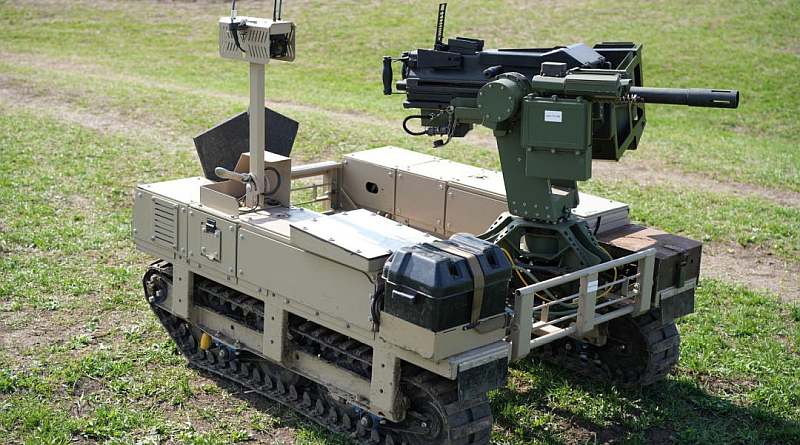
Other NRKs have grenade launchers or capabilities for setting mines.
It’s worth considering how these technologies are spreading and changing combat operations in a very short period. And this further confirms the opinion I expressed above. The American advice, pompously given to the Ukrainians, was that it makes no sense to wait for such technologies and that they should draft 18-24-year-old men and send them to the front as soon as possible. It’s hard to imagine a more foolish and backward step.
Fortunately, Ukraine rejected this advice, and increasingly we understand why. They will create these new units long before the American military has the wisdom to do the same. Although, this probably won’t stop Americans from lecturing Ukrainians on the state of their war.
Cover photo: 14th Separate Mechanized Brigade named after Prince Roman the Great
