

Information on current losses of the Russian Federation due to sanctions as of 13.04.2026.
1. The Russian Federation plans to introduce a new tax on “superprofits” despite promises from businesses to voluntarily fund the budget.
– The Russian authorities are preparing to introduce a new tax on companies’ “superprofits,” despite earlier offers from big businesses to make voluntary contributions to the budget. This essentially indicates a shift from situational agreements to the forced withdrawal of funds from the corporate sector.
– The introduction of differentiated rates within the range of 10-30% and a mechanism for calculating the so-called “superprofit” are being discussed. One option is to compare with the pre-crisis years of 2018-2019, which would artificially expand the tax base and bring many more companies under the new levy.
– At the same time, the government expects to receive at least 500 billion rubles in additional revenue. There is also consideration of withdrawing about 20% of profits for 2025, even despite deteriorating financial results in many industries.
– The greatest fiscal pressure might fall on the chemical industry, fertilizer producers, certain raw materials companies, and digital platforms. The business community opposes this approach, emphasizing the need to consider inflation and investments.
– However, these arguments are ignored, increasing the risks of further deterioration of the investment climate. Against this background, the new tax appears as yet another stage in strengthening fiscal pressure on the Russian economy. Amid falling corporate profitability and a general economic slowdown, the Russian authorities are practically forced to seek resources to finance expenses, shifting the burden onto businesses.
– This also demonstrates that even the loyalty of big capital no longer guarantees protection from forced withdrawals.
2. A system of “military nationalization” is forming in the Russian Federation with a redistribution of assets among elites.
– Since the start of the full-scale war, Russian authorities have been building a model of so-called “war nationalization,” which is effectively used not only to fill the budget but also to redistribute property within the elites.
– The state is massively seizing assets under formal pretexts—fighting corruption, revisiting privatization of the 1990s, or national security considerations. Meanwhile, the real goal is to change the balance of influence: punishing the disloyal, redistributing resources, and strengthening the regime’s financial base.
– According to official data, assets worth approximately 6.5 trillion rubles were nationalized in Russia between 2022 and 2025. At the same time, the number of criminal cases has sharply increased, which is estimated to undermine the existing model of private property protection.
– High-profile examples include lawsuits over the assets of former Rostov Region Governor Vladimir Chub, loss of control over Domodedovo Airport by Dmitry Kamenshchik, and cases against owners of large industrial and agricultural assets.
– Formally, the General Prosecutor’s Office plays a key role in the process, but the military-political bloc also has significant influence. The appointment of economist Andrei Belousov as Minister of Defense is seen as a signal that resource management is becoming part of the war strategy.
– The gap between the volume of seized assets and the budget revenues from their subsequent sale is indicative. Notably, the value of assets confiscated in 2025 is estimated at more than 4 trillion rubles, while privatization revenues amount to only about 100 billion rubles.
– This indicates that a significant portion of the assets is redistributed outside market mechanisms—in favor of structures close to the authorities. In the end, the state acts not so much as an owner but as an intermediary in the transfer of resources to a new configuration of elites formed in wartime conditions.
3. The war in the Middle East has effectively halted the import of equipment into Russia.
– Supplies of household appliances to Russia have sharply declined amid the war in Iran, which disrupted key logistics routes for parallel imports. Market participants state: the import of foreign brand equipment has practically stopped.
– This concerns products of companies that have officially left the Russian market, including Siemens, Bosch, AEG, Miele, Dyson. Since the end of February, delivery times have increased by 1.5–3 times, and logistics costs by up to 200%.
– A critical factor was the destabilization of supplies through the UAE, primarily Dubai, which was the main hub for parallel imports. Up to 60–70% of European household appliances, as well as a significant portion of electronics, were entering Russia through this route.
– The disruption of logistics has essentially cut off the main supply channel. Alternative routes exist, but they are significantly more expensive and longer, which automatically leads to higher prices for goods.
– A price increase of at least 20% is expected, but taking into account the deficit and logistics costs, real price hikes may be even higher.
– The situation demonstrates the vulnerability of the Russian market to external shocks: dependence on “gray” imports and bypass supply schemes makes the economy unstable even to indirect geopolitical crises.
4. Road builders in Russia warned of “cascade bankruptcies” due to state debts.
– Russian companies involved in road construction have announced the threat of mass bankruptcies amid chronic non-payments for government contracts.
– By the end of the first quarter of 2026, the accounts receivable of the eight largest companies exceeded 500 billion rubles, increasing by 147% year-over-year.
– The main reason is delays in payments from the state for already completed work. The situation is worsened by rising costs and limited access to financing. In this context, market participants warn that in the next two years, the industry may face “cascading bankruptcies,” where the problems of individual companies trigger a chain reaction across the sector.
– Additional pressure is created by the tax service, which demands additional tax assessments from dozens of companies totaling about 9.5 billion rubles.
– The situation demonstrates a systemic crisis: even a strategically important infrastructure sector for the state is facing a funding deficit and the inability of the budget to fulfill its obligations timely. This undermines not only business but also the implementation of key infrastructure projects in the Russian Federation.
5. Business sentiment in Russian trade has collapsed to a 20-year low.
– Business expectations in the retail trade sector in Russia have sharply deteriorated. By the end of the first quarter of 2026, the business confidence index fell to its lowest level since 2006.
– The indicator was minus 8 points, indicating a significant predominance of pessimistic assessments over optimistic ones. Compared to the same period last year, the index dropped by another 4 points.
– The worsening sentiment occurs against the backdrop of increased tax burdens and a sharp slowdown in consumer demand. Small businesses have proven particularly vulnerable, with new fiscal conditions posing survival risks.
– Statistics confirm the decline in business activity: in February 2026, retail trade turnover increased by only 0.3% year-over-year compared to 0.7% in January. For the first two months of the year, growth was only 0.5%, whereas it exceeded 3% the previous year.
– Thus, retail trade, a key indicator of internal demand, demonstrates actual stagnation. This indicates further economic cooling in the Russian Federation and a decline in consumer purchasing power, which increases pressure on businesses and raises the risk of a new wave of closures in the sector.
6. Moscow loses its main ally in Europe.
– In the Hungarian parliamentary elections, Viktor Orban suffered defeat after more than a decade in power. His party “Fidesz” received 27.64% of the votes and 55 out of 199 seats in parliament. The opposition “Tisza” led by Peter Magyar won with 69.35% and 138 seats, securing a constitutional majority (133 needed). The party “Our Homeland” received 3.02% and 6 seats.
– Voter turnout reached a record 77.8%. Magyar, who may become the new prime minister, announced a course for closer integration with the EU and strengthening cooperation with NATO, and also called for the president to resign.
– In recent years, Orban’s government has repeatedly blocked or hindered EU decisions on sanctions against Russia, making it considered a key ally of the Kremlin in the European Union.
– Now, the defeat of his party could shift the balance in the EU and means a loss for Moscow of one of its main political partners in Europe.
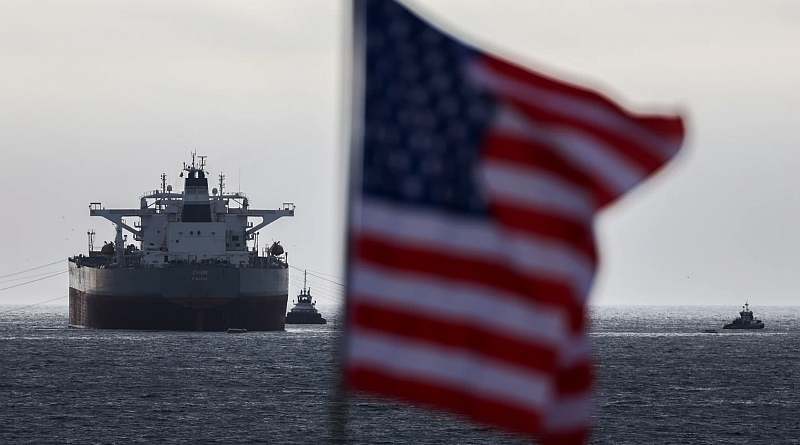
7. In the Gulf of Finland, a large-scale accumulation of tankers associated with Russian oil exports is forming.
– Dozens of vessels, a significant portion of which belong to the so-called “shadow fleet,” are forced to wait off the shores of Baltic countries due to a sharp reduction in the activity of Russian ports following Ukrainian strikes on energy infrastructure.
– In early April, Ukrainian forces attacked oil terminals at the Russian ports of Ust-Luga and Primorsk — key points for Russian oil exports through the Baltic Sea. A significant portion of supplies passes through these ports: approximately 20% of exports from Ust-Luga and another 22% from Primorsk.
– After the strikes, port infrastructure operations sharply slowed. For several weeks, almost no new tankers entered, and reception of vessels remained significantly limited.
– As a result, the tanker fleet began to accumulate in the Gulf of Finland. According to estimates, about 40 vessels are anchored just in Estonia’s economic zone, while others are concentrated in Finnish waters. Many of these vessels are old tankers used by Russia to bypass sanctions restrictions on oil transportation. A significant portion of such a fleet operates outside standard insurance and technical requirements, causing concern among Baltic coastal states.
– The presence of many dilapidated tankers near the European coast creates additional environmental risks, including potential oil spills.
– While Russian ports are trying to resume operations and address the aftermath of the attacks, these vessels are forced to wait in approaches to the Baltic Sea. A kind of “tanker traffic jam” has effectively formed, demonstrating the vulnerability of Russia’s energy export logistics.
8. The US announced a naval blockade of Iranian ports after talks failed.
– The United States announced the start of a naval blockade of Iranian ports from 3:00 PM Kyiv time on April 13. The decision was made after unsuccessful negotiations between the US and Iran, mediated by Pakistan, which ended without agreements.
– According to CNN, the US Central Command announced restrictions on the entry and exit of ships from Iranian ports. Washington also states that the restrictions may apply to vessels that allegedly paid fees to Tehran for passage in the region.
– The escalation was preceded by statements from Donald Trump about readiness to impose a blockade and possible involvement of allies, particularly in the context of demining the Strait of Hormuz.
– Iran, in response, stated it is ready to “respond harshly” to the presence of foreign military forces in the region, while emphasizing that civilian shipping will remain open.
– The negotiations lasted about 21 hours but ended without result due to disagreements over Iran’s nuclear program.
9. Germany hopes that the results of the parliamentary elections in Hungary will help unblock the EU’s €90 billion loan for Ukraine, intended to cover military and budgetary needs for 2026–2027.
– Previously, Prime Minister Viktor Orban blocked this decision, specifically demanding that Kyiv resume the transit of Russian oil. As a result, the final approval of the aid was delayed.
– After the victory of the opposition party “Tisa” led by Peter Magyar, Berlin expressed hope for the swift provision of funds and expects the prompt formation of a new government in Hungary.
– Magyar himself assured that the country would restore its role as a reliable partner in the European Union and NATO, which could aid in supporting Ukraine.
