

Information on Russia’s current losses due to sanctions as of 04/11/2026.
1. Ukraine struck Lukoil’s oil facilities in the Caspian Sea.
– On the night of April 10, Ukrainian Defense Forces units attacked two Russian drilling platforms on the Caspian Sea shelf. This was reported by the General Staff of the Armed Forces of Ukraine and the Special Operations Forces. The operation took place within the strategy of reducing Russia’s military-economic potential.
– Ice-resistant stationary platforms LSP-2 at the Valery Graifer field and LSP-1 at the Yuri Korchagin field were hit.
– According to the Special Operations Forces, both platforms belong to the Russian company Lukoil. They are located in the northern part of the Caspian Sea, approximately 1,000 km from the frontline, and play an important role in providing Russian troops with fuel and lubricants.
– The targeting of such objects indicates the expansion of the geography of Ukrainian strikes on Russia’s critical energy infrastructure and the undermining of its army’s resource base.
2. The Russian forestry industry is on the verge of mass bankruptcies — the sector is asking for budgetary assistance.
– Russia may face a wave of bankruptcies in the forestry sector amid a sharp deterioration in financial performance and increased costs following the reorientation of exports to Asian markets due to sanctions.
– Even large companies have “exhausted their margin of resilience” and are operating at a loss, accumulating debts to the budget and contractors.
– The industry’s total losses over the past three years exceeded 15 billion rubles.
– In 2025, the sector’s loss amounted to 2.2 billion rubles (compared to a profit of 3.2 billion rubles in 2024).
– The share of unprofitable enterprises has increased to 45%. Industry representatives assess the state of the sector as critical.
– Key reasons for the crisis include the loss of traditional European markets, logistical problems, and increased costs amid attempts to reorient to the East. This is another example of the systemic pressure of sanctions on Russia’s raw material sectors.
3. The number of defective freight cars in Russian railways increased sharply.
– As of the end of February 2026, the number of faulty or untimely repaired freight cars on the RZD network reached 158,000 units, which is about 11% of the entire fleet.
– For comparison, by mid-2025, there were about 86,000 such cars, meaning their number has effectively doubled. Currently, approximately 80% of all cars that are not used for a long time are attributed to faulty stock.
– One of the key reasons for this situation was the sharp drop in wagon rental rates in 2025 — by about 70%. In response, operators massively cut costs on maintenance and repair, leading to a critical accumulation of faulty rolling stock.
– By April-May, local shortages of functional wagons may occur on the network, particularly in the segments of gondola cars and tanks for transporting petroleum products at key loading points.
– The further development of the situation may trigger a chain reaction: an increase in rental rates, overloading of repair infrastructure, and a shortage of production capacities. An additional negative factor will be the expected reduction in the production of new wagons in 2026 by about 30%.
– Ultimately, operators’ attempt to maintain profitability by saving on maintenance creates risks of systemic destabilization of railway logistics in the RF.
4. The RF increased oil exports from western ports despite drone attacks.
– Russia increased oil shipments from key western ports in early April, despite recent drone attacks on the infrastructure.
– In the first week of April, total deliveries from the Baltic ports of Primorsk and Ust-Luga, as well as the Black Sea Novorossiysk, amounted to about 2 million barrels per day. By comparison, the average figure in March was approximately 1.9 million barrels per day.
– The highest load was on the port of Primorsk, which at the end of March was hit by drone attacks but quickly resumed operations.
– The port of Novorossiysk also partially resumed shipments of oil and petroleum products from the “Sheskharis” terminal after a four-day pause caused by drone strikes.
– Despite the sporadic disruptions, Russia has so far managed to maintain high levels of exports, indicating an adaptation of logistics to regular attacks.
– At the same time, such incidents increase the risks to the stability of supplies and may lead to additional costs and complications of export operations in the future.
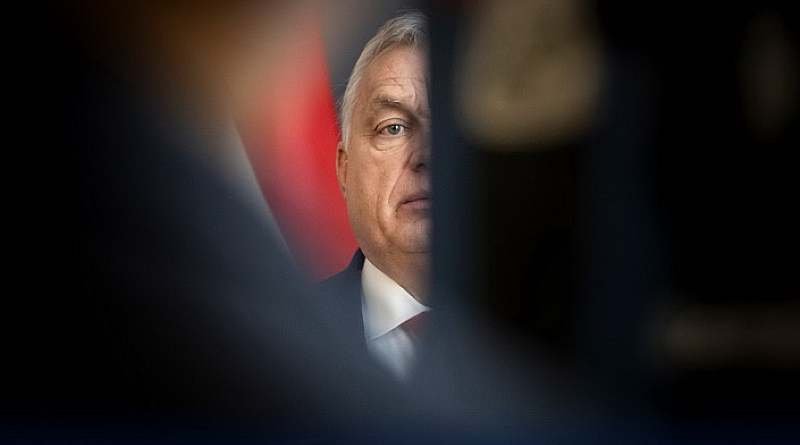
5. The Kremlin is preparing for the possible defeat of Orbán in the Hungarian elections.
– On the eve of the parliamentary elections in Hungary on April 12, the position of current Prime Minister Viktor Orban continues to weaken, despite political support from Moscow and some allies in the USA.
– According to polls, the advantage is gradually shifting to opposition politician Peter Magyar. This is further confirmed by prediction markets: Orban’s chances of retaining his position are approximately 29%, while the probability of Magyar’s victory is about 71%.
– Among the reasons cited for the weakening position of the Hungarian Prime Minister are new information leaks about Budapest’s close ties with the Kremlin. Additional factors include reports of potential incidents related to the energy infrastructure, which have heightened political tension in the country.
– The situation in Hungary demonstrates growing risks for pro-Russian political forces in Europe against the backdrop of Russia’s war against Ukraine and a general increase in anti-Russian sentiments in the region.
6. Asian countries pressure the USA to continue easing sanctions on Russian oil.
– Several Asian countries are calling on the USA to extend temporary easing of sanctions that allow the purchase of Russian oil. This refers to a 30-day exemption, which expires on April 11.
– Among the countries advocating for an extension are India and the Philippines. They insist on the prolongation of permits for oil already loaded onto tankers to avoid supply disruptions.
– The situation creates tension between USA allies. European countries are calling for a strict limitation on Russia’s revenues from energy resources, while Asian countries are trying to compensate for energy shortages amid global instability and rising prices.
– An additional factor is the consequences of the conflict in the Middle East, which has significantly destabilized energy markets. Since the beginning of military actions, oil prices have remained more than 30% higher than pre-crisis levels.
– The USA does not provide public comments on the future of the exemptions. At the same time, there is criticism in Congress and among European allies that such easements effectively allow Russia to retain income from energy resource exports.
– Washington’s decision is expected to be an important factor for the global oil market, which remains vulnerable due to limited supplies and geopolitical risks.
