
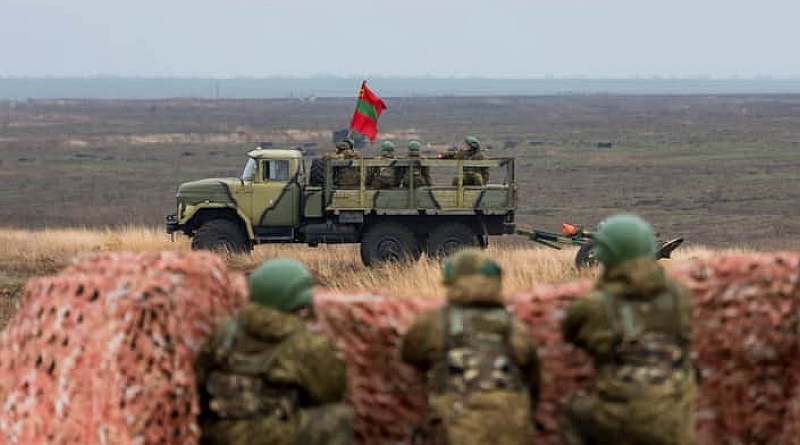
Oleksandr Kovalenko / Obozrevatel
The Deputy Head of the President’s Office, Pavlo Palisa, stated that Russia plans an offensive from a new direction, namely, the Kremlin wants to create a “buffer zone” in Vinnytsia from Transnistria. Even though the brigadier general noted that the enemy currently lacks the resources for this, it has caused some panic in society. But let’s analyze the likelihood of such a threat in more detail.
This topic is covered in the joint project by OBOZ.UA and the group “Informational Resistance”.
The last time we heard about threats from Transnistria from officials authorized to make such statements was in December 2025, when a source in the Main Directorate of Intelligence of the Ministry of Defense of Ukraine informed the media about increasing activity of Russian special service agents in Transnistria. Specifically, it mentioned strengthening mobilization measures, calling up reservists, reactivating weapons in storage, and the organization on the territory of the so-called “PMR” of UAV production and the opening of drone operator training centers.
Meanwhile, there have been no significant changes in the concentration of forces and means of the enemy, capable of posing a real threat on at least an operational-tactical level, in this isolated metastasis of the “Russian world” recently observed.
In turn, Transnistria, like Belarus, should be considered hostile territory to Ukraine—regardless of the number of Russian troops stationed there, which always pose a potential threat.
However, in the case of the recent statements made by Brigadier General Pavlo Palisa, it’s about creating some kind of buffer zone in the territory not so much of the Odesa region, with which Transnistria has a large border length, but specifically in Vinnytsia.
Most often, when we talk about threats from the so-called “PMR,” we automatically imply a threat to Odesa, but not Vinnytsia, which is rarely mentioned as a potential target for illegal armed formations of the unrecognized quasi-republic. And this is actually both quite logical and could have been a mistaken perception of potential threats from “PMR” all this time.
But before assessing the degree of danger, the potential of the forces and means at the disposal of the “republic’s” illegal armed formations should be analyzed.
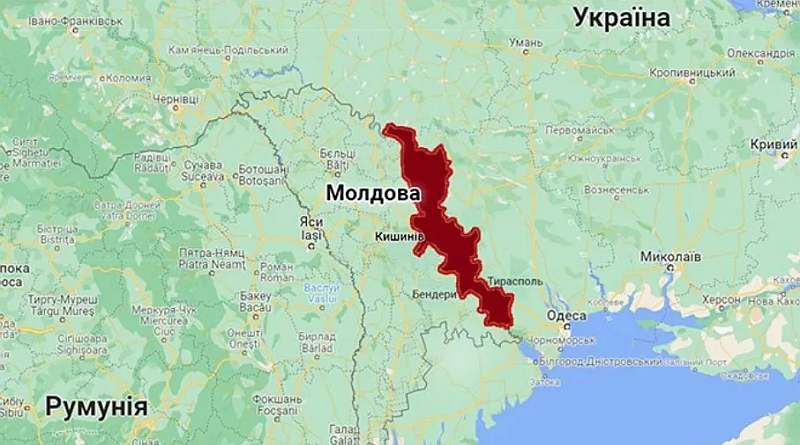
Potential of “PMR”
Answering the question of assessing the potential of Transnistria is quite easy since it has not fundamentally changed compared to the potential before and after 2022. It can be conditionally called preserved and degrading in conditions of complete isolation. Nevertheless, it poses a certain situational danger.
As of today, the number of Russian contingents in “PMR” is about 1,700 people, who consistently serve in an enhanced mode at such facilities:
– 1411th artillery ammunition storage base (village of Cobasna);
– “Tiraspol” airfield;
– 82nd OMSB (city of Bender);
– 113th OMSB (city of Tiraspol);
– 540th separate command and logistics battalion (city of Tiraspol);
– 450th military hospital (city of Tiraspol);
– Russian military prosecutor’s office department and FSB military counterintelligence department (city of Tiraspol).
Illegal armed formations of Transnistria also have not undergone radical changes over the past years, and their number is about 7,500-8,000 people.
The armament of both groups, so to speak, includes the following equipment:
– tanks – about 11 operational main battle tanks of T-64B/BV and T-72 modifications. About 30 T-64B/BV, T-72, and T-55 tanks are non-operational;
– armored vehicles – about 150 combat vehicles of BMP-1/2, BTR-60\70\80, BRDM-2, and MT-LB types, some of which are non-operational and cannot be repaired;
– barrel artillery – about 60 units including 122-mm D-30 howitzers, 85-mm D-44 divisional guns, and 100-mm MT-12 anti-tank guns;
– MLRS – about 20 units including 122-mm BM-21 “Grad”/VV-21.
In the realities of dynamic warfare, in which the Ukrainian army has the best experience in the world, such a complex grouping has chances in the case of direct invasion to hold on in the offensive for no longer than a week, and it may even be wiped out faster. But the point is that it is not so much about a direct invasion with an offensive on Odessa, but rather the mention of forming a so-called buffer zone. This suggests a possible hybrid nature of aggression rather than an attempt to carve out a corridor to Odessa.
Buffer Zone
Regarding the intention to create so-called buffer zones, the Russian military-political leadership has been declaring periodically since 2024, after the Ukrainian Defense Forces conducted a successful Kursk operation. However, behind these statements lies an attempt to justify the invasion and seizure of the territories of the Sumy and Kharkiv regions.
The invasion in May 2024 in the Vovchansk direction happened with the justification in the Russian Armed Forces as a failed attempt to break through to Velykyi Burluk. Later, these front segments along the border expanded with multiple tactical-level raids that did not penetrate more than 3-5 km into Ukrainian territory from the border.
In general, practically all the raiding actions by Russian occupiers are justified by creating a buffer zone, the essence of which is conceptually different. This refers to a neutral area not controlled by either side, created to prevent conflicts, reduce tension, or ensure security.
In other words, according to terminology rules, the incursion of enemy troops, such as Transnistrian armed groups into Ukrainian territory, is not the creation of a “buffer zone”, but an invasion.
The “PMR” Invasion
The “PMR” border with Vinnytsia region is a little over 30 km, stretching roughly from Velyka Kosnytsia to Chervona Polyana. The concentration of Transnistria’s armed groups in this zone cannot be carried out unnoticed, and any redeployment, especially along the M-4 route, will be observed by Ukrainian forces.
Meanwhile, the gathering of these aforementioned units and equipment could indeed be sufficient to make an advance of up to 5 km over a 30 km front controlling several settlements. However, the inexperienced and unprepared army of Transnistria and Russian “peacekeepers” will become stuck in a small area of combat, allowing Ukraine the right to retaliate.
Specifically, considering the border with Vinnytsia region, likely counteractions by Ukrainian forces could include a counterattack towards Katerynivka, along route 1611, aiming to cut off logistics via the M-4. The “PMR” armed groups would find themselves trapped and isolated from the south by Ukrainian forces and from the west by the Dniester River.
The suicidal mission will collapse quicker than the occupiers can even imagine.
Furthermore, Transnistria is a 200-plus km long strip, with a depth from the Ukrainian border of no more than 27 km. Most of the “PMR” territory is not only targeted by artillery but also by mortar fire. Not to mention the complete domination of FPV drones over such distances—both regular and fiber-optic-controlled.
If a threat arises from “PMR” and attempts by enemy forces to enter the territory of the Odesa or Vinnytsia regions, the remote fire impact on this quasi-republic would result in complete control over the entire Transnistrian area.
Most importantly, such an act of aggression would fully entitle the Ukrainian side to clear out this hostile entity. The question remains only in the political determination, with or without regard to the position of official Chisinau.
Conclusions
The “PMR” poses a threat to Ukraine, as does Belarus. These territories are used by Russia for provocations and sabotage against Ukraine, posing a potential terrorist threat to border regions. However, overall for our country, they present only a situational military threat, which can be quickly neutralized.
The only nuance is that no buffer zone will be created in response to aggressive actions from “PMR”; it will be an invasion. The meaning and purpose of a buffer zone are entirely different, and in this case, this terminology, which Russia often uses to justify the occupation of Ukrainian territories, cannot be applied.
Meanwhile, Ukrainian forces have all the capabilities to respond to such threats by completely clearing the problematic region of hostile elements, which will depend solely on the will of the country’s top leadership.
Cover photo: Occupying authorities of Transnistria
