
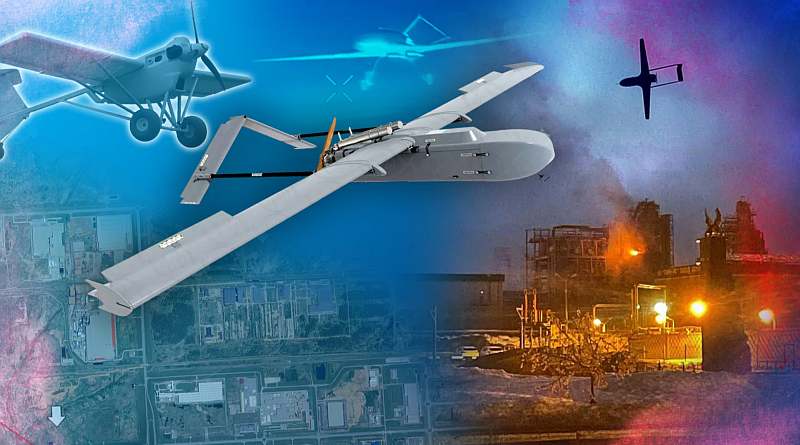
Phillips P. OBrien / Translation by iPress
Renowned American historian, professor of strategic studies at the University of St Andrews (Scotland) Phillips O’Brien argues in a traditional weekly review that Ukraine is increasingly enhancing its capability for both long-range and medium-range strikes – gradually putting the Russian army in a precarious position. Long-range strikes deplete Russia’s ability to create new military strength (primarily through attacks on refineries), while medium-range strikes paralyze its ability to redeploy existing forces to the front, particularly through constant strikes on the M-14 highway. The author also emphasizes that the Trump administration has begun to demonstratively distance itself from Putin and show greater support for Ukraine. The main thesis is that the reason for this shift is intelligence indicating that Russia is weakening, while Ukraine is holding up much better than the administration previously claimed.
I know that many of you are closely following the American-Iranian war and hear news that Trump may concede defeat and lay down arms. It seems this is the case. However, this review will remain within the scope of the Russian-Ukrainian war. If Trump indeed retreats, it won’t be a big surprise for the readers of this blog.
This was a week when Ukraine continued to enhance its potential for both long-range and medium-range strikes and publicly spoke about both avenues. For convenience, I will simply say “medium-range strikes” from now on. I understand that for long-time readers of this Substack, these concepts are not new, but in recent months many new readers have appeared, and I thought it would be helpful to briefly explain the difference between them. It’s not just about distance – in reality, it’s more about concepts and understanding what matters in the application of air power.
I will provide examples of each of these types, as last week Ukraine demonstrated its growing capabilities in both areas. If it continues to enhance its potential at the current pace and Russia cannot find a countermeasure, the Russian army will find itself in significant trouble.
The past week was also interesting for the Trump administration, which apparently is trying to abandon its previous support for Putin and hostility towards Ukraine. How they did it is ultimately less important than why they did it, but both aspects will be discussed.
Finally, my latest article has just been published in The Atlantic. Here is a gift link.
A brief overview of the difference between long-range and medium-range strikes
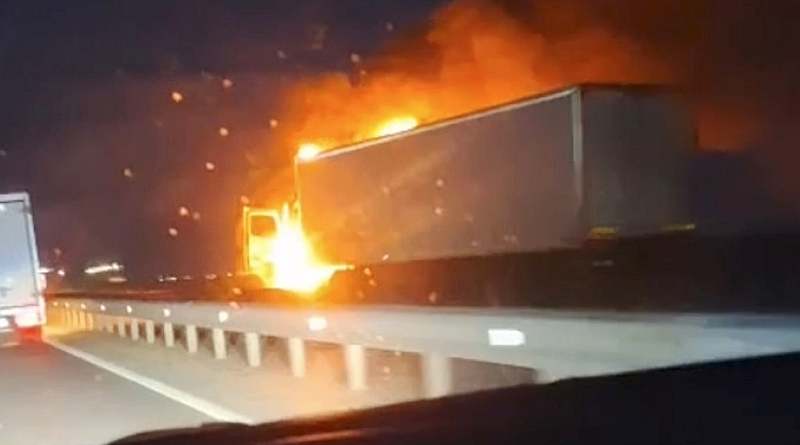
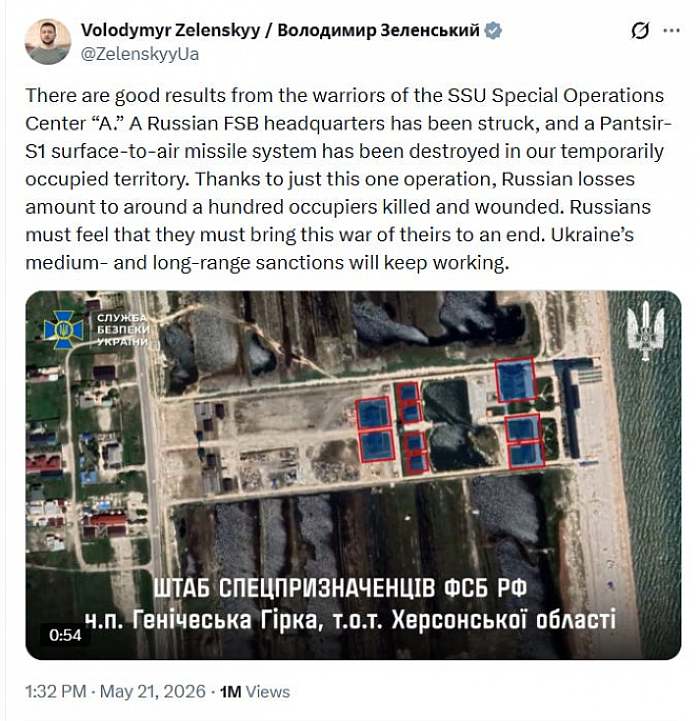
The sound you hear might be a burning Russian oil refinery near the Ural Mountains, or it could be the explosion of a logistics column moving along the M-14 highway (a Ukrainian route from the Russian border to Mariupol and further to Odessa, much of which is under Russian occupation). These examples of successful long-range and medium-range strikes by Ukraine are what Ukrainians are trying to convey to the rest of the world. Zelensky even mentioned both in one of his recent posts.
The difference between long-range and medium-range strikes
At the start of this explanation, I acknowledge that there is no single, generally accepted definition of long-range and medium-range strikes. In the context of this war, it’s best to think of the difference between them in conceptual categories rather than just as a difference in distance, with the caveat that technology and capabilities also play an important role.
Long-range strikes are most appropriately compared to the strategic bombings of World War II. This is an attempt to hit deep into Russia to damage strategic sectors that support the Russian military machine. This is most obviously related to the campaign against Russian refineries, but attention should also be paid to strikes on Russian military production, such as drone production, both at the component manufacturing stage and at the final assembly stage. Strikes around St. Petersburg and Moscow, and now increasingly in the Urals, are all part of this long-range campaign, but it also includes strikes in southern Russia, for example, in the Caspian area. So consider long-range strikes as an attempt to limit or weaken the Russians’ ability to build new military power.
Ukrainian medium-range strikes are conceptually different, although in some cases, medium-range strikes have hit targets almost as distant as those targeted by long-range ones. Medium-range strikes can occur over a fairly large area — from 25-30 kilometers from the front line to, say, another 300 km deep. What unites these strikes is their goal, as much as their distance. They are primarily aimed at disrupting logistics, stopping the transfer of already created Russian forces to the front to fight against Ukraine. They target road, rail, and sea transportation, as well as movement over bridges that deliver supplies or reinforcements to the front.
If a summary in one sentence is needed, it would sound like this:
“Long-range strikes aim to limit or destroy Russia’s ability to create new military forces, while medium-range ones aim to disrupt or destroy Russia’s ability to transfer already created forces into battle.”
Aside from the conceptual difference, one reason Ukrainians distinguish between these two types is that their systems with a range of up to about 300 kilometers are becoming more numerous and effective somewhat faster than their long-range systems. This does not mean that long-range systems are not improving — they are improving. It’s just that in 2025, Ukrainians realized they were on the brink of significant improvements in the medium-range sphere and began to conceptualize it more thoroughly.
Thus, a truly powerful air campaign must conceptually consider both these dimensions — this is exactly what Ukrainians are doing. The past week provided great examples that further illustrated the difference.
Medium-range strikes — M-14 highway
Regarding medium-range strikes, Ukrainians seem capable of regularly hitting traffic along the M-14 highway — the main land route used by Russians through southern Ukraine. Here it is marked on Google Maps: you can trace how it stretches from the Russian border to Mariupol, to Melitopol, and further to Nova Kakhovka. Also note that in Melitopol, the road branches off and becomes key for delivering supplies to and from Crimea.
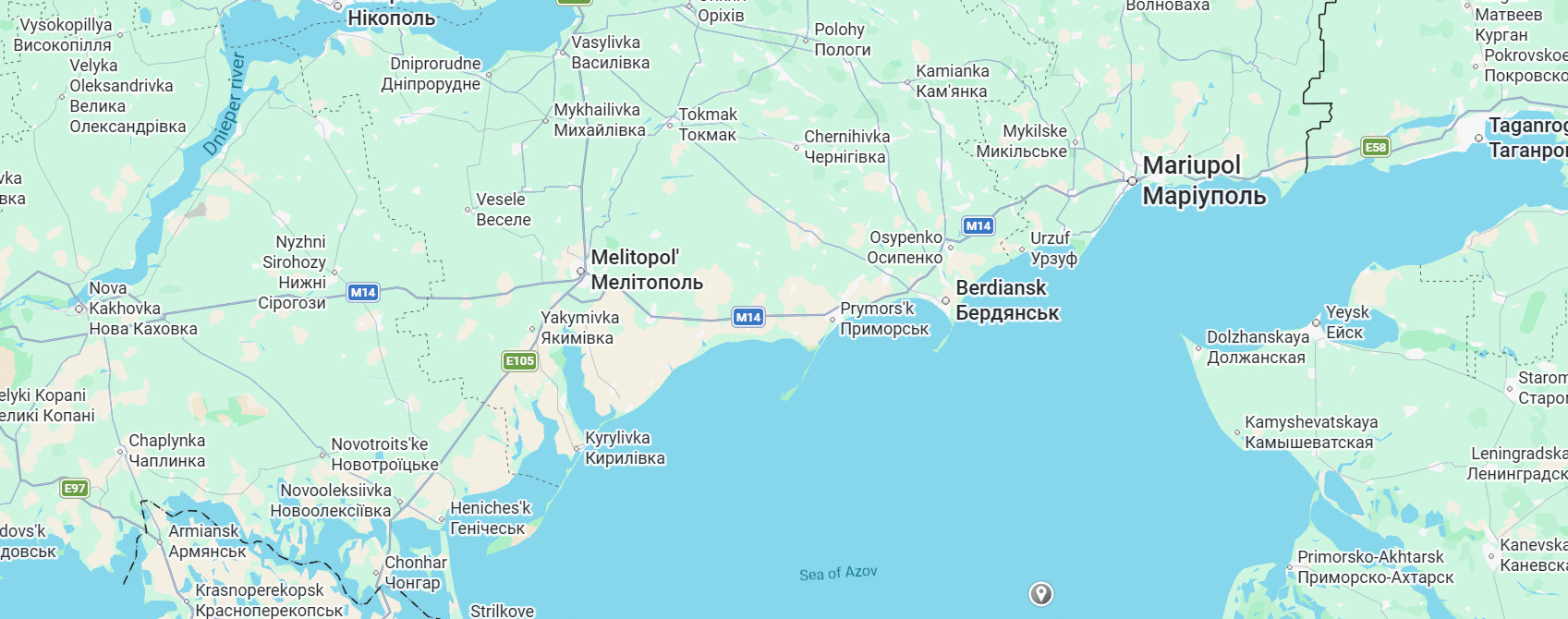
Ukrainians have managed to deliver hits to the movement along the M-14 so regularly that the Russian occupation administration had to issue an order prohibiting any civilian movement (except for food and essential supplies) on this road. Only military cargo and cargo necessary for life support will be allowed.
The reason is that cargo transportation on the road is under continuous attack, and it is reportedly strewn with destroyed equipment.
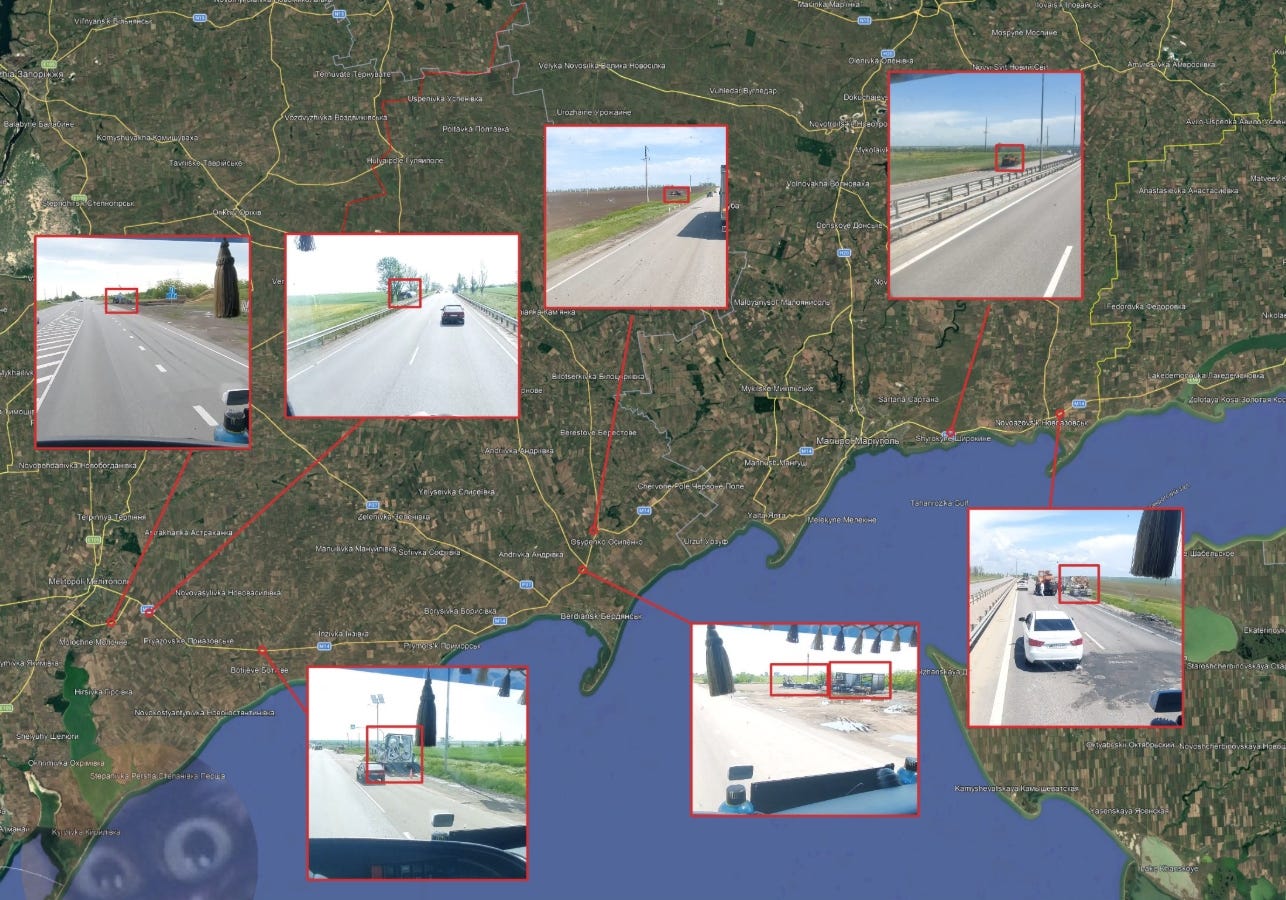
There is an ongoing discussion about whether Ukraine has established “fire control” along the road. I am still hesitant to fully assert this. If Ukraine had fire control, I would expect to be able to say that it can control movement anytime and anywhere. It is not clear that the campaign has already achieved such a level of control. It is probably more accurate to say that Ukrainians can sometimes block movement along the road. This will not stop all movement, but it can significantly impact it, destroying a considerable portion in the process.
The future of this confrontation will be determined by the situation at the front. If Ukraine can truly control and completely block all road traffic along the M-14, it will pose a huge problem for Russian forces in southern Ukraine (specifically in the Kherson and Zaporizhzhia regions). If supplies via this road are halted, along with rail connections, Crimea will be the only way for Russians to receive supplies. And this flow has already decreased.
Note: as of the time of writing this text, unconfirmed reports are coming in about supply issues for Russians in Zaporizhzhia – all I can say is: keep a close watch on this.
The Ukrainian strategy of medium-range strikes aims to deprive the Russian army in Ukraine of reinforcements and resupply. This could weaken the military, which fights in a rather primitive way, as the Russians do.
Note: another point that is worth mentioning and actually plays into the hands of the Russians. They don’t have to deliver as many supplies as in, say, 2022-2024, because they aren’t fighting with as much equipment. Since their forces consist of “lighter” infantry or forces on light transport, their supply needs are less extensive. I might need to write a separate piece about this, but this is one of the ways in which drone warfare gives the Russians an indirect advantage.
Long-range Strikes: Refineries and More
These Ukrainian long-range strikes have been ongoing for some time, and people usually associate them with attacks on Russian oil extraction and refining, especially on oil refineries. The Ukrainians themselves have made this a key part of their public discourse – among other things, they published relevant infographics this week.
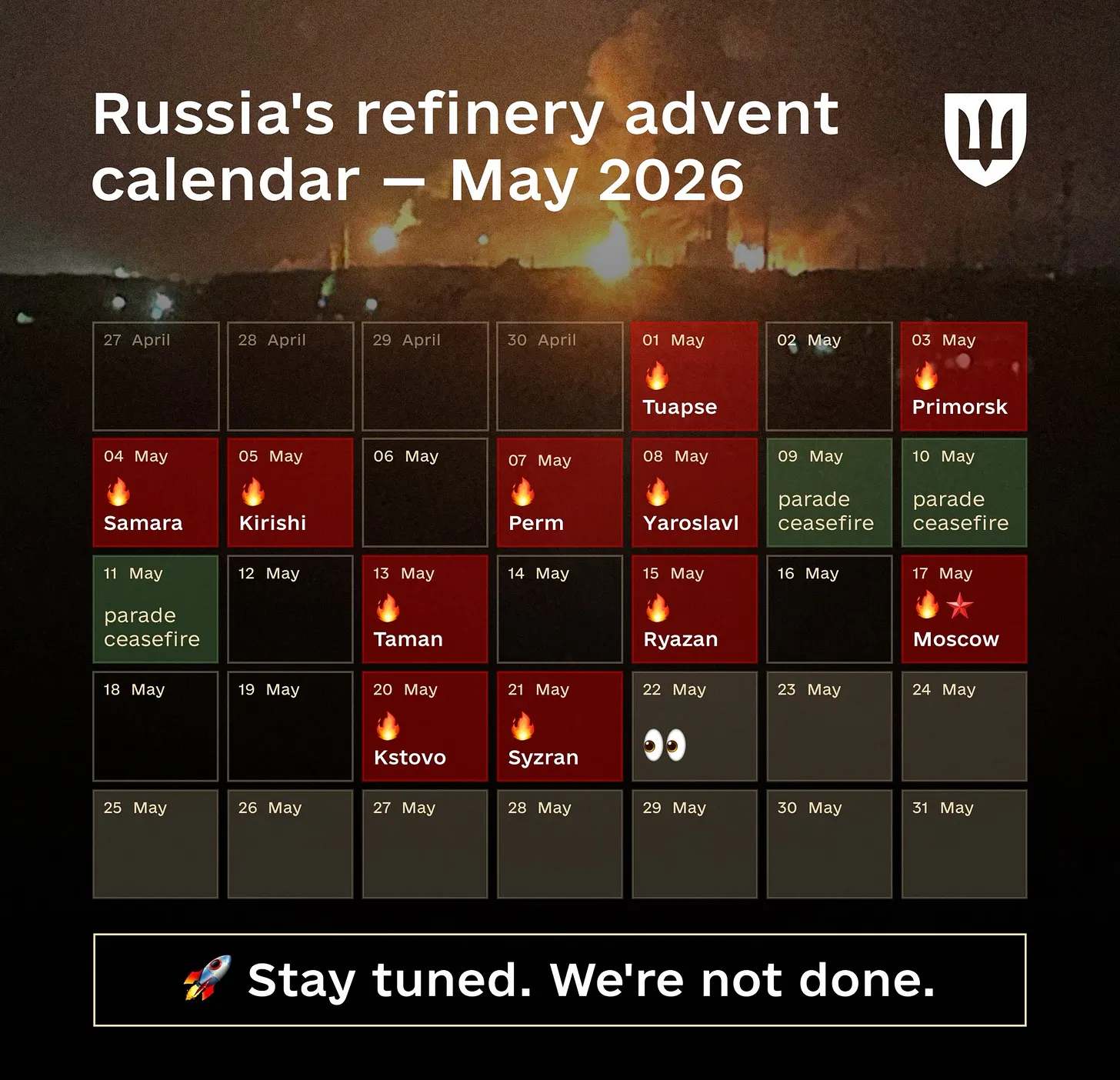
Here are the Ukrainian strikes on Russian refineries just in the last week and some of their documented consequences.
Chronology of Strikes (May 17–23, 2026)
- May 17: The Moscow Oil Refinery suspended oil processing after a massive drone attack over the past weekend.
- May 18 and 20: the “Lukoil-Nizhnevolzhskneft” (NORCI) refinery in Kstovo, Nizhny Novgorod Region, was hit twice, with the strike on May 20 accurately hitting a critical primary oil distillation unit.
- May 21: The Syzran Oil Refinery of Rosneft in Samara Region, located over 800 kilometers from the Ukrainian border, was hit. The strike caused a large fire. The plant’s annual processing capacity is about 9 million tons.
- May 22: the Yaroslavl Oil Refinery (YANOS) – one of the largest in Russia – was attacked. This facility is located approximately 700 kilometers from the border and serves as a key fuel hub for military logistics.
- May 23: operations spread to the Black Sea coast, with strikes on the Sheskharis Oil Terminal, a major export hub operated by Transneft, and the neighboring Grushova oil storage in Novorossiysk. Ukrainian sources also reported a strike on the Chrysalis tanker in the Black Sea.
Such a large number of attacks in one week, in such distant regions, marks a significant change. The Russian air defense is already struggling, and if it is forced to fend off attacks in such diverse areas weekly, one can imagine nothing but a worsening situation for it. Ukraine has been targeting oil refineries for some time, but it is ramping up the pace and striking farther than ever before.
These strikes aim to deprive the Putin regime of critically needed money (and, if possible, limit the Russian economy’s access to oil). In the future, Russia faces a financial abyss, as it has exhausted its National Welfare Fund. If Trump hadn’t intervened with his war against Iran, these financial problems would now be dire. However, the higher global oil price significantly helps Russia, although Ukraine, with long-range strikes, is limiting this effect. Here are some noteworthy events.
- Reduction of processing capacities: attacks from March to May 2026 disabled between 16% to 25% of Russia’s domestic oil refining capacities, resulting in a loss of about 1 million barrels per day in processing volumes.
- Decline in exports: as a result, the export of Russian oil products in April 2026 fell by 13.6% compared to the previous month, reaching a historic low of 2.2 million barrels per day.
Note: these are just attacks on refineries. This week, Ukraine, with long-range strikes, hit a number of other strategic targets, including a large chemical plant (involving explosives) in Perm.
In summary: Ukrainians are becoming increasingly strong in long-range and medium-range strikes – and this became the main event of last week.
The Trump administration changes course, and the reason for this is essential
Over the past week, the Trump administration made several notable shifts in its policy and public stance regarding Ukraine. Essentially, it tried to start distancing itself from Putin. J.D. Vance and Marco Rubio, two of Trump’s most likely successors, joined this reversal, and what they said is, in many ways, less important than why they said it.
Vice President J.D. Vance decided on May 21 to emphasize how much Trump helped Ukraine. He stated that “no U.S. president has done more to save Ukraine than Trump.” Now remember: Vance may be the most pro-Putin and most anti-Ukrainian member of the administration, a person who boasted that one of his “greatest achievements, which he is proud of,” was stopping all aid to Ukraine. Previously, his position was openly anti-Ukrainian: he downplayed Ukraine’s prospects and said the U.S. has no interest in this war, and now he wants to convince people that Trump was actually pro-Ukrainian?
By the way, Vance was referring to the first-term Trump administration’s decision to send anti-tank weapons to Ukraine. At the same time, he conveniently ignores the cessation of all aid to Ukraine during the second term and all the assistance to Putin, etc.
Secretary of State and National Security Adviser Marco Rubio said something a day later that could be argued was more revealing, although on the surface seemed quite bland. Essentially, he said that U.S. efforts to mediate the end of the Russo-Ukrainian war are currently coming to an end, and then added a series of odd theses.
Among them was that the negotiating parties (Russians and Ukrainians) were not doing what the administration wanted.
“Thus, we will gladly do so if there is an opportunity to hold constructive and productive negotiations. We are equally not interested in engaging in an endless cycle of meetings that lead nowhere.”
However, perhaps more interestingly, Rubio openly lied by claiming that the U.S. had not previously tried to pressure Ukrainians into accepting a bad deal.
“Despite leaks that are not true, despite stories that we are supposedly forcing Ukrainians to take a particular stance – this is not true. If we see the opportunity to hold talks that are productive, not counterproductive, and have a chance of being fruitful, we are ready to play this role.”
This is a blatant lie from Rubio, as I said. This statement is not based on “leaks,” as he tries to present. Zelensky gave a televised address in November 2025 and stated that Ukraine is being pressured by the U.S. (“main partner”) to accept a terrible deal. Here is Zelensky’s exact quote.
“Now is one of the most difficult moments in our history. The pressure on Ukraine is currently one of the hardest… Ukraine might face a very difficult choice: either lose dignity or risk losing its main partner.”
So, both Vance and Rubio, each in their own way, are dishonest, which in itself is not surprising. However, it’s interesting that they are dishonest to try to convince the American public that the administration was and is more pro-Ukrainian and more anti-Putin than it actually is.
The reason can only be that the intelligence received by the administration indicates that Russia is barely managing, while Ukraine is holding up much better than the administration stated both publicly and privately. Let’s recall: this is the same administration that not only said Ukraine had “no trump cards” but also assumed in its national security assessments that Russia had the upper hand in the war and would secure peace on its terms. This is most clearly seen in the “Annual Threat Assessment of the U.S. Intelligence Community” for 2025, released by the Office of the Director of National Intelligence (ODNI) on March 25, 2025. The report claimed that ending the war on Putin’s terms also aligned with U.S. interests. Here’s the beginning of the section on the war (page 18).
Russia and Ukraine
Over the past year, Russia has regained initiative in its full-scale war against Ukraine and is moving to amass greater leverage over Kyiv and its Western partners to force them to negotiate an end to the war on terms that would give Moscow the concessions it seeks. The continuation of the Russian-Ukrainian war maintains strategic risks for the United States of unintentional escalation to large-scale war, potential use of nuclear weapons, increased danger among NATO allies, especially in Central, Eastern, and Northern Europe, as well as further strengthening of China and North Korea.
And now the administration boasts about helping Ukraine? That doesn’t happen by accident – it’s because it realizes that everything it said in 2025 was wrong. Otherwise, it wouldn’t do this. Do you know why? Because Trump himself remains so tied to Putin that he doesn’t join this chorus. The administration doesn’t want Ukraine to succeed. Its fundamental worldview remains unchanged.
However, it is forced to pretend to be more pro-Ukrainian than it was – and that’s important.
So take this as a good sign, but don’t let these fraudsters get away with it.
Header collage: UP
