
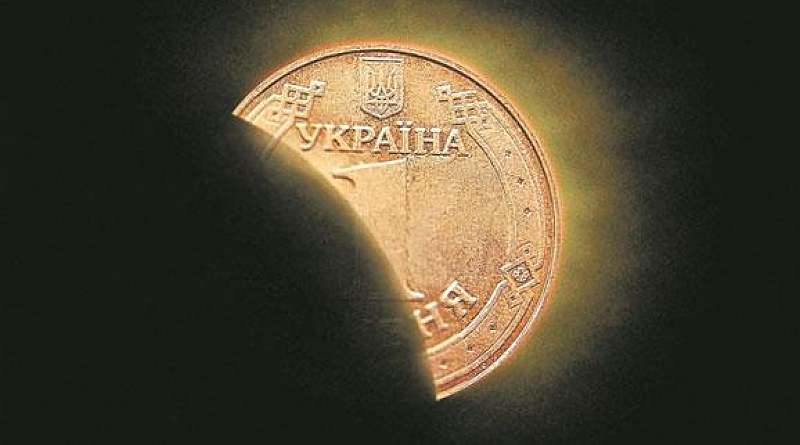
While Ukraine seeks funds for the war, part of our economy is in the shadows. What is the real scale of this shadow economy, why might it not align with government claims, and how can we effectively promote business legalization?
Half of the economy in the shadows?
Since the beginning of the major war, the Ukrainian government has continually faced the challenge of finding funds both for the military and for supporting the entire national economy. Despite relatively stable assistance from partners, we still finance more than half of the state expenditures ourselves (by 2026, Ukraine will cover about 60% independently).
Funding the state budget by our efforts is achieved through tax revenues and collections from various types of economic activity within the country. In the public sphere, officials often estimate the shadow economy in Ukraine at about half of the gross domestic product (GDP). For example:
- Yulia Svyrydenko, while serving as Minister of Economy, mentioned approximately 40%: “According to the Ministry’s estimates, 40% of the Ukrainian economy is in the shadows. This obviously includes the agricultural sector and agricultural exports”;
- Danylo Hetmantsev, head of the Verkhovna Rada Committee on Finance, gave an even more pessimistic assessment: “We believe that about half of the economy is in the shadows, but there are sectors, for example, trade, where it’s 60-70%”.
In 2025, Ukraine’s nominal GDP was $209.71 billion. Accordingly, if roughly half of the economy truly is in the shadows, this concerns about $100 billion in unaccounted economic activity (the shadow economy level is usually measured relative to the size of official GDP). This is indeed a huge amount, approximately equal to the GDP of countries like Bulgaria, Angola, Oman. For us, it means the loss of a significant portion of budget revenues, which would certainly be beneficial during a major war.
40-50% – an overestimation?
Despite the officials’ words, we should ask: is 40-50% of the shadow economy really an accurate assessment? After all, it’s about a huge parallel economy, which is very difficult to hide in today’s world of cashless payments.
It’s worth noting that estimating the scale of the shadow economy is an incredibly complex task. Over the past years, only a few comprehensive studies on this topic have been prepared. For instance, a report by the Kyiv International Institute of Sociology, which used the Putnins-Sauka methodology. It concluded that in 2018, 38.3% of the economy was in the shadows.
Later, the results of this methodology were analyzed by an international group of scientists and published in the Journal of Contemporary Central and Eastern Europe. It confirmed the conclusion of over 38% shadow economy in Ukraine. However, the cited estimates pertained to the period prior to the full-scale war, after which our economy underwent fundamental changes.
In 2025, Ernst & Young published a study estimating Ukraine’s shadow economy in 2023 to be 19.3%—much less than the materials mentioned above.
Another source is the assessment by the State Statistics Service of the so-called “non-observed economy.” In different years, the State Statistics Service provided data from 14% to 20%, yet its methodology is often criticized for its strict reliance on statistical data and failure to consider non-numerical factors.
Thus, we have authoritative studies that estimated a 38% shadow economy, but eight years have passed since then. Since then, we cannot say there are signs of its increase or stability. On the contrary, there are no signs of a massive increase in the cash mass of the hryvnia. Moreover, there is no massive circulation of dollars or euros in such volumes in Ukraine. Otherwise, without using cash national or foreign currency, it is simply impossible to bypass the banking system (barter exchange on such a scale is unrealistic).
Therefore, officials’ statements about a 40-50% shadow economy can be considered either too pessimistic an estimate or an attempt to shift chronic budget problems onto “tax evaders.” Most likely, Ernst & Young’s estimate is closer to reality.
Do Not Resort to Repression
In any case, the phenomenon of shadowing is generally undesirable, and the state must take reasonable measures to minimize it. International organizations (IMF, World Bank, OECD) in their recommendations state that repressive measures are undesirable in the fight against the shadow economy: tightening tax audits, total fiscalization, etc. In Ukraine, this has long been “noted” by the aforementioned Danylo Hetmantsev—the ideologist of the mandatory introduction of cash registers PPO/PRRO for sole proprietors of groups 2-4. His initiatives caused a series of protests in 2019-2021 (particularly, the SaveFOP movement).
Instead, reducing tax burdens and simplifying reporting are recognized effective measures for de-shadowing. Traditionally, a significant tax burden, especially on the wage fund, is the main driver of “under-the-table” payments. Reducing the rates of its components (Unified Social Tax, Personal Income Tax) will encourage employers to hire people officially.
Another aspect is the complexity of reporting. Most small entrepreneurs prepare reports independently as they do not have the resources to pay for accounting services. A high probability of errors in declarations increases the chance of fines and accordingly encourages entrepreneurs not to report their activities at all. Therefore, reporting should be as simple as possible, and the time for its completion and submission minimized.
Of course, much can be said about the moral component (“dishonest Ukrainians deliberately evade taxes”). But it is necessary to understand that this is the nature of business: feeling excessive pressure, entrepreneurs try to avoid it. Moreover, we are not talking about super-profits; in most cases, these are small economic entities for whom entrepreneurial income is a means of survival.
Moreover, in economics, one can sometimes encounter a cautiously positive view of the shadow economy (specifically its “gray,” non-criminal side). It is a kind of safety cushion that allows part of the business to survive difficult times and then return to full declaration. The state and the economy as a whole would suffer much more if these businesses simply ceased to exist with the onset of the crisis.
Do Not Overstate the Scope of the Problem
Thus, the shadow economy is definitely a problem for Ukraine, as we need to leverage all possible funds during the great war. Therefore, the state must take measures that would effectively stimulate businesses to emerge from the shadows.
Statements by high-ranking officials about 40-50% shadowing are likely exaggerated. This is indicated by the logic of cash flow as well as a recent report by Ernst & Young. While claims about “half of the economy being in the shadows” are media-attractive, we must assess the situation soberly and not overstate the scope of the problem.
In conclusion, the fight against shadowing essentially corresponds to a set of measures for the overall improvement of the business environment in the country. Low taxes, protection of property rights, digitalization, ease of doing business, and fair justice are the keys to both de-shadowing and economic prosperity in general.
Collage: Business TV
