
Regarding Moscow’s threats to strike Kyiv and “make it uninhabitable” because people died in Starobilsk dormitory.
Notice, I am not joking about “girls in panties,” — these are Ukrainian people who became victims of Moscow’s invasion.
However, there is no need to use civilians in drone assembly or at military sites as a human shield, nor to joke about Yelabuga Polytechnic and redirect bakeries to produce UAVs.
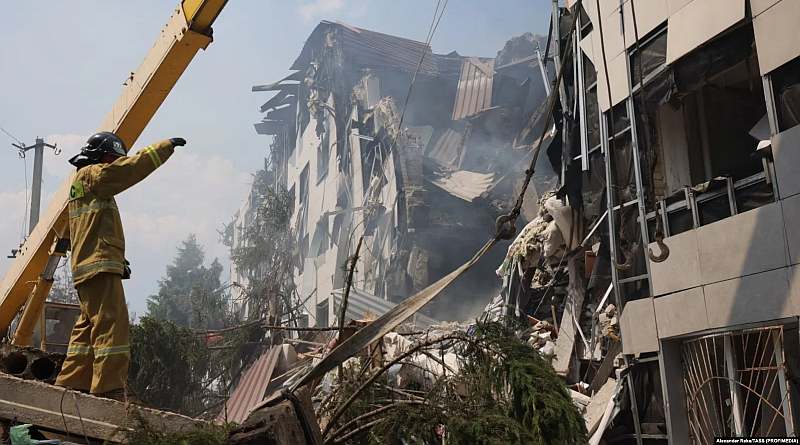
Starobilsk is a Ukrainian city, temporarily occupied. The occupier bears full responsibility for placing the “Rubicon” center in the technical school and for civilians living there. As well as for evacuating civilians from such objects.
All this wailing about the beaches of Zugres and “angel alleys” should be directed at the Kremlin regime, which started an aggressive war against a sovereign country. Did those same Girkin with “Kamaz” weapons from Russia (where even holding an empty placard is prohibited) enter here themselves?
Once again, maybe someone didn’t understand. Moscow has no more means to threaten us than it does now. There is no talk of a “Kyiv unfit for life.”
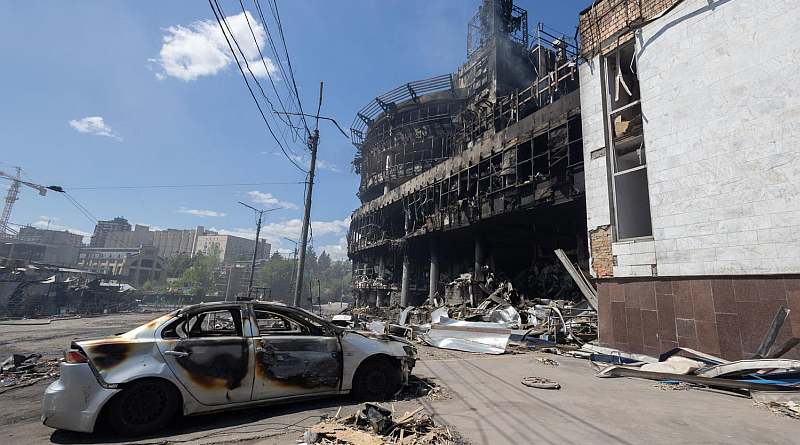
Since the invasion, the Russians have used the entire spectrum of weapons against Ukraine: “Kinzhals,” “Iskanders,” converted anti-ship missiles with accuracy of plus or minus a block, KABs, bunker-busting heads, thermobars, even BRSD.
They’ve hit rock bottom — firing “Iskanders” and Kh-101s manufactured last month (and now the Russian military-industrial complex can produce about 40–50 ballistic and the same number of cruise missiles per month). They shot off the S-300 missile stocks down to deficit.
The enemy is lacking even air-to-air missiles on aircraft. It has come to purchasing shells and gunpowder from North Korea.
That’s it, they’re stuck. Soviet reserves have been depleted, and it turned out worse than in Afghanistan. Because the spirits did not bomb in response the airfield in Akhtubinsk (600 km from Ukraine) and Orsk (1800 km) and did not stop all the refineries in the European part of the Russian Federation.
No strategic bombing campaign by the RF against Ukraine (bridges, railways, military-industrial complex, mobilization, freezing cities) has achieved its goal. Why should this one?
How many missiles and naval drones have the Russians thrown at the bridge in Zatoka—I’ve lost count at 20+ waves of attacks. And did the bridge fall? Was Bessarabia cut off? Yes, holes were poked, movement was stopped, and they gave our repairmen a hard time. But the bridge still stands, and the strategic task of the Russians is not achieved.
Nuclear weapons are not used not because they are afraid (we don’t have nuclear deterrence). But because it’s the same dilemma that the Americans faced when they were preparing to land on the Japanese islands.
If special warheads are used to support the landing, they need to be spent by the dozens. And it takes out, well, maybe a dispersed battalion, and that in ideal conditions. In the end, to the ruins of Popasna, which no one plans to rebuild, radioactive ruins of, for example, Kostiantynivka could be added. And what will change? Will several million shells from the EU, a coalition of drones with millions of units, and the supply of guided bombs from France and the USA stop? No, of course not.
And hitting cities where drone production is spread thinly will neither disable the military-industrial complex nor avoid a hundred drones targeting the roofs of one’s own nuclear reactors and chemical plants. No one will have any sympathy after that.
It is clear that destroying all major cities using strategic nuclear forces is not feasible — contamination would reach the Black Sea, Crimea, Tuapse. Chernobyl was first reported by reindeer herders in Scandinavia, if anyone remembers. Poisoning the borders of the Russian Federation to “punish the Ukrainians” is too much even for people who are accustomed to smearing competitors’ underwear with Novichok.
And, of course, there’s the inevitable extremely sharp reaction from other nuclear club countries. During Cold War-era exercises, an exchange of tactical nuclear strikes always led to the use of strategic forces, resulting in whatever was left of, say, Hungarians having to resettle on 20% of uninfected Soviet Ukrainian territory.
Nuclear winter, months-long fires, famine, high mortality from radiation sickness. There are numerous materials on this topic. To risk such an outcome just to push Ukraine into neutral countries and occupy the ruins of Donbas is madness.
In the end: a few dozen ballistic missiles a month (plus or minus 50 pieces) is their limit now. Quickly scaling up combat chemistry, electronics, and engine production is not as simple as promising on television to “make the enemy’s capital uninhabitable.”
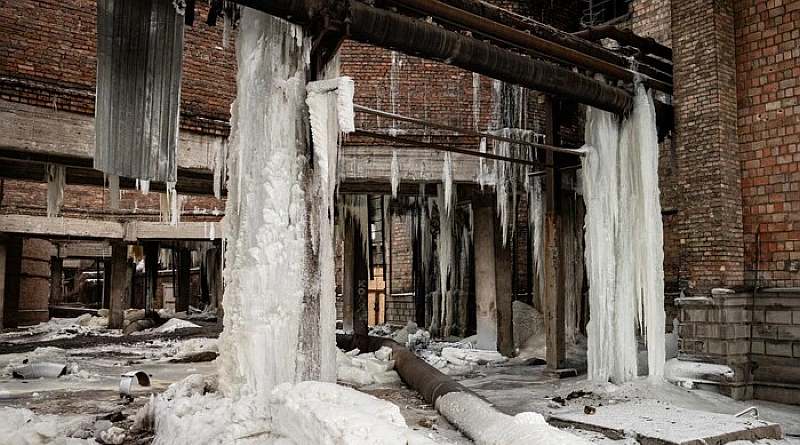
Russia attempted to plunge Kyiv into blackout and freeze it. It didn’t work. The ratio of damage from raids on the capital simply does not match the costs for Russia. We intercept most of the “Shaheds” (launched in hundreds) and missiles with a complex decentralized system of mobile groups, interceptor pilots (including those with sports aircraft), small-caliber anti-aircraft artillery, SAM systems, Air Forces, and army aviation.
Despite the constant shortage of interceptors, the EU has already launched the production of missiles for Patriot and is increasing the quantity for SAMP/T. Not everything will get through. And dispersion will not allow bottlenecks to be knocked out. In the worst case, the EU will lend a hand: the Czech initiative may cover more than just artillery shells.
What “decision-making centers” the Russians dream about is unclear. Historical buildings on Bankova? Management might not even be conducted from there, but from the metro or bunkers 80 meters deep, which the USSR built accounting for multiple nuclear strikes.
They literally do not have the means to pressure us more than they do now.
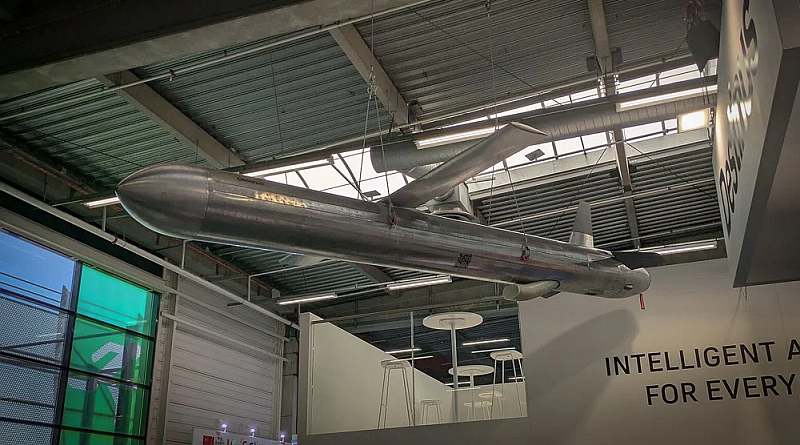
But we do. Our own ballistics, increasing “Flamingo”, “Neptune”, and reactive “Rut” to dozens of units per day, modernization of mid-strike UAVs. Combat units with 200 kg payloads and a range of 300+ km — this is enough to completely demolish a building. For now, we are targeting FSB bases and pilot schools, but next we’ll target railways, chemical enterprises, and dual-use plants.
Strikes on electronics factories in Bryansk and galvanics workshops in Votkinsk will only scale up. Temporary bans on the export of ammonium nitrate in the spring, six-month strict quotas (over 20 million tons) on fertilizer exports, and a complete ban on fuel exports from the Russian Federation are just the beginning of how the war is affecting their economy.
In a year, we will have aviation capable of reaching the KAB carriers, our own ballistics, and even more cruise missiles. Western intelligence works like clockwork — within 48 hours, we know about the preparations for launches of the same “Oreshnik.”
Our task by that time is to take their threats seriously. Bomb shelters, maximum dispersal, relocating production underground, duplicating adjacent lines.
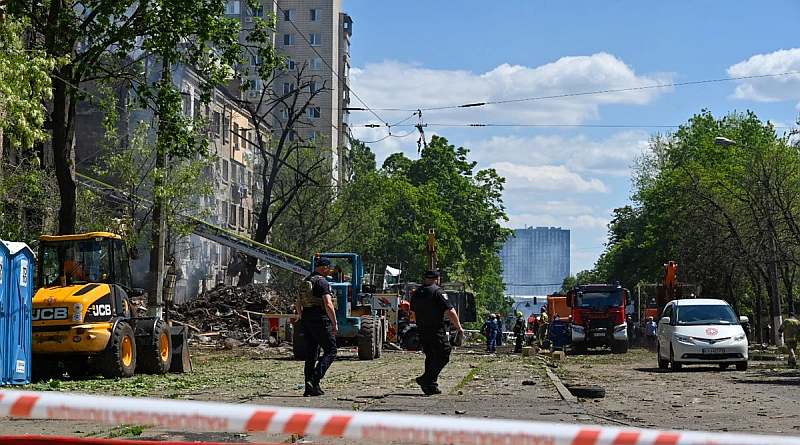
The fact that in the last raid on Kyiv only three died is a stroke of luck, as there are many injured by glass (the ratio of intercepted targets and minimal losses proves the effectiveness of air defense). But we all need to learn a very simple truth: there are practically no victims from the ballistics collapsing a hallway and piercing a basement. And even if there is a collapse, they will be dug out as long as there is water and two exits.
Will the Russians deliver strikes? Yes. Will they be able to carry out their threats to destroy Kyiv? No.
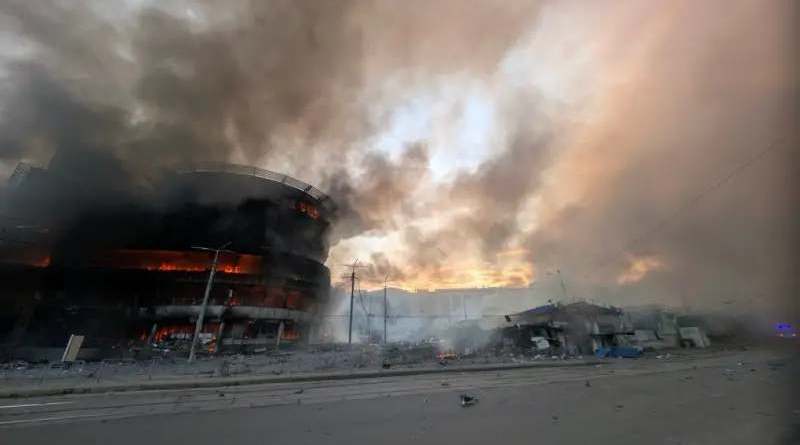
In the cover image: Smoke rises above the city after Russian strikes on Kyiv, Ukraine, May 24, 2026. Photo: BBC/Dmytro Vlasov
