

Iran has no military means to oppose the coalition.
A blockade means that if the US doesn’t want it, 10-15 billion worth, for example, of wheat, corn, barley, and other goods for livestock feed won’t go there. Eggs will be once a month, as will meat.
If they want, they will bomb with three aircraft carriers: the “Bush,” “Ford,” and “Lincoln.” One will always be in maintenance and repair, but its wing will sit in Israel and bases in the Gulf. You can process two large ports or the railway. Tankers through the Caspian won’t go to China anyway.
Russia hasn’t yet managed to pass gas to its bros, so industry won’t be well off — severed horizontal connections from bombings and decreased currency.
Plus, two expeditionary units have pulled up — the entire wing of F-35B hangs on the LPD “Tripoli” and its sister ship. A third of all flying B-52s and B-1 Lancers are already sitting in Britain. Dozens of strategists. A week later, the “Bush” arrived, the crews reloaded, rested, and maintained the planes.
If they want, they’ll knock out the fleet of diesel and electric locomotives. They are all bought bypassing sanctions or completely ancient — JDAMs will suffice, and there are 120,000 sets of them. If they want, they will isolate two ports: Bandar Abbas and Chabahar, hitting tunnels, bridges, and sorting stations.
If they want, they’ll press on water purification and desalinators. There’s already a drought, and they’ll say it’s retaliation for strikes on the UAE and Saudis.
With oil at 140, they’ll open shale, and US oil will work at full capacity. The gallon was already 5 bucks under Biden, and 6 in California.
And if the reps lose the election, they won’t go to the basement.
They will tell voters: “Look, everything flourished under us; we drove the bearded fanatics back to the 19th century in 40 days, and Kambala blew everything and lost peace.”
For Republicans, keeping Iran in ruins is the ideal, cheapest showcase of a “strong America.”
Meanwhile, oil overflows Iranian tankers and trains because it can’t be exported. Two dozen bridges — minus, transportation — minus, steel — minus. And these are horizontal chains: agricultural, construction, repairs, and military industry all suffer.
Can you break the blockade without a navy? No. Can you reach three aircraft carriers and two escorts with F-35s with something? No. Can you produce missiles under the pressure of bombings on chemicals, solid fuel, hulls, and engines? No. Leftovers have already been used — they fired at Israel slightly more than in that 12-day campaign over 40 days. Slightly more, but stretched over 50 days.
The US has a trump card: deprive the country of generation, crush the steel and chemical industries — send them to the 19th century, where genies and cane punishments prevail.
Landing on the islands of Greater Tunb, Lesser Tunb, and Qeshm — this is a 50,000-strong group, a hundred HIMARS and M270, which will simply fry the coastal strip.
Remove the Iranian mines in the Arabian Sea and place their own, using submersibles to detonate and set them. And navigate only through a designated corridor, ready for a strict inspection. This is pure Douhet Doctrine—blockade, industrial area, railways.
Iran’s plan is to endure, use state employees as a human shield at power plants, and threaten to attack everyone: from Turkey and Azerbaijan to the UAE. They say, “Time works for Iran.” Seriously? For a country that had an annual inflation rate of 43% even before the war, with a bureaucrat’s salary at 150 bucks? Everyone wants to sit in a bunker and manufacture rockets for the bearded elders.
The enormous country is completely shattered. There’s no fleet that was under construction for 20 years. No aviation. And no one will give them a hundred modern aircraft just for good looks. All these tales about allies are good for tweets about a multipolar world. But in reality, buddies from Russia themselves barely manage to deliver 20 aircraft a year, and China doesn’t provide weapons on credit. And where to get them if ports are standing still?
10,000 killed on that side, coalition losses – 13 people. Like Zulus for now.
Let’s see what happens in the repeated negotiations. I don’t believe in the delivery of nuclear materials or the limitation of their proxies. It will smell of chaos and expensive gasoline.

The US, together with Israel, launched Operation “Epic Fury” on February 28, 2026. And more than a month and a half of active hostilities later, it became clear that Washington found itself in a dead-end situation due to extremely unprofessional planning of the operation. As a result, “peace negotiations” that also led to nothing. But how will events unfold in the region in the near future?
This is covered in a joint project by OBOZ.UA and “Information Resistance”.
Predictions are thankless, but it is clear that the failure of the “peace negotiations” in Islamabad places the White House in an even more fatal dilemma than before.
Soon Donald Trump will be forced to make a tough choice between withdrawing troops and folding the operation under the guise of a crushing “victory” over Iran, or intensifying it with a land component. And both options are fatal for the US president.
Operation “Epic Fury” started effectively, but as we can observe, not efficiently.
It is evident that the decision approving the operation and strikes against Iran were made spontaneously and emotionally, but not prudently and wisely. Perhaps the idea of an operation against a country that had been preparing for such a scenario for decades arose in the wake of the successful arrest of Nicolas Maduro in Caracas, which can be called an outstanding example of conducting such pinpoint actions in the heart of enemy territory without undue modesty. However, comparing the conditions and capabilities of the US regarding Venezuela and Iran is incorrect and is more of an amateurish than a practical approach.
Nevertheless, the operation “Epic Fury” cannot be called outstanding, but rather a failure that cornered Donald Trump. However, for one of its participants, the outcome seems to be quite different.
The fact is that while the US faced a harsh dilemma, Israel gained maximum benefit: for the first time, crushing Iran’s military-industrial complex, removing its elite, minimizing threats from the development of the nuclear program and future terrorist threats for years to come.
Therefore, considering Israel’s interest, it accomplished and even overachieved its goals, but as for the United States, the ways out of the current situation remain unclear to them.
Existential Crisis of “Epic Fury”
As of April, we can state that the US has not yet managed to completely nullify the threats from Iran, deplete its ability to strike Middle Eastern countries, a safety guarantee that American troops still could not ensure, and unblock the Strait of Hormuz.
Iran, despite suffering extensive losses and continuing to endure them, has nevertheless adapted to the conditions of the current operation and has elevated missile and drone terror as its main instrument of response to a systematic level.
Throughout the second half of March and from the beginning of April, Iran maintained a stable launch rate to Middle Eastern countries, averaging 35 missiles and about 65 kamikaze drones of various modifications per day. Moreover, Iran’s strikes are not only chaotic with the purpose of terror and intimidation but also are targeted, precisely hitting foreign and specifically American bases in the region. The result of such strikes has already led to the loss not only of expensive radar systems but also of heavy, non-tactical level military aviation.
In addition, the US, which claimed that Iran’s air defense was completely destroyed, is increasingly losing its tactical aviation in the “clear sky” zone.
Against the backdrop of growing US losses, damages, and the isolation faced by the Persian Gulf countries, as well as the destabilization of the energy market, which directly affects the domestic political situation in the US itself, bringing it to a critical level, the White House, it seems, decided to choose not the lesser of two evils, but rather the greater one. Especially after failing to negotiate with Iran from a position of strength and ultimatums, Iranians, for the first time in the last half-century, felt their advantage over the Americans.
With each passing day, it becomes increasingly evident that Donald Trump not only approved the decision to carry out the ground phase in Iran, for which “peace talks” served as a respite to prepare the operation. An operation that may become the 47th President of the USA’s own Vietnam.
Donald Trump’s “Vietnam”
It’s evident that Operation “Epic Fury” planning did not initially include a ground phase, and just like the spontaneous and reckless planning we’ve seen over the past month, the same will occur during the organization of the land stage.
It’s now known that the ground phase will involve units of the 31st MEU of the USMC, with 3,500 Marines urgently dispatched from Okinawa on the amphibious assault ship USS Tripoli to the Middle East region. They will be supported by the cruiser USS Robert Smalls of the “Ticonderoga” class and the destroyer USS Rafael Peralta of the “Arleigh Burke” class.
Additionally, forces and resources of the 11th MEU from San Diego have been sent to the region, numbering 1.5 to 2 thousand Marines.
The 82nd Airborne Division is also preparing for deployment in the region.
Clearly, these forces are critically insufficient to conduct a full-scale ground operation on the mainland of Iran, so the entire campaign will be limited in scope.
Since last month, hints or direct suggestions have come from several American officials and high-ranking individuals that the US ground operation will focus not on the entirety of Iran but solely on Kharg Island.
These claims were corroborated by the deployment of not just the mentioned forces and means, but also SEAL Team 6 and the 5th Special Forces Group Delta to the Middle East.
Considering these concentrated forces in the Middle East, it’s evident that the operation will be limited but precise and highly professional, targeting specifically Kharg Island.
The issue with everything occurring now (in the absence of basic secrecy, when strikes on Iran are announced months in advance, and the ground operation is anticipated weeks out) is that despite all the blatant bravado, the landing on Kharg Island may become Donald Trump’s “own Vietnam.” Simply put, a disaster.
The forces and means currently gathered by the United States in the Middle East are sufficient for a rapid operation to capture Kharg Island. However, the more pressing question is the ability to hold this island.
Kharg Island – is a small piece of land in the Persian (Arabian) Gulf, covering an area of 22.59 km², with a population of about 10 thousand people, mostly residing in the town of the same name, where an airport is also located.
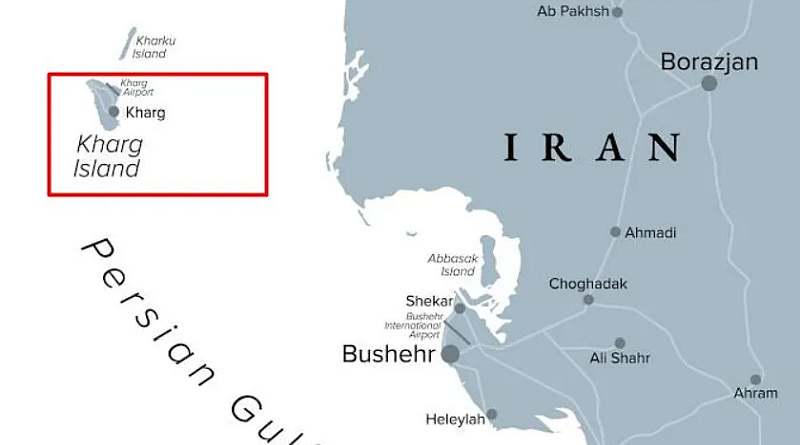
Incidentally, it is not surprising that recently information has begun to appear (still unconfirmed, but nonetheless) that the US is deploying in the region units of the 75th Ranger Regiment specializing in airfield seizures, as well as the 621st Contingency Response Wing (USA).
The 621st Wing is a unique, elite unit of the US Air Force, specializing in rapid deployment in crisis zones, with a role in restoring airfields, managing air traffic, and receiving cargo under challenging conditions.
In other words, everything indicates not only a land operation on Kharg Island but also the US’s intention to hold it for an extended period.
However, while taking control of the island might not even be in question, considering the elite units dispatched for these tasks to the Middle East or already deployed there, holding a piece of land measuring 22.59 km², located 35 km off the coast of mainland Iran, is a debatable point.
Essentially, Iran could redirect its attacks on Middle Eastern neighbors to the constant shelling of Kharg, where maneuverability and space are extremely limited. US troops on the island may find themselves completely isolated. After the euphoria of a rapid and successful operation to seize the island, there may soon be disappointment from inaction and daily losses.
Ballistic and cruise missiles, kamikaze drones, tactical drones, even rocket artillery systems, and long-range artillery can strike and shell Kharg 24/7. Holding Kharg will become a bloody trial for American soldiers.
A vivid example can be the temporarily occupied Crimean Peninsula, with an area of 27,000 km², yet even this area is insufficient for maneuver for the Russian forces concentrated there, especially air defense systems. This allows the Ukrainian Defense Forces to systematically and effectively destroy them remotely.
Imagining a group of elite American troops of at least 8,000 on an isolated piece of land of 22.59 km² is difficult. But it is not hard to imagine how soon elite Rangers, SEALs, and Marines might perish due to another poorly planned operation.
Therefore, the operation on Kharg Island could turn into Donald Trump’s “own Vietnam.”
Conclusions
Trump has trapped himself in a no-win situation where he must choose the lesser of two evils under the current circumstances. The first is to end the operation in the Arabian Gulf, hiding behind an ephemeral “victory” and “achievement of all set goals,” but facing a reputational hit due to international and American understanding that the war was lost. The second is to take measures that would lead to even more bloodshed and greater reputational losses. The second option could just be a ground operation on Kharg Island.
Peace negotiations are at a stalemate because Iran is tying the U.S. in knots. And everything points to the fact that the 47th president of the U.S. has chosen the second option. Not ready to accept defeat in a failed operation for the U.S., but prepared to drag American troops into an even bloodier and more disastrous phase of this confrontation with Iran.
Operation “Epic Fury” is reaching its point of no return, turning not just into an “Epic Fail,” but into a personal “second Vietnam” for Trump.
