
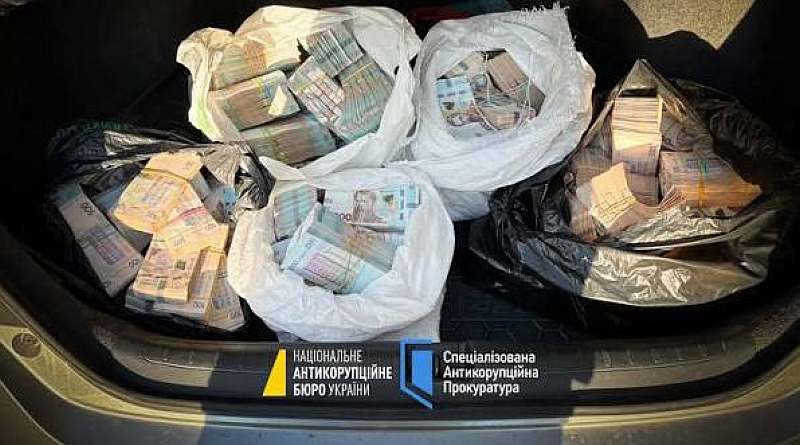
In certain corruption cases, bail has ceased to be merely a precautionary measure and can turn into a tool of criminal economy.
The head of the NABU detective unit, Oleksandr Abakumov, noted this in his post.
He stated that for some suspects, tens and hundreds of millions of hryvnias are sometimes paid from accounts of companies connected to the criminal environment. In such a scheme, bail can become a way of using funds of dubious or criminal origin to release another participant in illegal activities.
How the bail scheme works
According to Abakumov, for top officials, bail is sometimes paid by companies that formally have no connection to them. These are firms with dubious business activities, whose nominal owners and managers cannot explain the source of the money and the reasons for paying the bail.
“Behind the scenes of such front persons are other people — the real beneficiaries of these companies,” wrote the head of the NABU detective unit.
The mechanism, according to him, involves exchanging cash received from illegal activities for non-cash funds of companies. Then the enterprise formally acts as a bailer and transfers the money to the appropriate account.
For example, in the “Midas” case, Abakumov notes, the cost of such a service could amount to 10% to 30% of the bail amount.
“So it’s not just a way to help a particular suspect. It’s also a rather profitable business,” he emphasized.
Bail as “payment for silence”
Abakumov believes that the problem is not only in releasing the suspect from custody. If funds of criminal origin are used to pay bail for another participant in the same activity, it may allow the criminal group to effectively ensure the preservation of its own activities.
“And then, in fact, bail becomes a payment for silence. The criminal environment’s expenditure on preserving itself,” the detective stated.
He also pointed out the risk that after posting bail, the suspect may violate the duties imposed on him by the court or leave the country.
In his opinion, the rules for determining bail and the procedure for posting it require legislative changes. In particular, the state should check companies that suddenly post tens of millions of hryvnias for suspects: identify their real owners, the origin of the funds, and connections with the suspects.
Abakumov noted that draft law No. 15388 from July 8, 2026, could be the basis for such changes. According to him, the legality of the fund’s origin should be verified before the bail serves its function and the suspect is released from custody.
“Bail should remain an effective precautionary measure, not a cashback from stolen assets,” he concluded.
