
Maksym Beznosiuk and William Dixon, CEPA / Translation iPress
GLOBSEC Associate Expert Maksym Beznosiuk and GLOBSEC Senior Associate Expert at the Royal United Services Institute (RUSI) William Dixon highlight that Russia is rapidly increasing its production of ballistic missiles and preparing to use the winter months for massive pressure on Ukraine’s energy, gas infrastructure, and railways. At the same time, the shortage of Patriot interceptor missiles increasingly weakens Ukraine’s ability to protect its extensive network of critical facilities. The authors emphasize that additional air defense systems alone will not be enough – Ukraine needs long-range systems for systematic strikes on Russian missile factories, depots, and launch infrastructure. The resilience of the country this winter will largely depend on whether Ukraine and its allies can turn this production race around.
In the coming months, Russia will intensify ballistic missile strikes, trying to break Ukraine. The West must help her strike back.
At the start of Russia’s full-scale invasion, Western analysts stated that its missile stockpiles would last for six months. Four years later, Moscow is producing over 100 ballistic missiles and ballistic trajectory weapons each month and plans to double this figure by the end of the year.
Putin knows that Ukraine is chronically suffering from a lack of interceptor missiles to destroy Russian ballistic missiles, and as winter approaches, this will become a serious problem. But he also knows that Ukraine now has the means to retaliate. This struggle will not be one-sided, and the West is definitely interested in ensuring that Russia experiences no less, if not more, pain than it inflicts.
The Kremlin is now trying to exploit a huge vulnerability. The war against Iran has depleted stocks of Patriot interceptor missiles, and there is no obvious way to quickly correct the situation – apart from the “millions” of calls by President Volodymyr Zelensky to allies asking for more interceptors.
Russia is rapidly expanding production. It is now producing ballistic missiles much faster than the United States produces PAC interceptors capable of shooting them down. This gap will not close anytime soon, which foreshadows serious problems for Ukraine.
This winter is likely to be exceptionally difficult. The scale of Russia’s production advantage is alarming. In just one week, according to Zelensky, Russia launched 61 missiles, including 56 ballistic missiles, over 1,560 strike drones, and 1,540 aerial bombs, while intensifying strikes on railways, fuel infrastructure, and energy facilities.
Such scales reflect the simple arithmetic of a production race that Russia is currently winning. In July alone, Moscow used more than twice as many ballistic and cruise missiles as in June – 364 compared to 178; the number of ballistic missiles increased by 34%, and the use of guided aerial bombs tenfold. This is not the exhaustion of old stockpiles. Russia has replenished a significant portion of what was spent and is accumulating reserves to deliver even more powerful blows.
Putin employs what could be called a Stalinist principle: placing critically important enterprises deep in the rear, covering them with the best available air defense systems, and subordinating the economy to the needs of the war machine.
The Votkinsk Machine-Building Plant, the main Russian producer of “Iskanders,” is located 1,500 km from the Ukrainian border, in the country’s densest air defense coverage zone. The enterprise has increased its workforce, built new production workshops, and operates around the clock.
According to Ukrainian intelligence estimates, only this plant and similar enterprises will be able to produce up to 700 Iskander 9M723 ballistic missiles this year, with Russia already exceeding monthly plans: in July, it produced 65 such missiles instead of the planned 60, and 87 Kh-101 cruise missiles instead of the planned 72.
Collectively, its production lines can supply Moscow with more than 100 ballistic missiles or means of destruction with ballistic trajectories each month.
Ukraine strikes back. Its less sophisticated long-range drones nevertheless hit Russian refineries with extraordinary regularity and precision. Similarly, grain facilities and naval shipyards, while Crimea is virtually under siege. Overall, Ukraine is now able to inflict significantly more damage on Russia than at any time in the past four years of war, but although it strikes missile factories and component manufacturing enterprises, it has not yet managed to seriously reduce production volumes.
The growth of Russia’s ballistic capabilities allows it to implement a doctrine that has been in place since the front line stabilized: a systematic campaign against infrastructure, aimed at turning winter into a weapon and making Ukraine increasingly unmanageable.
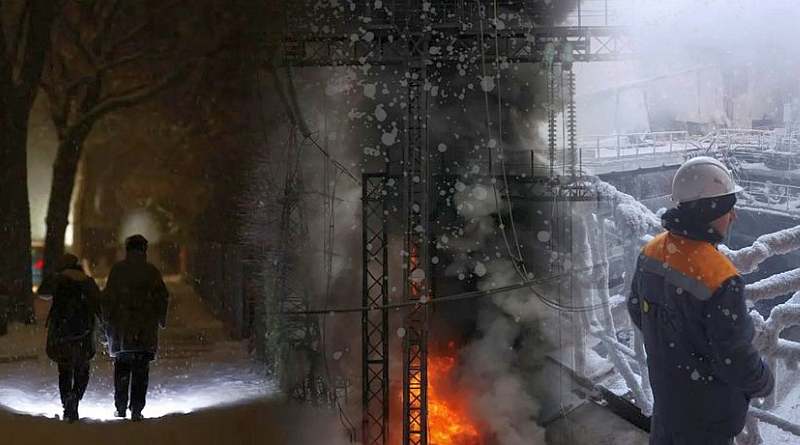
Since October, Russian strikes have damaged over 9 gigawatts (GW) of thermal and hydroelectric power plants, as well as CHP plants—more than half of the approximately 17.6 GW of generating capacity available to Ukraine in the 2025-2026 heating season. Ukraine has restored 4 GW and is rushing to restore another 6 GW by the 2026-2027 heating season. Moscow aims to destroy faster than Kyiv can rebuild. The coming winter, with only a few months remaining, will be a test of national resilience and a contest between Russia’s expanding weapons production base and Ukraine’s air defense system and infrastructure repair capabilities, which are under increasing strain.
Energy is only part of the target list. Since January 2026, Russia has carried out 250 attacks on Naftogaz facilities—these are not isolated strikes, but a prolonged campaign aimed at simultaneously reducing domestic gas production and depleting repair capabilities. On the night of August 6-7, Russia conducted one of the largest recent attacks on Ukrnafta, damaging seven oil and gas production facilities in eastern Ukraine and forcing several of them to cease operations.
The geographical scope and frequency of strikes indicate one goal: to force Ukraine to defend a dispersed network of facilities that cannot be covered simultaneously with a limited number of interceptors.
The railway is the third front. Just in the past week, Russia reportedly attacked Ukraine’s railway infrastructure 41 times, damaging 11 locomotives. Russia also deliberately targets repair crews. The cumulative effect is a slowly unfolding logistical crisis: the capacity to transport military cargo, evacuate civilians, and export goods, whose revenues are crucial for Ukraine’s defense funding, is decreasing.
Is there a way out?
Yes. Key importance lies in Western assistance in developing new Ukrainian missile defense systems and increasing supplies of Patriot interceptors – on August 13, Zelensky stated that at least a fivefold increase in their stocks is needed.
But this will not be enough. Ukraine must be able to simultaneously attack production targets on several fronts. This means financing the mass production of long-range weapons, including the Ukrainian “Flamenco” missile and other systems under development, as well as providing intelligence, components, and support needed for targeting missile factories, warehouses, and launch infrastructure within reach.
This implies filling gaps in sanctions, strengthening export controls, and imposing secondary sanctions on companies and countries supplying Russia with foreign electronics and equipment. European dual-purpose components continue to be found in samples of Russian weapons. This is not a secondary issue. It directly helps manufacture missiles hitting Ukrainian cities.
Until Ukrainian strike capabilities can systematically reach critical production targets, the West as a whole will remain on the losing side of this missile production race. It’s worth remembering: NATO representatives state that an outright Russian attack on Alliance countries is quite possible by 2029.
Europe, of course, could finally undertake what it has so far avoided for political reasons: expanding NATO’s air defense coverage to the western part of Ukraine. This proposal is called Sky Shield. It would allow Kyiv to release its limited supply of interceptors and concentrate them in regions most vulnerable to ballistic strikes, instead of defending the entire country simultaneously.
Russia has been building a production base for four years, designed to withstand a Western response. This winter will show whether Ukraine and its allies can confront it.
Collage: Focus
