
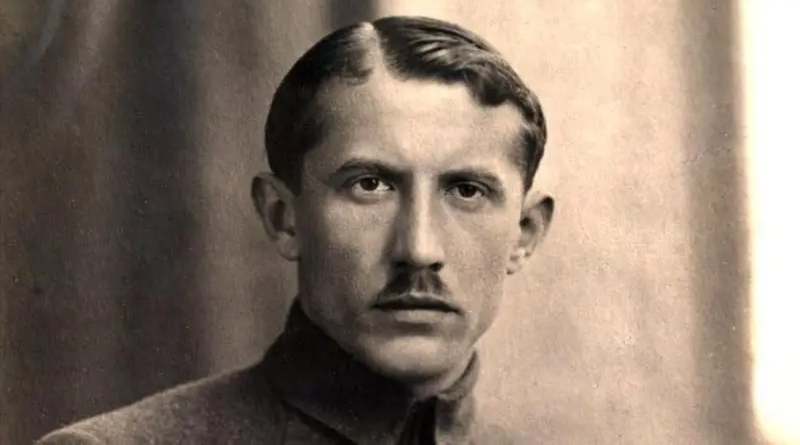
The Office of the President of Ukraine reported on August 11 that the remains of Colonel Yevhen Konovalets of the Ukrainian People’s Republic were exhumed at the “Krosswijk” cemetery in Rotterdam (Netherlands). His remains will be returned for burial at the National Military Memorial Cemetery.
The OPU’s statement indicated that the reburial of Konovalets was decided by the Head of the Presidential Office Kyrylo Budanov, Acting Minister of Foreign Affairs Andriy Sybiha, and the Head of the Ukrainian Institute of National Memory Oleksandr Alfyorov.
Konovalets’ remains will be returned to Ukraine and reburied at the memorial cemetery, with a farewell ceremony to be held at the Patriarchal Cathedral of the Resurrection of Christ of the UGCC in Kyiv.
According to Alfyorov, the monument from Yevhen Konovalets’ grave will return to Ukraine and become a memorial object. The burial site of the colonel in Rotterdam will be memorialized.

The reburial of prominent figures is part of the Pantheon of Ukrainian Heroes project.
This pantheon is conceived as a multifunctional memorial, cultural-historical, and landscape complex intended to “promote the preservation of Ukrainian state traditions.” The pantheon will house the remains of prominent Ukrainians who made an “exceptional contribution to the achievement of independence and state sovereignty,” according to the Office of the President.
The territory of the pantheon will feature honorary burials, compositions, spaces for ceremonial events, and a museum space.
At the end of May, the OPU organized the reburial at the military cemetery near Kyiv of the remains of UPR Army Colonel, Head of the Organization of Ukrainian Nationalists Andriy Melnyk, and his wife Sofia Fedak-Melnyk.
Who was Yevhen Konovalets
Colonel Yevhen Konovalets was among the founders of one of the most capable units of the UPR – the Sich Riflemen unit.
He participated in the liberation of Kyiv in March 1918 and then in the overthrow of Hetman Skoropadsky, leading the Sich Riflemen in the war against the Bolsheviks in 1919.
After the revolution’s defeat, he emigrated, and in 1929 in Vienna, he founded the Organization of Ukrainian Nationalists (OUN), which later led to the creation of the Ukrainian Insurgent Army.
Historian Yuriy Shapoval points to Konovalets’ role in suppressing the Bolshevik uprising at the “Arsenal” at the beginning of 1918.
Candidate of Historical Sciences, researcher of the Ukrainian Revolution of 1917–1921, Mykhailo Kovalchuk also mentions his leadership of a unit of the Sich Riflemen, although he notes that in the future, to glorify the image of the OUN leader, his role in revolutionary events was exaggerated.
The head of the Institute of National Memory, Oleksandr Alfiorov, considers Konovalets a “figure whose scale is hard to overestimate.”
“Commander of the Sich Riflemen, co-founder and first leader of the Ukrainian Military Organization, first head of the OUN — he was one of the first to realize a simple yet fundamental truth: Ukraine cannot exist without its own state and army. He dedicated his entire life to this idea,” he wrote on his Facebook page.
In 1938, Yevhen Konovalets was killed in Rotterdam by Soviet secret agent Pavlo Sudoplatov.
In January 2017, a memorial plaque was unveiled in Kyiv in honor of the colonel. It is located on building number 24 on Sich Riflemen Street, where the barracks of this unit were organized in 1918.
How and where he died
The Soviet authorities developed several operations to assassinate Yevhen Konovalets. Most of them were unsuccessful, but in May 1938, an NKVD agent managed to kill the Ukrainian figure.
This was the culmination of a long-term special operation codenamed “Stavka” approved in the Kremlin.
It involved the penetration of a Soviet agent into the close circle of the Ukrainian colonel.
For the “operational combination,” they selected a suitable person — Vasyl Lebid, who was personally acquainted with Konovalets.
They became friends from 1915-1918 in a prisoner of war camp. Subsequently, they fought together in the UNR army.
According to some reports, Lebid was even Konovalets’ deputy, elected as commander of the Sich Riflemen’s Kurin.
After the defeat of the Liberation struggles, their paths diverged: Konovalets ended up in exile, and Lebid in Ukraine. In 1921 or 1922, he was recruited by the Chekists.
In early August 1933, Lubyanka orchestrated Lebid’s “escape” from the Soviet Union to Belgium.

Abroad, he met with the OUN leader. He claimed to allegedly lead the nationalist underground in Ukraine, preparing to overthrow the Soviet regime.
With the onset of arrests, he allegedly arranged under false documents with the surname Khomyak as a loader on a ship that was supposed to stop in a Belgian port.
The leader believed the former comrade-in-arms.
Lebid spent over a year among OUN leaders, sending secret information to the Soviet Union.
Specifically, he informed Moscow that Konovalets had dispatched five people to the United States with the task of assassinating the Soviet People’s Commissar for Foreign Affairs, Maxim Litvinov.
The Commissar was negotiating the establishment of diplomatic relations between the USSR and the USA.
The five assassins were arrested, and the attempt did not occur.
In October 1934, Lebed returned to the USSR, supposedly to continue underground activities.

But there could be no question that during the next meeting, Lebed would attempt to shoot Konovalets.
Firstly, he was always accompanied by assistant Yaroslav Baranovsky, a person utterly devoted to the leader. Being alone with Konovalets was practically impossible.
Secondly, the Kremlin wanted to eliminate the head of the OUN leadership in a way that would not reveal the “hand of Moscow.”
Therefore, a person was needed who, having long-term contact with Konovalets, could carry out an unexpected assassination.
Thus, in the “Stavka” special operation, Pavlo Sudoplatov appeared, a senior inspector in the human resources management of the OGPU. A native of Melitopol, he lived in Ukraine until 1933. He was fluent in the Ukrainian language.
There was another nuance as to why they settled on this candidate – he dreamed of avenging his older brother, a Red Army soldier who died during the Civil War near Zhytomyr in a battle with Konovalets’ cavalry detachment.
In June 1935, Sudoplatov (under the name “Pavlo Hryshchenko”) traveled to Finland with Lebed, supposedly as his nephew.
Lebed met with Kindrat Poluvedko, the OUN representative in Finland (also a Lubyanka agent). He introduced the nephew as a Komsomol member disillusioned with Soviet power.
Poluvedko contacted Konovalets, and he invited Sudoplatov to a meeting in Berlin. The OUN leader showed interest in the young Ukrainian and took him under his wing.
After some time, Sudoplatov returned to the USSR. In Moscow, he reported to the People’s Commissar of Internal Affairs, Nikolai Yezhov. Yezhov took the agent to Stalin. Sudoplatov described the situation in the OUN, its plans, the internal power struggle within the organization, and sources of funding.
During the next meeting, Stalin directly ordered him to kill Konovalets.
“And what are Konovalets’ tastes, weaknesses, and hobbies?” asked the ruler of the Kremlin.
“He loves chocolate candies,” Sudoplatov replied. He explained: everywhere they were together, he would first buy a luxurious box of chocolates.
“Try to use this,” advised Stalin.
In early February, Sudoplatov set sail from Murmansk on a cargo steamer disguised as a ship’s radio operator. Along with him, Olexander Timashkov, supposedly a storekeeper but actually a specialist from the NKVD’s department of operational-technical means, traveled to Europe. He developed a “gift” for Konovalets – an explosive device that looked like a box of chocolates, designed in Ukrainian style.
After some time, Sudoplatov arranged a meeting with Konovalets in Rotterdam on May 23 over the phone. He put the “charged” box of chocolates in his pocket. The explosion would occur half an hour after its position was changed from vertical to horizontal.
Precisely at 12 o’clock, as agreed, the Bolshevik agent entered the restaurant of the “Atlanta” hotel and sat down at the table where Konovalets was sitting.
After a short conversation – no more than 5 minutes – the interlocutors left.
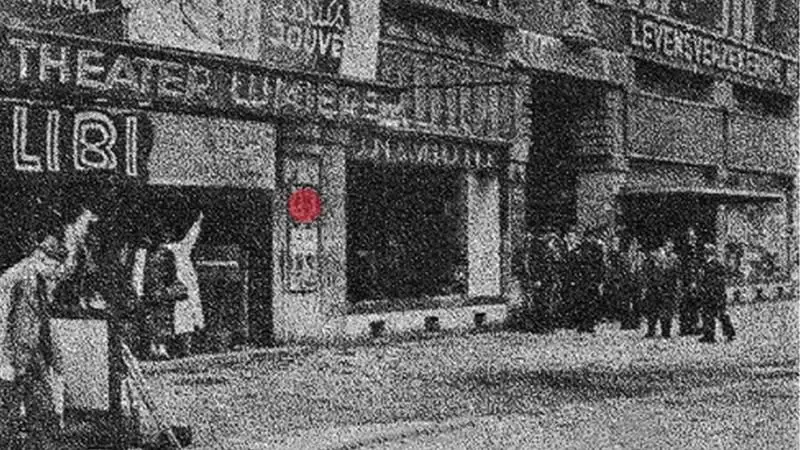
As he was leaving, Sudoplatov presented a box of Ukrainian chocolate candies – placing it on the table. Konovalets took the gift and left the restaurant. He headed to his hotel but lingered near the “Lumière” cinema, looking at a poster for a new film. At that moment, an explosion occurred, audible for several kilometers.
The OUN leader was killed, and the assassin escaped.
SZI of Ukraine: Yevhen Konovalets in Confrontation with the DPU-NKVD
On May 23, 1938, NKVD USSR officer Pavel Sudoplatov killed the leader of the OUN leadership, Yevhen Konovalets. The fatal explosion in Rotterdam was the culmination of a years-long, large-scale operation by the Soviet DPU-NKVD organs, personally directed by Joseph Stalin.
