
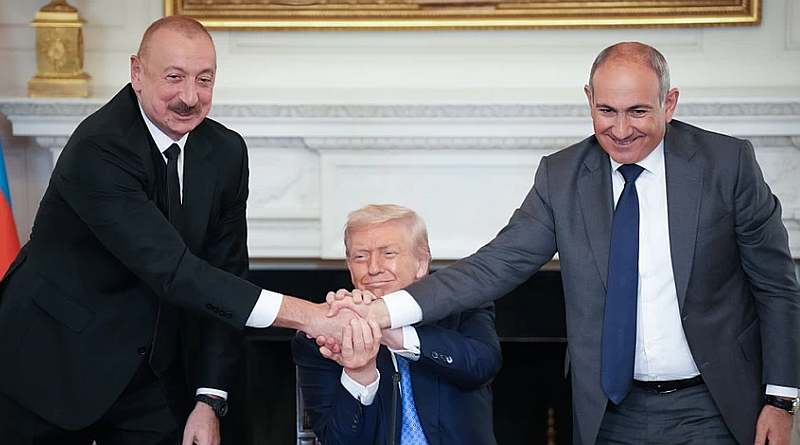

The statement by Armenian Prime Minister Nikol Pashinyan regarding the imminent start of exporting Armenian products to Azerbaijan indicates a shift in the peace process from political agreements to practical economic interaction.
The resumption of trade relations, which have been absent since 1988, is a logical step following the signing of the “agreement on lifting restrictions” in Washington in 2025, creating mutual interest in maintaining stability and strengthening trust between the two countries.
For Armenia, developing trade with Azerbaijan is part of a consistent policy of reducing dependence on Russian intermediaries in regional matters. Yerevan seeks to establish direct dialogue with Baku and independently determine the parameters of interaction with neighbors, significantly enhancing the political agency of the republic and gradually reducing Moscow’s influence on processes occurring in the South Caucasus.
The advancement of direct Armenian-Azerbaijani dialogue indicates a gradual change in Russia’s role in regional processes. Yerevan aims for key issues in bilateral relations to be resolved directly by the states of the region, aligning with the course of expanding interaction with other international partners, although this process raises serious concerns among supporters of the traditional orientation toward security from Moscow.
The development of economic ties between Armenia and Azerbaijan opens the prospect of restoring regional interconnectedness after years of conflict. Renewing trade routes and expanding contacts between businesses of the two countries can create new economic incentives for border regions, reduce the effects of long-term isolation, and fundamentally change the traditional model of competition in the South Caucasus.
The Pashinyan government believes that developing direct economic ties could become one of the key factors for long-term stabilization.
The growth of trade and the formation of mutual economic interest increase the cost of potential escalation for both sides, as any military actions would directly harm the financial interests of entrepreneurs and the budgets of both states.
Nevertheless, a critical analysis shows that the implementation of the announced intentions faces significant risks, including uncertainty in transport tariffs and risks of economic imbalance. Fully initiating exports will require not only political will from the leadership but also a deep transformation of institutions capable of guaranteeing the security of transactions amidst the still unresolved mutual distrust.
Armenia’s strategic choice in favor of economic integration with its neighboring state demonstrates Yerevan’s desire to become an independent player capable of exploiting its geographical position. The success of this policy will show to what extent economic feasibility can overcome long-standing political confrontation and transform the Caucasus region into a space of stable cooperation.
