
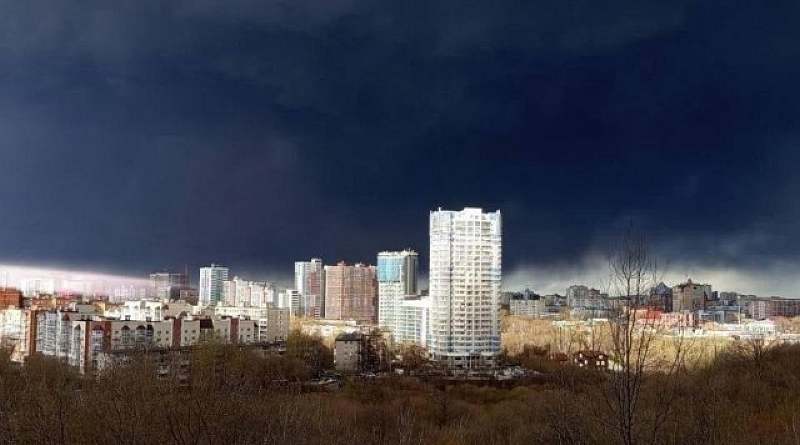

On April 29, in Perm, day turned into night in the middle of the day. And it’s not just our drones reaching far. There’s a significant plan being carried out jointly by many of our units. Hence, it’s another long read with a brief analysis of recent events in Russia.
Black smoke covered the million-strong city. People were taking photos and videos during lunch, as if it were the beginning of the night. Children were evacuated from schools. In the city, there was an oil rain, and there are many videos not only with cars. Governor Makhonin confirmed a hit on the “industrial site”. However, he did not specify which one, because there was nothing to specify. People themselves already showed everything, and the SBU clarified it for him.
The Alpha Special Operations Center worked on the LODS “Perm” – the linear production-dispatch station “Transneft”, similar to the LODS Samara, which was targeted recently. The distance from Ukraine’s border is over 1,500 kilometers. A new range record for our oil campaign. Result: many oil storage tanks are burning at the station.
Simultaneously, the Orsk Oil Refinery “Orsknefteorgsintez” was attacked. This is also a major refinery in Russia with a processing capacity of about 6 million tons of oil per year. It produces gasoline, fuel oil, bitumen, and aviation kerosene. The city’s mayor confirmed the attack and urged people not to go outside. Orsk is over 1,400 kilometers away.
Two objects. One night. More than 1,400-1,500 km from the border.
What is LODS “Perm”, and why is it more important than another oil refinery
LODS “Perm” is the largest station of the Perm District Oil Pipeline Management “Transneft-Prikamye”. The enterprise maintains about 6,000 km of main oil pipelines, 31 oil pumping stations, and a storage park with a total volume of over 400,000 cubic meters. How it differs from an ordinary refinery, I explained using the example of LODS Samara.
Through LODS “Perm”, oil is distributed in four directions, including to the Perm Refinery. Further, the raw material can be directed to the ports of Primorsk, Ust-Luga, Novorossiysk, and Tuapse (gg, maybe not anymore 🙂 ).
LODS “Perm” is not a terminal point; it is a transit hub. Main oil pipelines (MOP) pass through it, forming the “backbone” of Russian exports.
Directions and volumes:
MOP “Surgut – Polotsk”: One of the most powerful pipelines. The capacity of this branch is about 40-50 million tons per year.
MOP “Kholmogory – Klin”: Ensures oil supply to central Russia and Moscow refineries. Capacity – up to 30 million tons per year.
MOP “Perm – Almetyevsk”: This is a direct link to Tatarstan and further into the “Druzhba” system. Capacity – about 20-25 million tons per year.
Total volume: the station is capable of processing over 100-120 thousand tons of oil per day through its pumping systems.
A new reservoir with a volume of 50,000 cubic meters, almost 60 meters in diameter and 18 meters in height, was recently completed here. New reservoirs were built because the old ones were insufficient.
The connection between the LODS “Perm” and Samara is obvious – we are targeting upstream of the oil pipeline.
On April 21, we already struck the LODS “Samara” – the hub where the Russian Urals oil grade is born. The Perm LODS is a node upstream. Oil from Siberia flows through the Surgut-Polotsk pipeline precisely through the Perm node – and further west, including the Samara cluster. Samara has already burned. Now we cut off what feeds it.
Let’s simply summarize the work of the deep strikes over 45 days, starting with the largest losses – the reservoirs. This is also important in light of recent events.
The Tuapse Refinery – the largest destruction of the reservoir park in the entire campaign. Out of a total park of 47 reservoirs with a total capacity of about 159,140 m³, 28 units were destroyed or seriously damaged. The General Staff confirmed: only from the strike on April 20, 24 were destroyed and 4 reservoirs were damaged. 61% of the reservoir park was put out of action. Add to this the destroyed deep-sea oil loading racks of the marine terminal. Even if the plant resumes processing, it will not be able to load oil onto tankers. The fire in Tuapse has not stopped since April 20. Smoke stretched for 380 kilometers, covering Maykop, Stavropol, Armavir.
LODS “Samara” (April 21) – 5 reservoirs of 20,000 m³ each = 100,000 m³ out of circulation. This is the place where Urals are born.
LODS “Perm” (April 29) – many reservoirs are burning, but needs clarification. Considering the smoke screen and comparing it to other hits – approximately 200,000+ m³.
NPS “Gorky” (April 23) – 3 reservoirs, fire 20,000 sq.m.
Syzran Refinery (April 18) – AVT-6 (71% of the plant’s capacity) + RVS-10000.
Novokuybyshev Refinery (April 18) – AVT-11 + AVT-9: the plant is completely shut down.
Yaroslavl Refinery (April 25-26) – confirmed damage to the vacuum oil distillation unit – a key element of the processing cycle. Fourth strike in six months.
Orsk Refinery (April 29) – one of the largest refineries in Russia, 6 million tons/year. Repeat attack – the first strike was in November 2025.
Feodosia – separately and fundamentally. This is not oil export. It is the only maritime fuel artery of Crimea and fuel supply for the occupation group. October 2025: 11 reservoirs destroyed. April 2026: fires on the 8th (lasting more than 3 days) and 23rd. Let’s also consider the destruction of railway ferries and the disabling of BDK – this is systematic destruction of Crimean logistics.
Final Arithmetic
Tuapse – 28 reservoirs with a total capacity of ~97,000 m³ destroyed/damaged. LODS “Samara” – 100,000 m³. LODS “Perm” – 200,000+ m³. NPS “Gorky” and others – ~70,000 m³.
Overall confirmed capacity taken out of circulation – over 460,000 m³ just for April. Considering Perm – actually 550,000-600,000 m³.
Now recalculate at current prices.
Urals oil as of the end of April is $105.99/barrel, and at its peak reached $120.16/barrel. We conservatively take an average price of $106. We estimate 1 cubic meter of oil as approximately 6.3 barrels. 550,000 m³ × 6.3 × $106 ≈ $367 million – the cost of oil in the tanks alone. Plus infrastructure: one RVS-50000 costs from $5-8 million, CDU plants – tens of millions each. The total cost of destroyed infrastructure is over $800 million-1 billion in 45 days.
Now look at the map. Three separate directions are being hit in parallel and independently:
Volga-Ural cluster: LVDS “Perm” → LVDS “Samara” → Novokuibyshevsk + Syzran refineries. We hit both upstream, the mixing hub, and the processing plants simultaneously.
Central and northern direction: Yaroslavl Refinery (supplying the Moscow region and aviation) + NPS “Gorky” (Surgut-Polotsk-“Druzhba” pipeline) + Orsk (Ural and Volga regions).
Black Sea-Crimean: Tuapse (the only refinery on the Black Sea, 90% for export, now in ruins) + Feodosia (fuel artery of Crimea and the army of roosters).
Disrupting such nodes does not only mean a local problem: it creates an imbalance in the entire system, forcing the rerouting of flows through other routes or reducing the load on pipelines. And this affects not only exports but also the internal fuel supply – from civilian transport to military logistics.
The Ministry of Defense of Ukraine confirmed: The Defense Forces increased the range of strikes on Russia by 170% since 2022.
1,500 kilometers this morning. Tuapse is still burning from the strike a week ago. Orsk is burning. Perm is starting to burn, but the consequences are already catastrophic.
Yes, in general figures, when under the OPEC quota Russia can extract 9 million tons of oil a day, and we reduced the pumping potential by 5-10%, storage in tank parks at the same level – it may not be much. But we have not finished the spring campaign against petrodollars. Each hitch at some stage short-term reduces potential and deviation from planned figures for the industry.
Long-term, we will need to look at the summer when other figures will be visible, after other strikes. For now, we should be glad that we approach the strikes systematically and accurately. I see all the logic and understand it. And it is beautiful. We are at a good start in dismantling the unbreakable union of ensuring war through the oil and gas sector. And there is also wheat, phosphorite, nickel, titanium, copper, steel, and other resources that help the elders in the Kremlin somehow still fight and maintain the economy. But none of this is eternal.
Night in the middle of the day can happen in Perm, 1,500 km away from us.
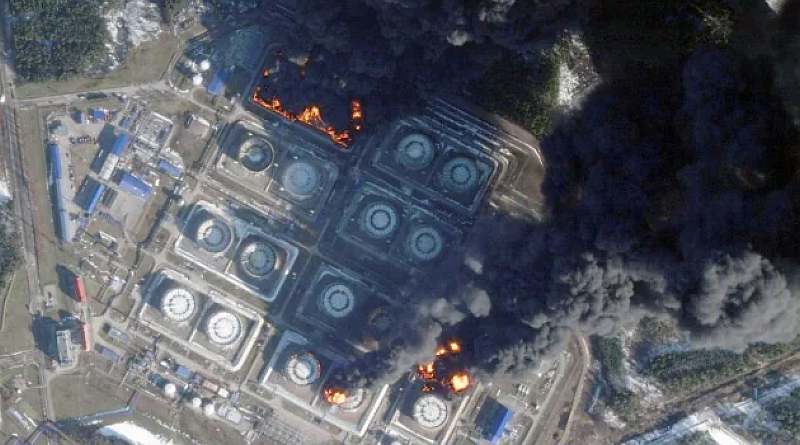

It’s such a day that you don’t have time to record everything.
On April 29, CSO “A” SBU drones hit the LPGS “Perm” (Perm region, 1740 km from Kharkiv). Initially, at least two tanks holding 50,000 cubic meters of oil caught fire. Then, judging by the video, another 50K tank exploded. And this, it seems, is not yet the finish.
Involuntarily, a calculator comes to mind, which I wrote about 10 days ago. A bit of context for clarity.
1. The conditional report is appropriately started at the end of February, when it became extremely difficult not to notice the trend. Among other things, the care of the SBU over 2 months covers:
• February 23 – the monstrous LPGS “Kaleikino” (Almetyevsk, Tatarstan).
• March 12 – LPGS “Tikhoretsk” (Tikhoretsk, Krasnodar region).
• April 11 – LPGS “Crimean” (Krymsk, Krasnodar region).
• April 21 – LPGS “Samara” (Samara region, damage unclear).
• April 23 – NPS “Gorky” (Mishikha, Nizhny Novgorod region).
• April 29 – LPGS “Perm” (Bashkultaevo, Perm region).
(And in between, there were ports and other objects).
Listing even for the most unsuspecting person would lead to the thought that there is a focus on the infrastructure of main oil pipelines (oil product pipelines). That is why I suggested guessing in one try who caused the volcanic eruption in Perm.
Except for the “Samara” station, large-scale fires have been confirmed everywhere. So we’re talking about 5+ successful SBU attacks causing significant direct damage, 3+ of which occurred in the last 3 weeks.
The service is showing dynamics and bringing the Kremlin to the conclusion that can be supported by calculations on a calculator.
2. The partial disabling of each station is a chain reaction.
LPGS “Perm” services a network of main pipes extending 180 km, including three main oil pipelines (Surgut–Polotsk, Kholmogory–Klin, Perm–Almetyevsk), as well as a pipe to the Lukoil petrochemical enterprise “Permnefteorgsintez”. It is the largest station of the Perm regional oil pipeline management of JSC “Transneft-Prikamye”.
News from 2016: “… construction of a 50,000 cubic meter oil storage tank was completed (RVSPK-50000). Thanks to the accumulative capacity of the tank… the technological reliability and stability of oil transportation through the main oil pipelines Surgut-Polotsk and Kholmogory-Klin has been improved.”
News from 2021: “… ‘Transneft – Prikamye’ has put into operation a new tank (also 50K) for oil storage at the LPDS ‘Perm’. The tank is equipped with a floating roof to minimize oil evaporation during storage, with a diameter of 60 m and a height of 18 m. The total weight of metal structures used in construction is about 1300 tons… specialists installed shut-off valves, mounted about 900 m of process pipelines and a production-storm sewer system. In addition, the fire extinguishing automation system was refined… Oil will be received into the tank from the main oil pipelines (MNP) Kholmogory – Klin and Surgut – Polotsk. The service life of the new tank is 50 years”…
The tanks are surrounded by embankments, equipped with electrochemical protection systems, and other devices. In the fall of 2025, the LPDS ‘Perm’ replaced the pumping equipment.
The details repeat a plot I already described using the example of GPS ‘Gorky’. Over the past 10-12 years, there has been significant modernization of the Transneft network. Building one 50K cubic meter tank takes 2 years.
And now, at least 2, probably three 50K barrels have been lost in a single morning.
In total, there are 10 tanks at the LPDS ‘Perm’, 6 of which are 50K. So more than 40% of the station’s capacity has been lost. This will impact (to what extent – precisely unknown, but towards reduction) the capacity of the oil pipelines.
When Transneft conducts works/repairs requiring disconnection/reconnection of tanks, the period of reduced pipeline capacity is measured in HOURS. Because it’s costly and affects production chains.
The next level of consequence is shutting down wells.
GPS ‘Gorky’, visited a week ago, also serves the Surgut – Polotsk pipeline.
Dear Russians, run! While it’s not too late.
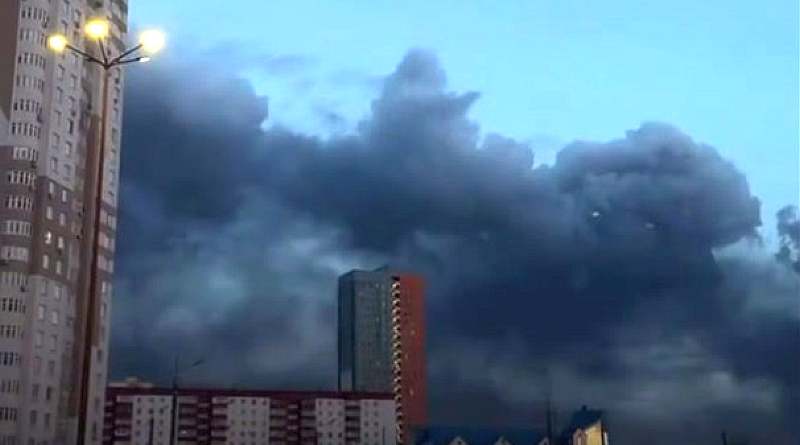
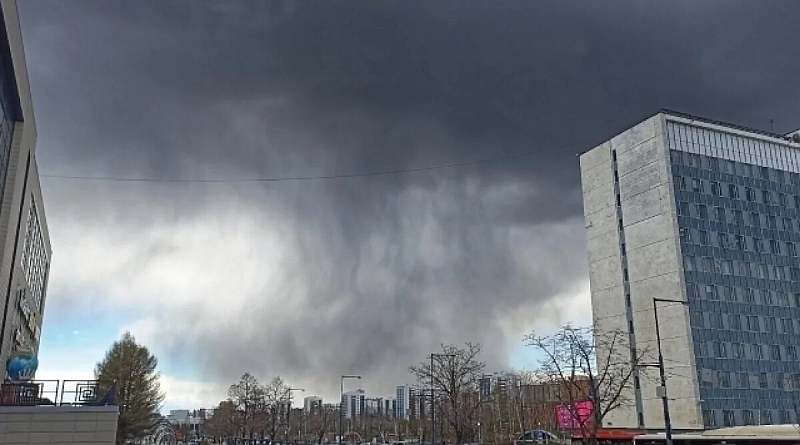
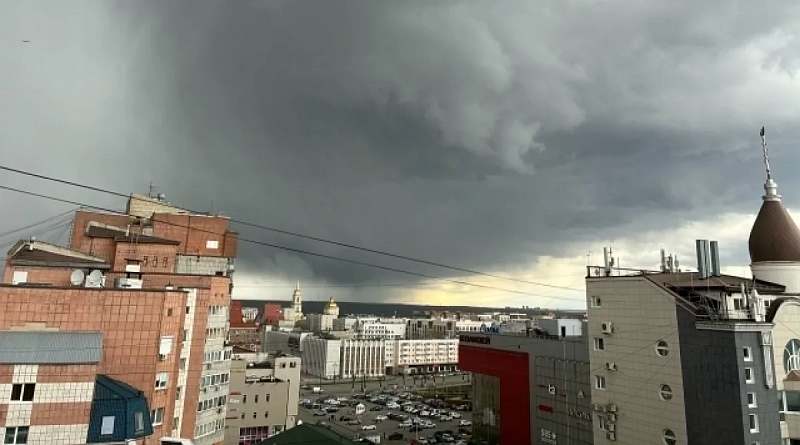
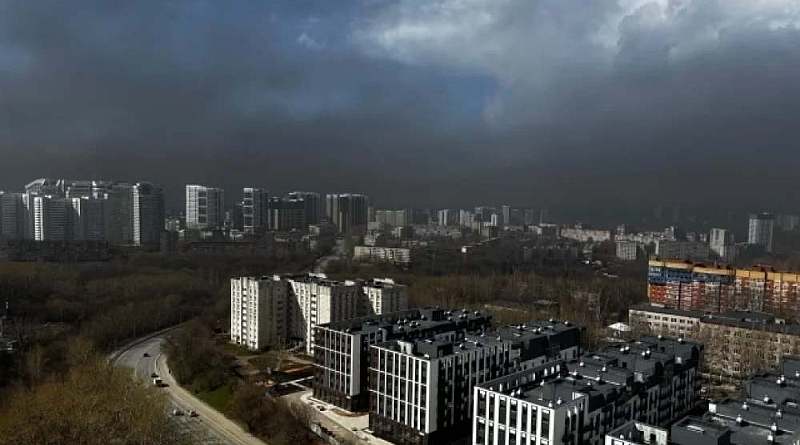
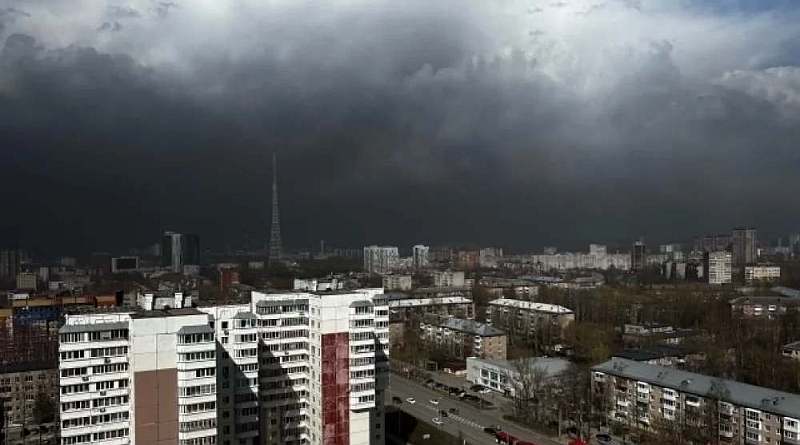
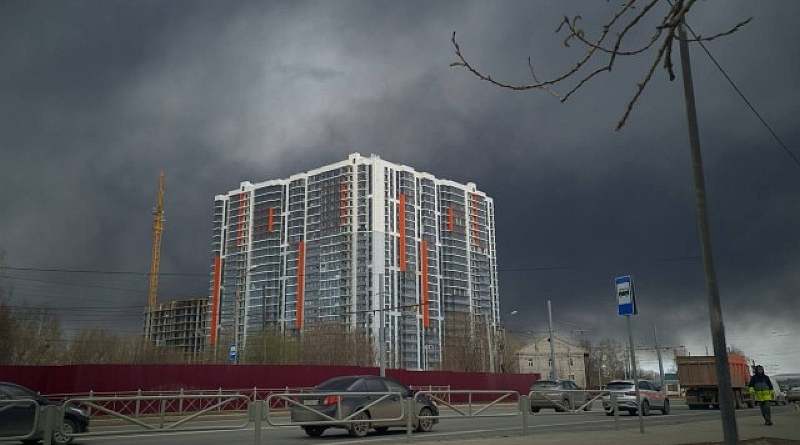
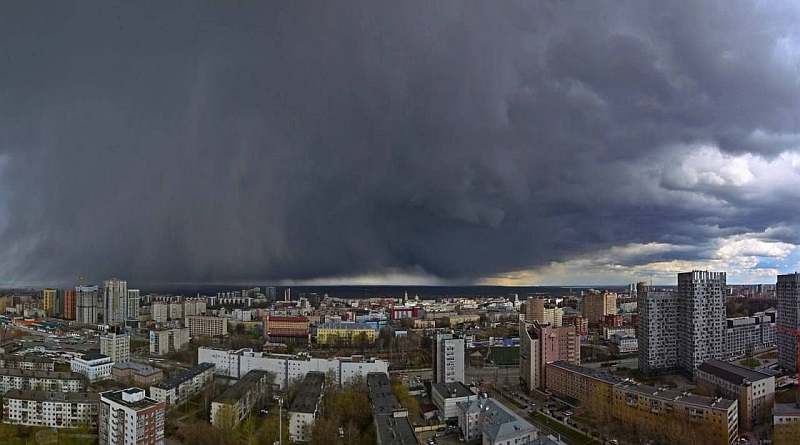
In all photos: city of Perm, RF, April 29, 2026. Photo: Occupier media
