
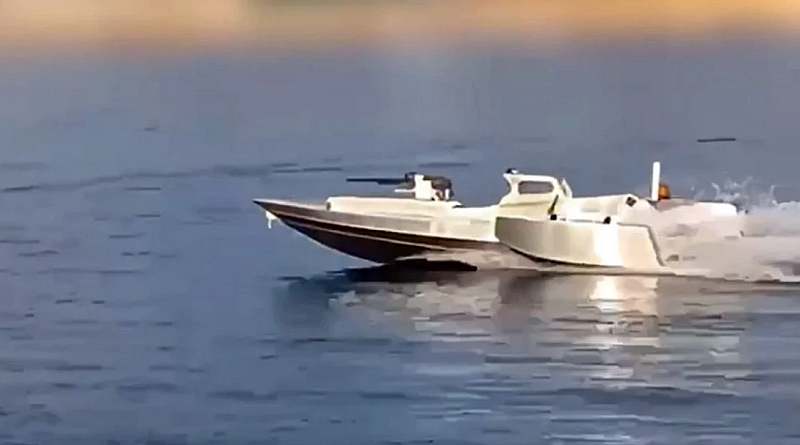
Since the beginning of the invasion, unmanned vessels of the Defense Forces have successfully completed numerous missions, being employed by various organizations: the GUR, SBU, and the 385th Special Purpose Brigade of the Ukrainian Navy, making it extremely difficult to accurately assess the damages inflicted on the enemy or to identify which specific unmanned vessels were used, except for the “Magura” and Sea Baby.
From open sources, it is known that “Magura” struck 15 combat ships/boats of the enemy fleet, of which 8 to 11 were sunk. Additionally, they shot down two or three helicopters, two Su-30 aircraft, an armored personnel carrier (how is unclear), over 100 enemy military personnel, totaling more than 20 air and naval targets, of which about 15 were destroyed.
Sea Baby attacked 10–11 ships/vessels, including corvettes, landing vessels, reconnaissance ships. Many attacks were carried out on the shadow fleet (tankers), the Crimean Bridge, port infrastructure, helicopters, submarines, coastal facilities. As of 2025, the effectiveness of combat use is assessed at 90%, with hits exceeding 55%.
Yet, on a galactic scale, it is impossible to keep something hidden from the enemy for long. The enemy also has unmanned vessels, and their response arrives as well.
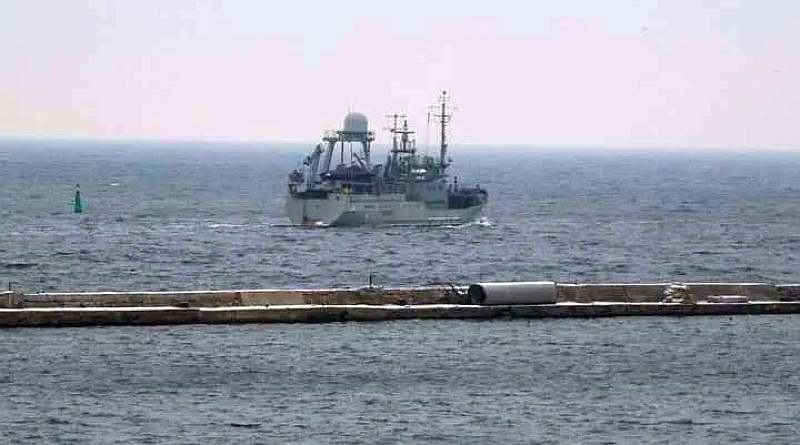
The most well-known and first confirmed successful case of the use of a Russian unmanned vessel against a Ukrainian military ship is the attack on the medium reconnaissance ship “Simferopol“. A high-speed unmanned boat (presumably of the “Katran” type) struck “Simferopol” near the dock in the Danube delta close to Romanian territorial waters. As a result of the strike, at least two Ukrainian sailors died, several were injured, and the ship sustained damage.
On April 23, 2026, an enemy unmanned vessel attempted to approach one of the ports of Greater Odesa. A unit of the 801st Special Operations Center of the Ukrainian Navy promptly detected it and destroyed it with an FPV drone strike.
After the successful strike on the “Simferopol,” the aggressor conducted a series of less publicized attacks using unmanned boats on port and coastal infrastructure (primarily in the Odesa region and Danube). These attacks should be seen as part of the preparation for the massive use of unmanned boats in 2026, but the effectiveness of the enemy’s boat operations remains low due to communication issues and Ukrainian countermeasures.
The defense forces have repeatedly identified and destroyed Russian unmanned boats heading towards the ports of Odesa or the Danube. Most such attacks failed due to the quick response of the Ukrainian navy and border guards. It should not be excluded that the aggressor was testing equipment, conducting reconnaissance, and simultaneously attempting to block maritime corridors, but significant damage to coastal infrastructure from the boats has been minimal.
What’s on the enemy’s menu? The only operational and technical requirements for the enemy’s unmanned boats were formulated in February 2025. Relatively mass production began in the spring of the same year. In the summer, the Rubicon Center for Advanced Unmanned Technologies took an interest in maritime unmanned systems.
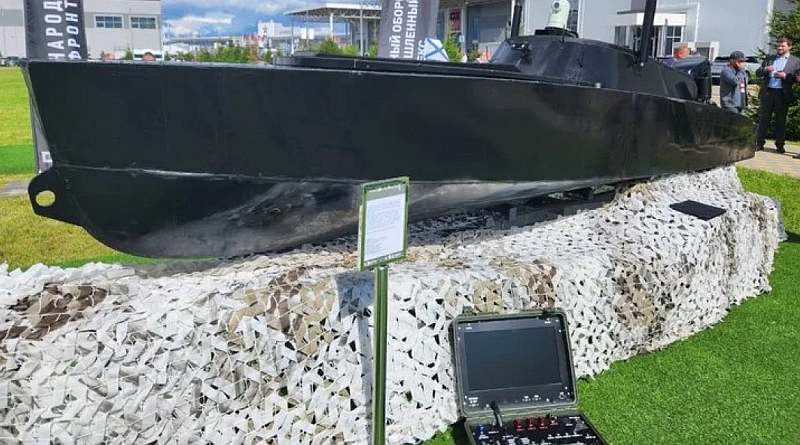
BEK “Arkan” (sometimes “Zephyr”) is the most compact multipurpose platform presented at the “Fleet-2024” exhibition. Length — about 5.3 m, speed — up to 40 knots, range — about 500 km, seaworthiness — up to 3 points. The BEK is positioned as a universal robotic platform with low visibility, high maneuverability, and AI integration, primarily used for hydrography, reconnaissance, and as a base for other complexes. Naturally, all the details are entirely “import substitution” and “unmatched.” And the queue of importers rumbles in the hall, eager to purchase.
BEK “Katran” is a trimaran with an aluminum hull developed by the Tula Center for Unmanned Systems and Technologies (CBST). Its main feature is a lightweight shock-resistant hull for high waves, capable of carrying FPV drones (such as FPV “Skvorets”) for launch over 200+ km. The BEK can perform missions of patrolling, reconnaissance, logistics, and strikes. “Katran” went into testing in 2025. Mass production is planned. The project’s joke is the name stolen from a similar Ukrainian project.
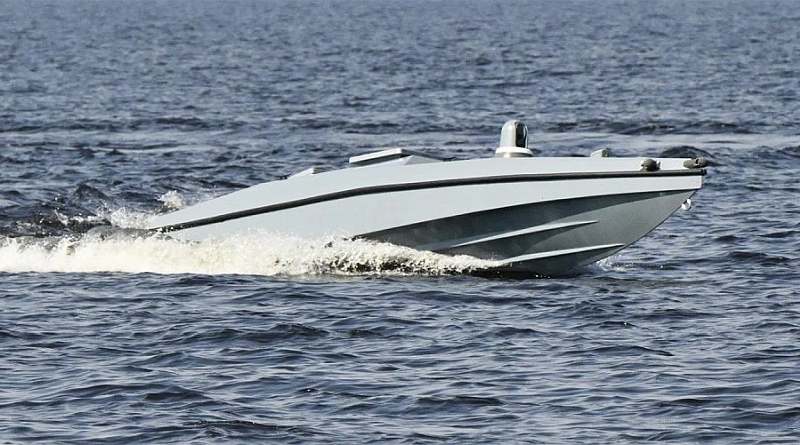
BEK “Vyzr” (RK-700) — a multifunctional platform from the Kingisepp Machine Building Plant, part of the “Kalashnikov” concern. Length — about 7 m, width — 2.5 m, speed — up to 45 knots, range — up to 600 km. Payload — over 1 ton, small underwater vehicles or other BEKs, can be used for evacuation, patrolling, or weapon installation. If communication is lost, the BEK automatically returns to base. Mass production began in the fall of 2024. They offer a version for the civilian sector.
BEK “Murena-300S” — a marine kamikaze drone from the Tula CBST. Very similar in size to our “Magura”. Range — up to 250 km, but with additional tanks — more, payload — 250–350 kg. In 2024, a version with a concealed antenna, presumably Starlink, was spotted. Used for strikes on Ukrainian ships and coastal objects, there are reusable variants. “Murena” is one of the first “responses” to Ukrainian marine drones, actively developing.
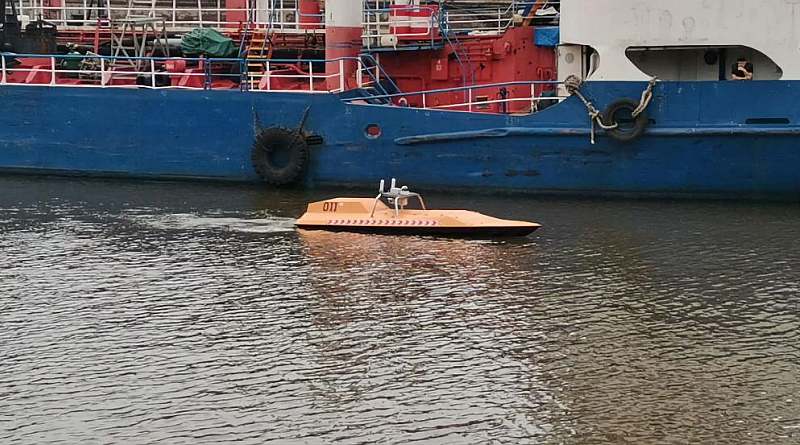
BEK “Sardina” — a compact USV produced by the company Navis, primarily oriented towards hydrographic surveys in challenging conditions (harsh weather, shallow waters). Launched from shore or a vessel, it has high stability on the water. Information about combat use is limited, but it is part of the line of Russian BEKs for reconnaissance and support. A typical Russian example of “people’s” and state defense industries.
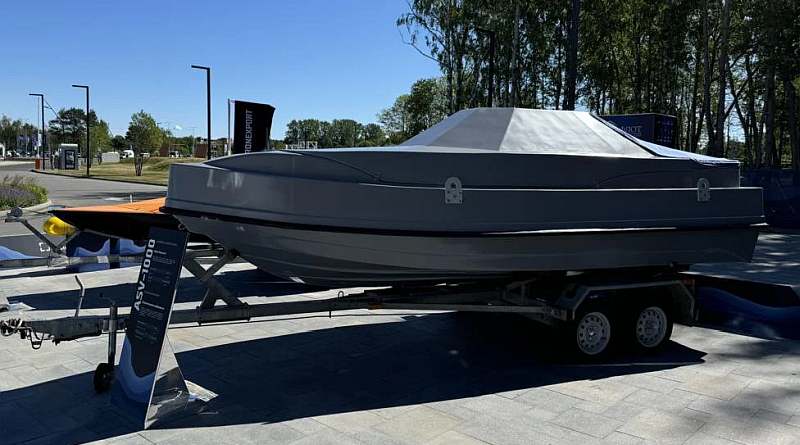
BEK “1000” is a heavy platform up to seven meters long, capable of carrying up to a ton of payload for various purposes (ammunition, equipment). The platform can be used for mounting weapons or a powerful warhead. BEK was presented at “Fleet-2024” alongside “Arkan” and “Vyzyr.” BEK is multipurpose — from logistics to strike missions. Its technical characteristics are undisclosed, but there’s an emphasis on high load capacity for complex missions.
Overall, Russian BEKs are a response to the Ukrainian successes of 2022–2024 with a focus on seriality, cost-effectiveness, and multitasking. In 2025–2026, the enemy planned to use BEKs massively, including for strikes on the Ukrainian coast.
The main issue is communication (especially after Starlink restrictions). Sergey (Flesh) Beskresnov detailed this problem. The enemy is seeking solutions to manage moving objects at great distances while ensuring stability and quality. The enemy has the “Pautina” radio system. Rosatom has developed a rapidly deployable autonomous mobile security alarm system for its needs. Its foundation is MESH technology. This technology involves combining several Wi-Fi devices, nodes, modules into a single seamless network with one name (SSID), providing stable high-speed internet over a large area. Unlike routers with repeaters, MESH nodes operate as an equal network, automatically switching the client to the best signal without breaking the connection.
“Pautina” fell into military hands, and the system is now limited to a distance of 30 km, making it suitable only for coastal areas. Attempts to use the technology from relay ships were unsuccessful — the connection drops during high waves and fast maneuvering. Again, the channel characteristics do not provide the throughput needed for BEKs.
Using “Zala” UAVs as relays also failed; the “Aeroscan” company’s equipment did not cope with the tasks. Attempts to use equipment from LLC “PLAZ” were more successful and provide stable communication for attacks on the entire coast of Ukraine. However, another issue arose: BEK is a powerful source of radio emissions, which Ukrainian radio intelligence units can detect from afar. Detected BEKs will either be jammed or destroyed.
The confrontation of robotic systems at sea will continue to develop, and we will witness new attacks and strikes.
And a few relatively fresh rumors.
According to RFI and other sources, as of April 2026, a Ukrainian contingent of over 200 military personnel and experts has been deployed in western Libya, at the Air Force Academy in Misrata, near Zawiya (Mellitah oil complex area), and at facilities in Tripoli.
The Air Force Academy in Misrata is the main hub (housing our forces along with the Turkish, Italian, US (AFRICOM), and British intelligence), used for managing, training, and deploying UAVs; Zawiya is a key facility with direct access to the sea, equipped for launching the Magura V5. Most operations against Russia’s shadow fleet are conducted from here. The base was modernized in the fall of 2025. Facilities in Tripoli are used for coordination and launching drones. RFI claims that this was the launch site for the drone that hit the Russian tanker.
The Ukrainian interest is to establish a network of facilities to pressure the shadow fleet of the reckless gas station. In return, Ukraine trains Libyan military personnel in drone operations and provides certain equipment. All with the consent of Libya’s Government of National Unity led by Abdul Hamid Dbeibah.
Our personnel are not idle. In December of last year, a strike on the tanker Qendil, and in March this year, hit on the LNG tanker Arctic Metagaz off the Libyan coast. A drone, likely a Magura V5, struck the engine room, causing significant damage and leaving the ship adrift.
Information is based on investigations by RFI, AP, LA Times, and Ukrainian media (April 2026).
