

Information on Russia’s current losses due to sanctions as of 03/04/2026.
1. The rise in global oil prices will not save the Russian budget.
– Despite the increase in global Brent oil prices to $83 per barrel due to escalation in Iran, the Russian state budget remains critically dependent on resource deficits caused by abnormal war expenses in Ukraine.
– The current financial model of Russia anticipates a maximum deficit of 3.8 trillion rubles, provided the average annual price of Urals oil does not fall below $59, while a breakeven point is only achievable at $97 per barrel.
– Current figures show a significant discrepancy with planned parameters: the average price of Urals in January was recorded at $41, and in early March, it was only $46.4, indicating further expansion of the sanctions discount, which reached $27–28 relative to benchmark grades.
– An additional destabilizing factor for the revenue side of the budget is the currency rate discrepancy, as the actual price per barrel in rubles in February was a third lower than the forecasted 5440 rubles.
– Russia’s oil and gas revenues show a steady negative trend, limiting the Kremlin’s ability to finance budgetary obligations and undermining the long-term sustainability of the economy under external pressure.
2. Russia’s consolidated budget recorded a record deficit of 8.3 trillion rubles.
– The consolidated budget deficit of Russia at the end of 2025 reached 8.3 trillion rubles, marking an absolute anti-record in nominal terms. As a percentage of GDP, the figure was 3.9% — worse values were recorded only in the crisis year of 2020.
– Formally, the federal budget ended the year with a deficit of 5.6 trillion rubles. At the same time, a significant portion of the financial burden was redistributed to regions and off-budget funds. The cumulative deficit of regional budgets amounted to 1.5 trillion rubles, with another 1.2 trillion falling on off-budget funds.
– Thus, the center partially “blurred” the negative figure by shifting the imbalance to lower levels of the budget system. The deficit is growing amid high budgetary expenditures and limited revenues.
– Even potential increases in oil prices do not guarantee stabilization: additional revenues may be offset by rising expenditures.
– If the current deficit trend continues, the Russian federal budget deficit may grow to 8–9 trillion rubles, and the cumulative deficit of the budget system may exceed 10 trillion.
– In this case, resource redistribution among different levels of government will lose effectiveness, increasing the need for new borrowings, fiscal constraints, or unusual budgetary decisions.
3. Russia reduces support for small businesses.
– The volume of state support for small and medium-sized businesses (SMBs) in Russia has sharply declined. According to the HSE Development Center, in 2025 the number of SMB companies and self-employed individuals covered by all types of assistance was 436.7 thousand — 20% less than the previous year.
– The number of financial support recipients decreased by 16% — from 165.6 thousand to 139.1 thousand enterprises and entrepreneurs.
– The overall volume of funding fell even more noticeably. Over the year, it amounted to 354 billion rubles — 33.1% less than in 2024 (529.5 billion rubles). The average size of support was also cut almost by a quarter: from 4 million rubles to 3 million.
– The reduction in assistance occurs against the backdrop of slowing economic activity and rising business costs.
– For the small sector, which traditionally has limited access to credit and relies on government programs, such cuts may mean further contraction in investments and a decrease in the number of new projects.
4. Russia proved incapable of supporting Iran during US and Israeli strikes.
– Russia is limited to verbal support for allies and unable to provide Iran with real assistance during US and Israeli strikes. Following the fall of Bashar al-Assad’s regime in Syria and Nicolás Maduro’s in Venezuela, Putin essentially reduced the response to diplomatic statements. He expressed condolences over the death of Ali Khamenei by sending a letter to Iranian President Masoud Pezeshkian, calling Khamenei a “distinguished statesman.”
– Meanwhile, the Kremlin condemned the “cynical violation of moral norms and international law,” avoiding direct mention of the US so as not to antagonize Donald Trump, on whose support it counts in negotiations over Ukraine.
– According to the French Institute of International Relations (IFRI), such restraint indicates a strategic reduction in Russia’s role. Moscow proved unable to protect partners in Syria and Venezuela, lost influence in the settlement between Armenia and Azerbaijan, and in the summer of 2025, Trump rejected its idea of mediation regarding Iran.
– In Washington, Russian alliances are increasingly perceived as an insignificant geopolitical factor.
– Nevertheless, the rise in global energy prices amid escalation may bring Moscow certain economic benefits, although political dividends remain minimal.
5. The escalation of the crisis around Iran could push China towards deeper energy ties with Russia.
– Amid the risk of losing cheap Iranian oil and potential long-term disruptions in the Middle East, Beijing is forced to seek alternatives to stabilize imports.
– Xi Jinping’s government is likely to rely on expanding supplies from Russia. Russia already provides about 20% of China’s crude oil imports and remains the largest supplier.
– In the energy market, it is believed that in the event of prolonged instability in Iran or its geopolitical pivot, the balance of power in favor of Moscow will only strengthen.
– At the same time, such a situation creates room for the Kremlin for price pressure. Moscow may try to secure better terms and higher prices for oil and gas, taking advantage of China’s vulnerability.
– According to industry representatives, major Chinese oil companies are already increasing purchases of Russian raw materials, and state-owned CNPC plans to resume operations at mothballed refineries in Dalian to receive additional volumes.
– Among long-term steps, accelerating the implementation of the Power of Siberia 2 pipeline, which is set to connect Russia’s northwestern fields with China through Mongolia in the early 2030s, is also being considered.
– There is also mention of the potential expansion of Arctic oil transportation routes.
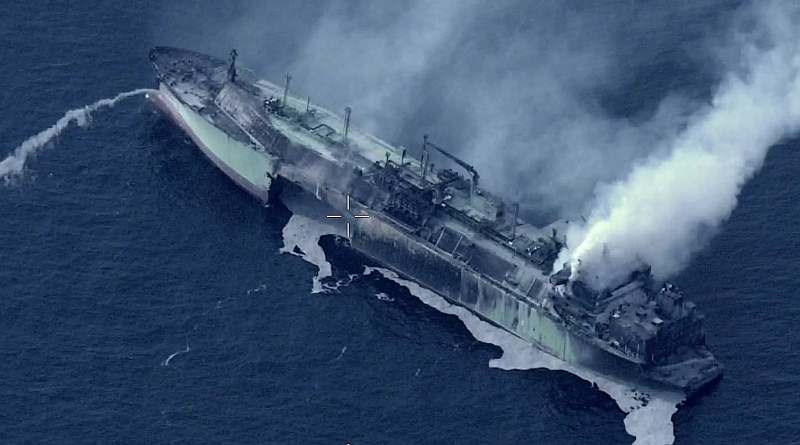
6. In the Mediterranean Sea, the Russian gas carrier Arctic Metagaz caught fire.
– On the morning of March 3, a fire broke out on the Russian liquefied natural gas carrier Arctic Metagaz in the eastern Mediterranean Sea. The incident was reported by trade publications and agencies citing sources in shipping and maritime security.
– According to available information, the fire occurred while the vessel was in motion. Some sources suggest that explosions may have preceded the fire.
– The vessel has been under US and UK sanctions since 2024. It departed from Murmansk on February 24 after loading and was likely headed to the Suez Canal.
7. Belgium has set a €10 million bail for the oil tanker Ethera, linked to Russia’s “shadow fleet,” which was detained on Sunday.
– According to Belgium’s Ministry of the North Sea, 45 violations were identified during the inspection, mostly invalid certificates. It was additionally established that the vessel was sailing under the falsely declared flag of Guinea and used forged documents. The tanker is on the EU sanctions list.
– The vessel will be able to leave the port only after posting bail and undergoing a re-inspection. Shipowners are required to properly register the state flag, obtain valid certificates, and address technical deficiencies.
– Brussels emphasized that these measures are aimed at ensuring compliance with EU sanctions, protecting the North Sea, and limiting funding for Russia’s war against Ukraine.
– Moscow previously called the detention of its tankers “piracy.” At the same time, the rapid growth of the “shadow fleet” has resulted from Western sanctions: to circumvent restrictions, Russian exporters increasingly use vessels with opaque ownership structures and an aging fleet, increasing both sanctions and environmental risks.
– The new case in Belgium demonstrates increased control over such schemes and rising costs for Russian oil exports.
8. In Germany, a court in Würzburg sentenced a 49-year-old car dealer from Bavaria to six years in prison for exporting 111 luxury cars to Russia in violation of EU sanctions.
– The investigation was conducted by the Essen customs authorities in cooperation with the prosecutor’s office. The total value of the illegally supplied cars amounted to around 20 million euros. Additionally, law enforcement managed to prevent the sale of another 400 cars valued at approximately 40 million euros.
– The investigation determined that the ultimate recipients of some of the cars were entities connected to the Russian government and security agencies, including Kremlin administrative bodies, intelligence services, and a state oil company.
– The vehicles in question were mainly armored premium cars, such as the Mercedes-Benz S-Class. After the implementation of a ban on luxury goods to Russia in 2022, the dealer arranged a scheme through a network of shell companies. Prior to the full-scale war, he primarily worked with Kazakhstan but later shifted focus to the Russian market, becoming a significant supplier for premium car dealerships in Moscow.
– The verdict demonstrates increased enforcement of sanction compliance in the EU and highlights the growing risks for intermediaries who assist Russian entities in circumventing restrictions.
– For Russian state clients, this means a further narrowing of access to Western goods, even in the segment of high-status products.
In the image: Damaged sanctioned tanker Arctic Metagaz, March 3, 2026. Photo: @emad_badish
